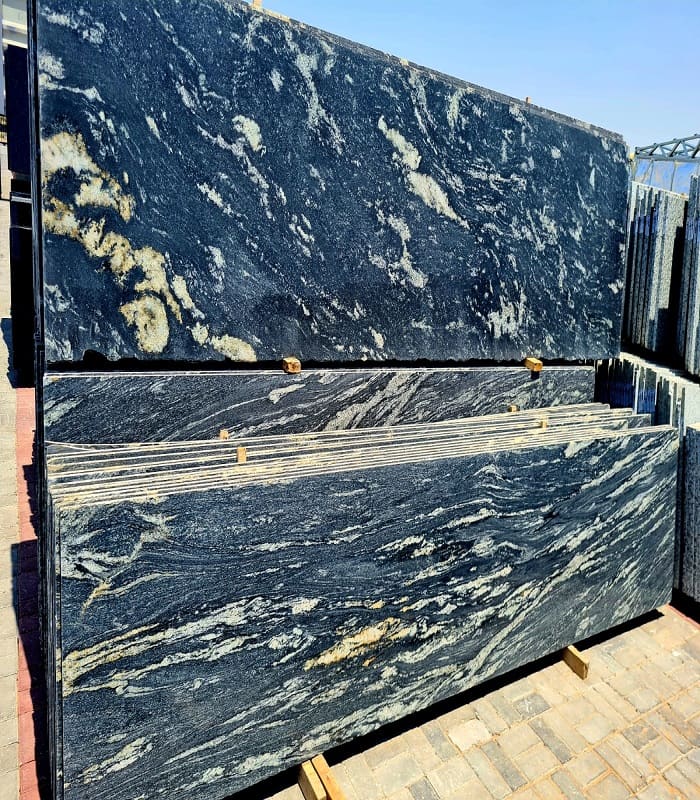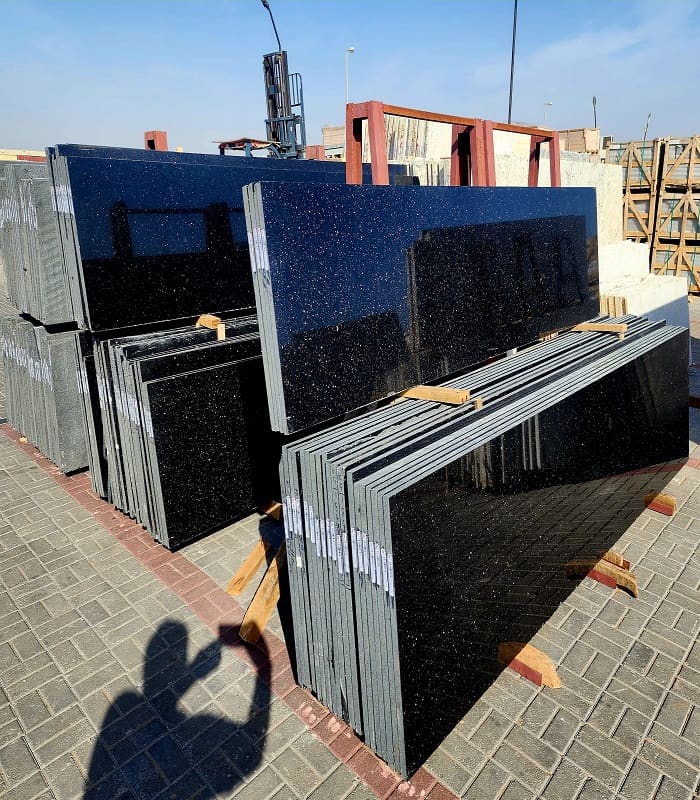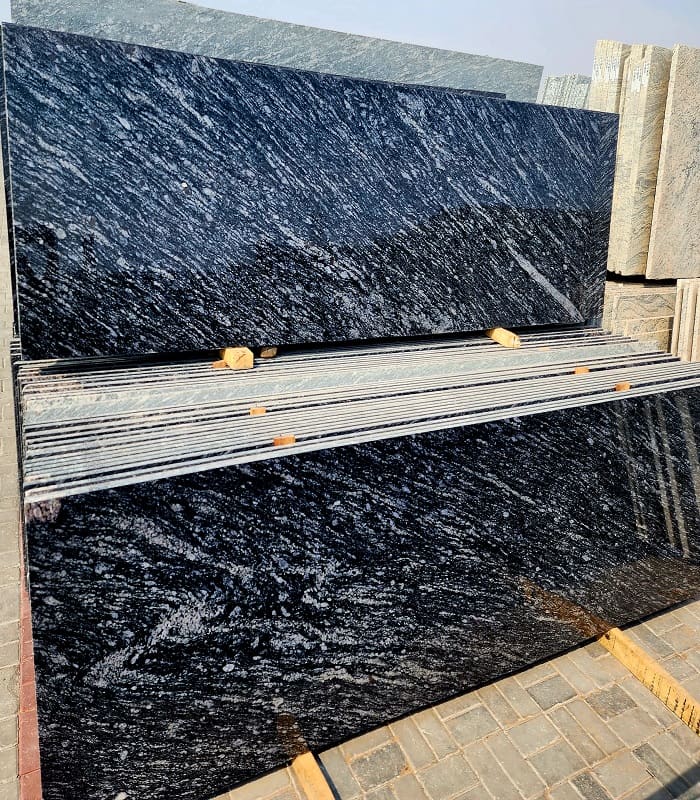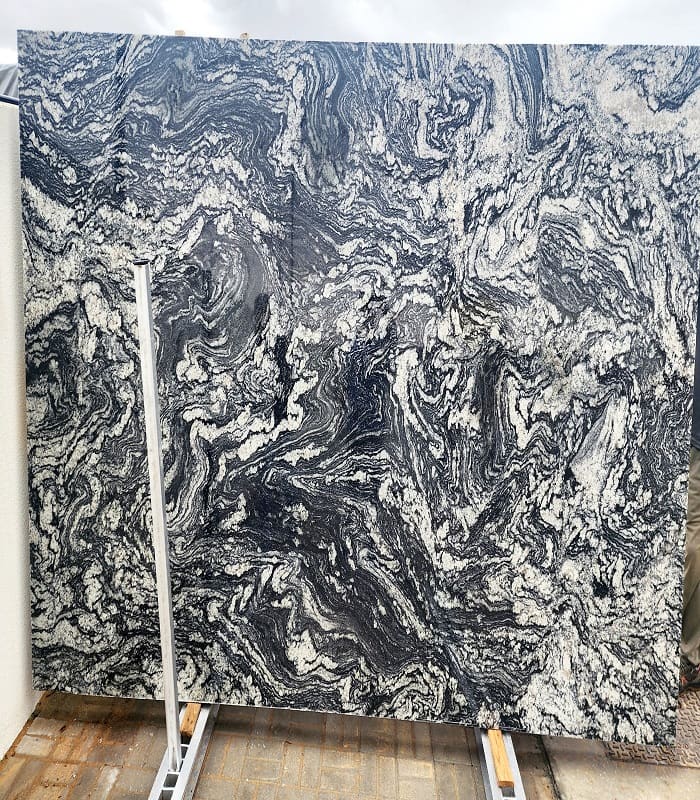
Granite · 6 variants
Application
Heat, food preparation and edge requirements.
A kitchen worktop is cut from a full slab, so the useful starting point is the slab format, not a colour swatch. Stones Forever supplies granite as cutter slabs and gangsaw slabs in 20 mm and 30 mm from our yard in Emirates Industrial City, Sharjah. Your fabricator then templates, cuts, edges and fits the tops.
This page covers what is particular to kitchens: heat beside the hob, food preparation, sink and hob cut-outs, joints and edges. It is general guidance. Whether a particular slab works for your layout is decided with your fabricator, and availability, slab sizes and price are confirmed in your quotation.
Granite generally copes with normal kitchen heat better than many worktop materials, but a pan taken straight from a high flame can still cause local thermal stress, mark a sealer or affect any resin used to treat the slab. Plan a trivet or a heat-resistant zone beside the hob rather than relying on the stone.
Granite is widely used where food is prepared. Hygiene depends on the surface being cleaned and, where it is absorbent, kept sealed. Cutting directly on stone blunts knives and can mark some finishes, so a chopping board is still the norm.
Cut-outs remove material from the narrowest part of the top and are a common place for cracks during handling. Decide the sink type (undermount or top-mount) and the hob model before templating, because the cut-out size comes from the manufacturer’s template, not from the stone.
Breakfast-bar overhangs and island ends need support designed by your fabricator. Unsupported overhang limits depend on thickness, material and the edge build-up, so treat any figure you see online as a starting question, not an answer.
If a run is longer than the slab available in your chosen lot, there will be a joint. Ask your fabricator where it will fall: joints are usually kept away from the sink and hob, and on patterned stone they are more visible.
Eased, bevelled, bullnose, mitred and other profiles are cut by the fabricator. Rounded edges are generally kinder to knocks in a busy kitchen; sharp square edges chip more easily. Agree the profile before you confirm the material thickness.
Dark Emperador is a marble. Marble is softer than granite and is etched by acids such as lemon juice, vinegar, tomato and many kitchen cleaners, so dull marks on a polished surface are likely in a working kitchen. Some people accept that; choose it knowingly and ask your fabricator. Black Marquina is listed as granite by the source catalogue, but the trade name is usually used for a marble, so do not apply granite assumptions to it until its family is confirmed. Porcelain slabs (15 mm) are sometimes used for worktops, but cutting, support and edge treatment depend on the manufacturer’s guidance, which we do not hold. Strongly patterned slabs can contain natural fissures that your fabricator should inspect before cutting. If you are unsure whether a material suits your layout, send your drawings with the request and we will pass the question to technical review rather than guess.
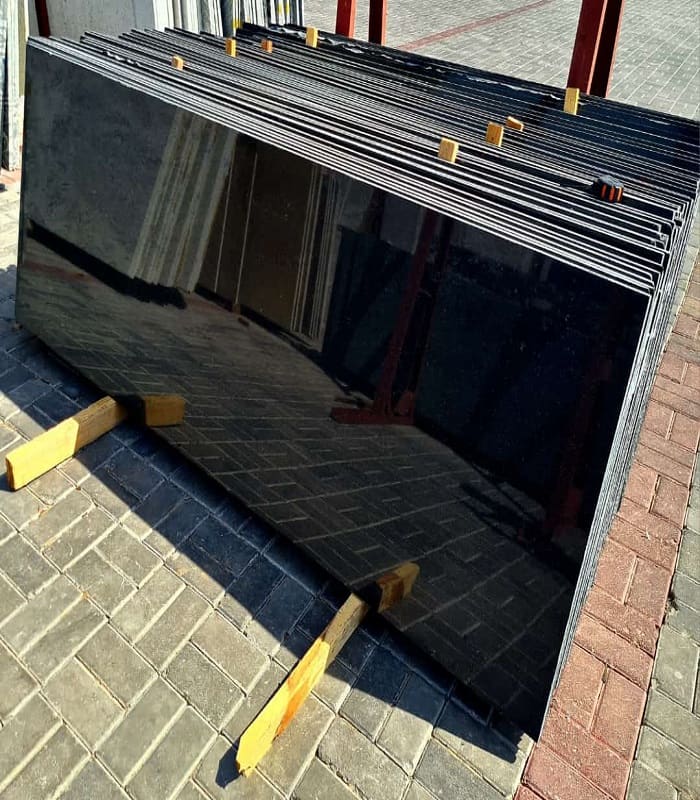
Finishes are not recorded in our catalogue, so the finish of each slab is confirmed in your quotation. In general, a polished face is the easiest to wipe clean and tends to resist staining best, but on dark stone such as black granites it shows fingerprints, water marks and smears. Honed and leathered finishes hide fingerprints and glare but are usually more open, so oil and coloured liquids can mark them more readily and sealing needs checking more often. See our finishes guide.
We offer granite slabs in 20 mm and 30 mm. A 20 mm top is lighter and often given a thicker-looking front edge by laminating or mitring a strip underneath; it is commonly fully supported on the cabinets. A 30 mm top is heavier to handle and transport and is often chosen where a fabricator wants more stiffness at overhangs or around cut-outs. Neither thickness is right for every kitchen: your fabricator decides what the layout, support and edge detail need. See 2 cm vs 3 cm granite.
Measure each worktop run separately, along the wall, and note its depth. Sketch L and U shapes with every leg labelled, and say whether figures are in metres or millimetres (for example 3.25 m or 3250 mm). Approximate sizes are fine for a first quotation; your fabricator will template the final sizes.
We ask for kitchen quantities in square metres (m²) of finished worktop, plus the list of piece sizes above. That lets us check which slab sizes in your chosen material can yield your longest piece. The number of slabs actually needed, including waste around cut-outs and offcuts, is confirmed by your fabricator from the cutting plan. If you already have a fabricator’s cutting list or slab count, attach it.
Stones Forever is a material supplier: our quotation covers the slabs. Templating, cutting, edge profiling, cut-outs, polishing of cut edges and installation are normally done by your fabricator. Some past deliveries have included pieces cut to size, including countertops; if you need cutting, say so in your request and we will confirm whether it can be arranged before we quote. Please do not assume it is included.
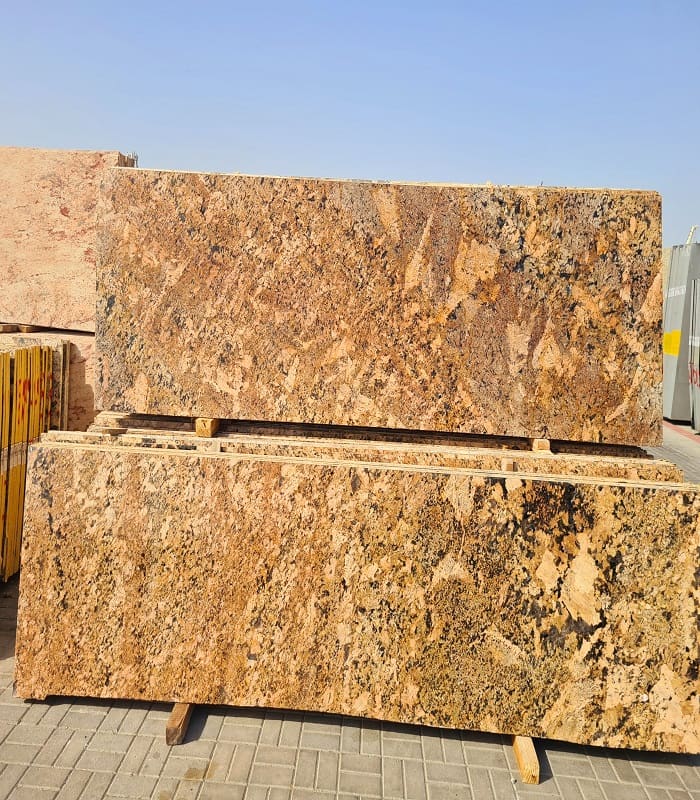
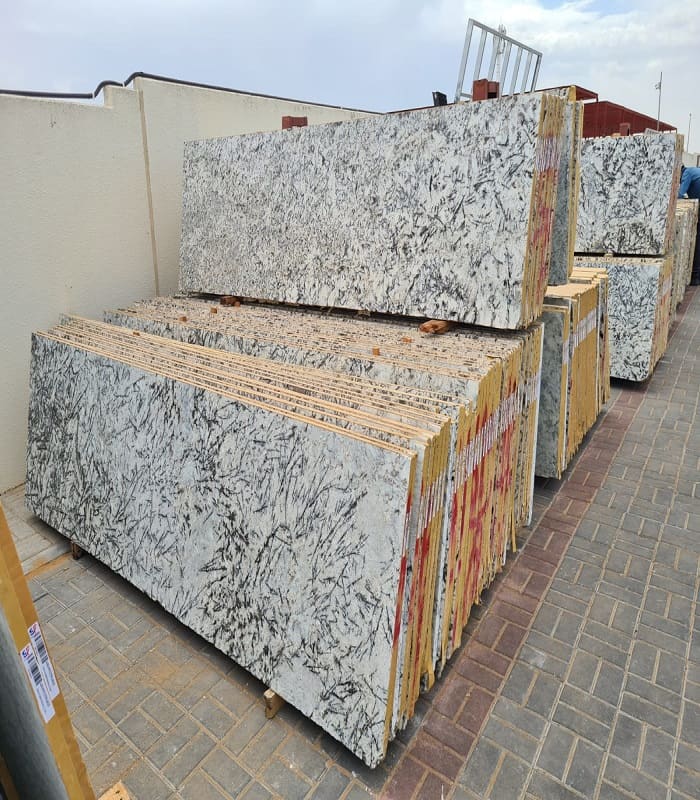
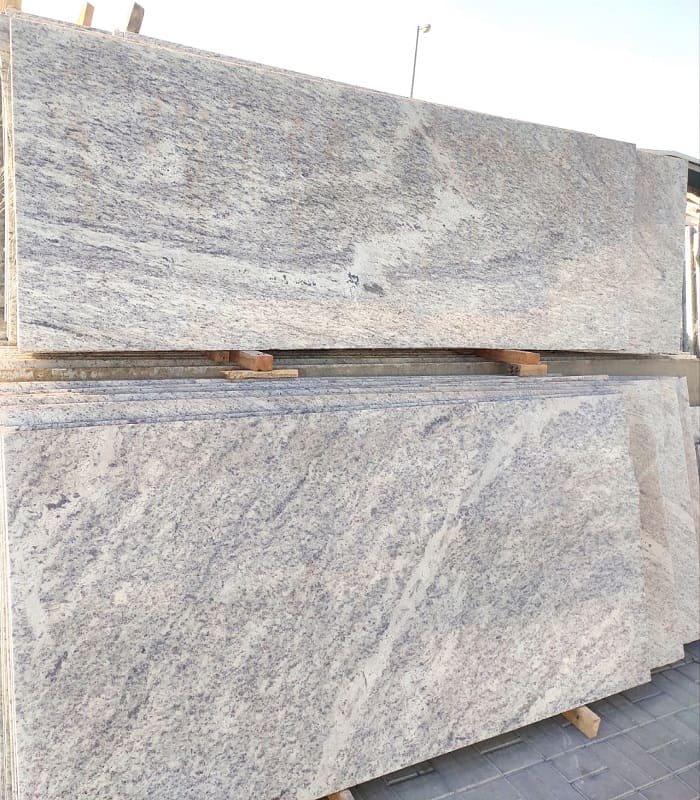
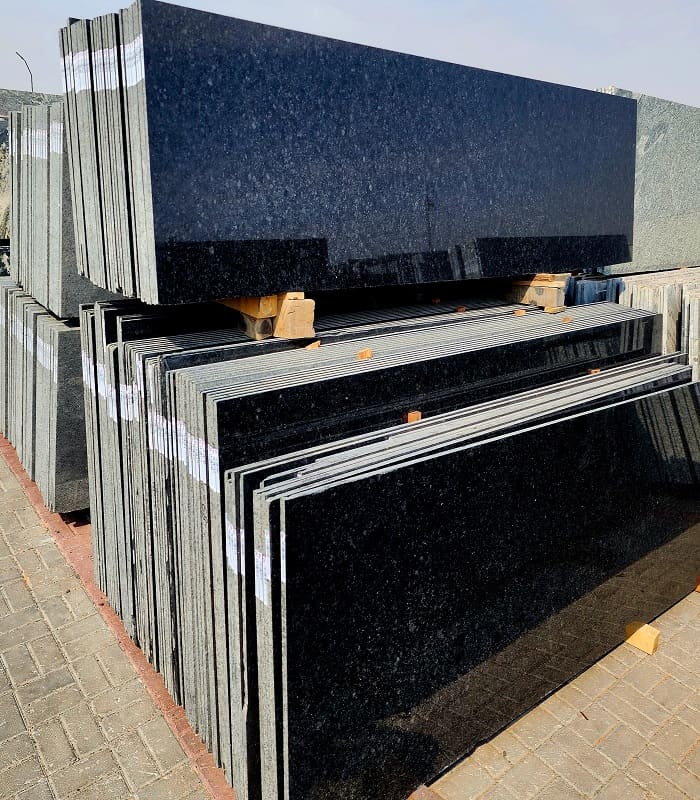
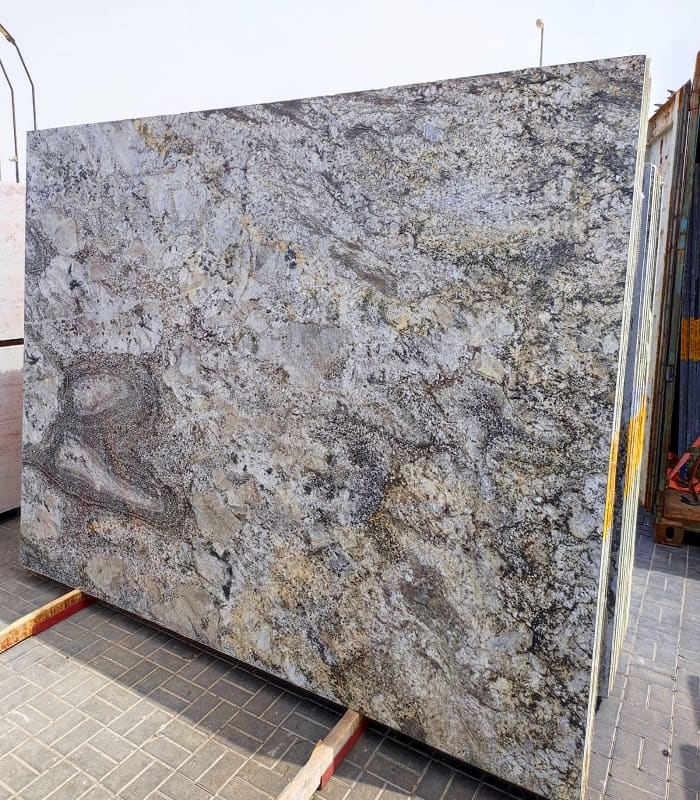
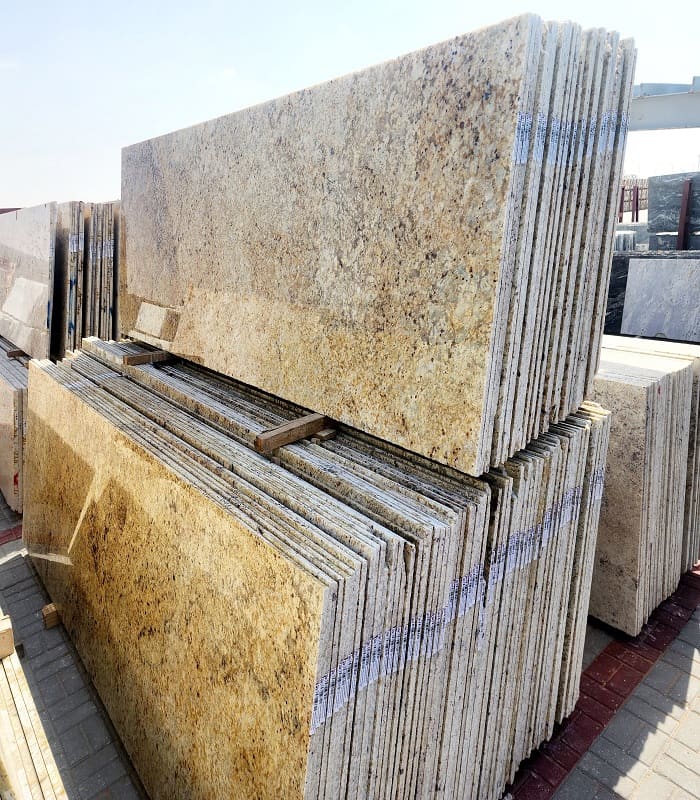
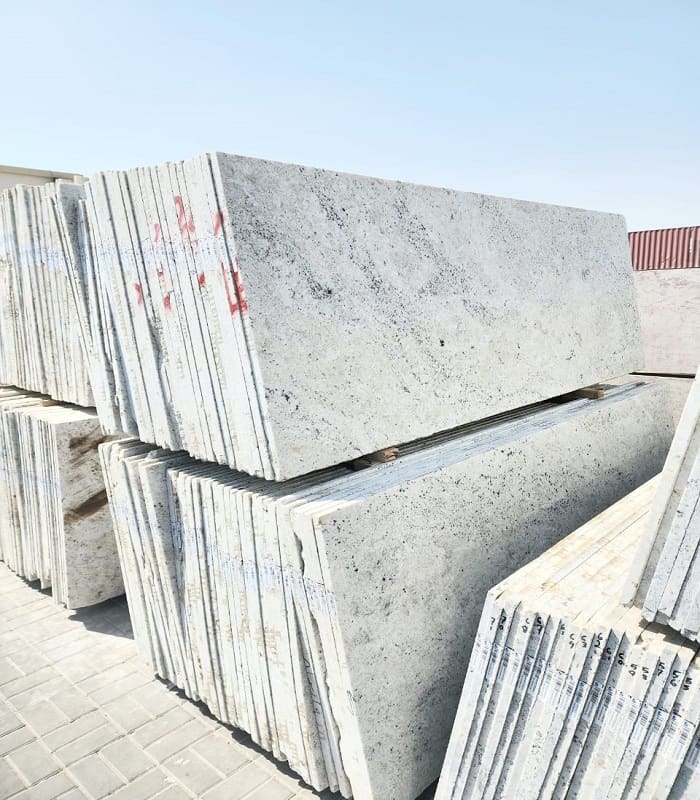
Granite is quarried, so colour and pattern vary between blocks and across a single slab. In a kitchen the variation that matters is at the joint and between an island and the perimeter run. Ask for slabs from the same lot and, where possible, view the actual slabs. Materials with bold movement (for example Viscon White, Black Forest or Alaska Gold) change more from slab to slab than even or finely speckled ones (for example Absolute Black, Steel Grey or Black Galaxy). See natural variation.
If your designer, consultant or client needs technical documents such as test reports, data sheets or certificates, list them in your request and we will tell you what can be provided for the materials you choose.
Kitchen slabs usually go to the fabricator’s workshop rather than to the home. Slabs travel on edge and are heavy; a 30 mm slab weighs about half as much again as a 20 mm slab of the same size. Tell us the delivery address, whether a forklift or other lifting equipment is available to offload, and who will receive the stone. Delivery terms are confirmed in each quotation. See delivery preparation.
Ask in your request whether a sample or a yard visit is possible for the materials on your shortlist. For a kitchen, seeing a full slab is generally more useful than a small piece, because a sample cannot show how the pattern runs across a three-metre worktop.
Wipe spills promptly, especially oil, wine, coffee, turmeric and citrus. Clean with warm water and a mild, pH-neutral detergent, and avoid bleach, vinegar and abrasive pads, which can dull a finish or wear down a sealer. Use trivets for hot pans and a chopping board for cutting. To check whether a top needs sealing, put a few drops of water on it: if the stone darkens within a few minutes, ask your fabricator about a sealer. See the granite care guide.
If you want a very even colour with little variation, engineered quartz is the usual alternative: see our quartz range, and the granite vs quartz guide explains the differences. Our porcelain slabs (80 × 240 cm, 15 mm) give a marble-look surface that is thin and light, but worktop use depends on manufacturer guidance and fabricator experience with porcelain. Dark Emperador marble gives a warm veined look but will etch; compare in granite vs marble. For colour ideas, see granite colours for kitchens.
Either can be used. Cutter slabs are generally smaller and gangsaw slabs generally larger, but actual sizes vary by lot. Long runs and islands often push you towards larger slabs to avoid joints. Send your piece sizes and we will check what is available. See cutter vs gangsaw slabs.
It is better not to. Granite generally handles kitchen heat well, but direct, concentrated heat can stress the stone locally, mark a sealer or affect resin treatment. A trivet costs far less than a repair.
If any piece is longer than the slab, yes. A good fabricator places joints away from the sink and hob and matches the pattern as closely as the slabs allow. On even, speckled stone joints are usually less noticeable than on strongly veined stone.
We supply material. If you need cutting, tell us in your request and we will confirm whether it can be arranged before quoting. Installation is normally by your own fabricator or contractor.
From the catalogue
Shown because they are offered as slabs that are typically cut for worktops. This is not a statement that every material suits every kitchen — confirm with your fabricator.