Buying guide
Natural variation in stone: lots, batches and slab inspection
Short answer
No two blocks of natural stone are the same, so colour, pattern and markings vary between slabs and between deliveries. Slabs cut from the same block are the closest match. Photographs and small samples can only show what a material generally looks like, so inspect the actual slabs you will receive, in person or by video, before confirming an order.
- Variation is a property of natural stone, not a defect; how much depends on the material.
- Slabs from one block match best; a later arrival of the same material may look different.
- Order the full quantity for a project at once, from one lot, with a sensible spare.
- Inspect the actual slabs: colour, pattern, fissures, filled pits, edges, thickness and finish.
Why stone varies
Granite and marble form over very long periods, and the mix of minerals, the size of the crystals and the way they were folded or veined change across a quarry and even within a single block. One end of a block can be lighter or more heavily patterned than the other. Quarries also move through different parts of the deposit over time, so the same trade name can look somewhat different from year to year.
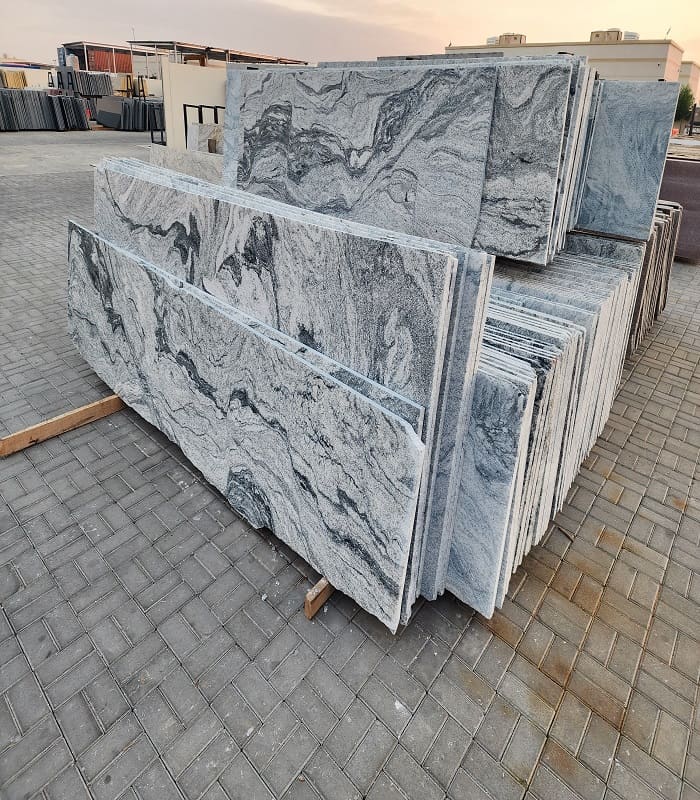
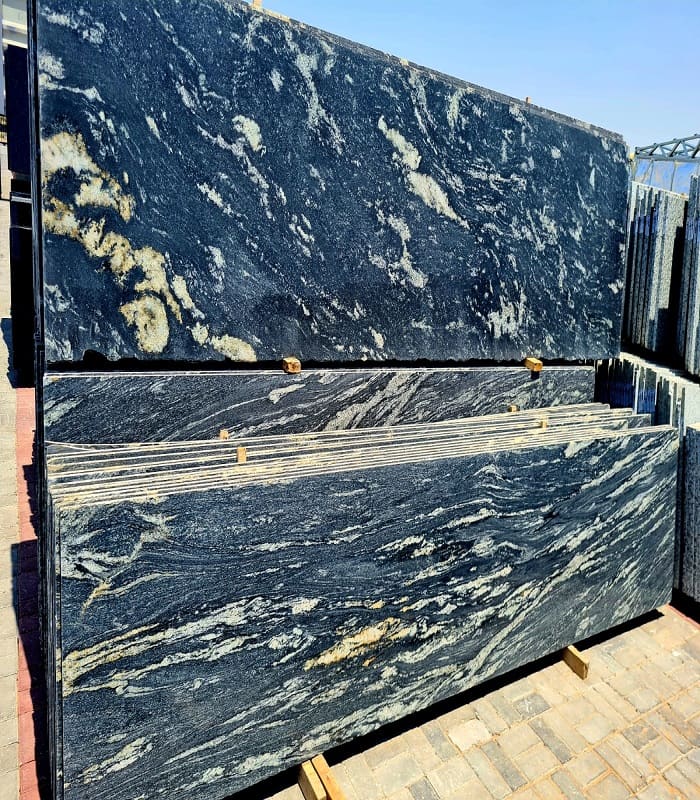
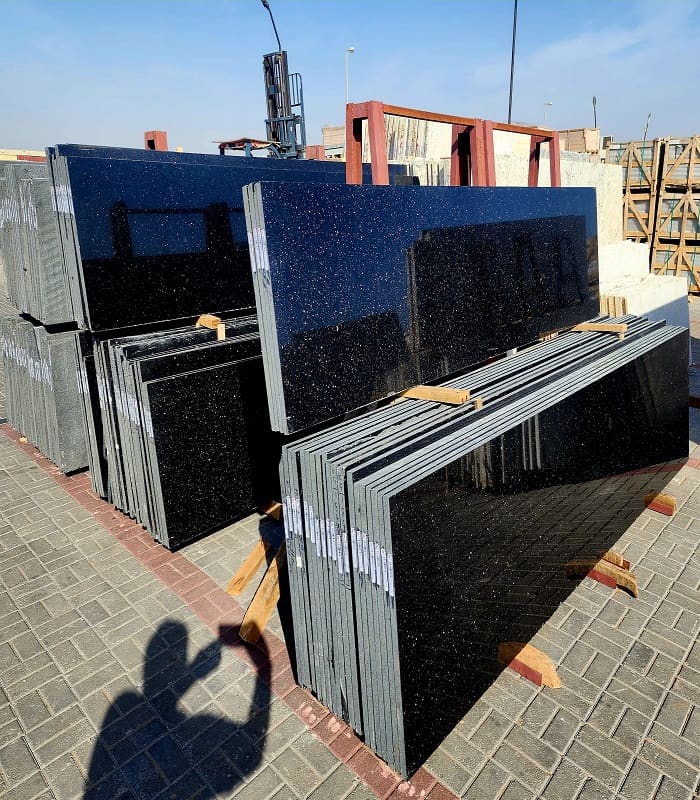
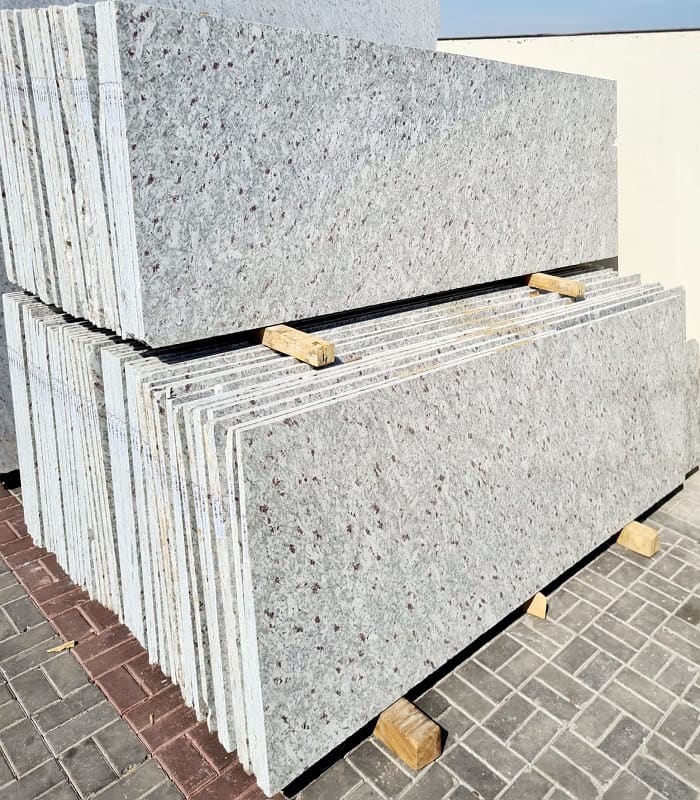
Some materials vary much more than others. Even, speckled stones such as Black Galaxy or Moon White look fairly consistent, while Viscon White shows pattern direction and density changing strongly from slab to slab, and Black Forest is described from its photos as a stone where no two slabs look alike.
Lots, batches and blocks
A block is the quarried piece the slabs are cut from. A lot or batch is a group of slabs or tiles processed and shipped together, usually from one block or a few similar blocks. For matching, the order of closeness is roughly: consecutive slabs from one block, then other slabs from the same block, then slabs from the same lot, then material from a different arrival.
In practice this means:
Order the whole quantity for a project together, from one lot, rather than in stages. Add a sensible spare for breakage, future repairs and replacement tiles, because matching later from a new arrival may not be possible. If a job is phased, ask whether enough material from the same lot can be set aside.
What photographs and samples can and cannot show
The slab photographs on this website are yard photographs of real stock, taken for the previous catalogue at 700 × 800 px. They are a fair guide to what a material generally looks like, but they are historical: the slabs shown may no longer be available, and current slabs may differ. Screens also change colour and contrast.
A small piece of stone shows colour and grain size but not the movement across a full slab. For speckled stones that is often enough to decide; for high-movement stones it is not. Whether samples can be provided has not been confirmed, so ask when you enquire. A yard visit or remote video viewing of the actual slabs is the reliable option.
Checklist for inspecting a slab
Bring your fabricator if you can; they will see the slab in terms of where the pieces and joints will go.
- View in daylight and, if possible, compare slabs side by side. Note the slab or reference numbers.
- Colour and pattern: overall tone, any darker or lighter zones, pattern direction and where the strongest features fall.
- Natural features: fissures, mineral clusters, veins and dry seams. Many are normal; ask about anything that worries you.
- Filled pits and resin: many slabs are resin-filled at the factory; look at how well fills blend in, especially on polished faces.
- Backing: whether the slab has a mesh or resin backing, and its condition.
- Edges and corners: chips and cracks, particularly where your pieces will be cut.
- Finish: consistent polish or texture across the face, without dull patches.
- Thickness: measure at several points if your detail is tight.
- Photograph each slab you select, front-on with its reference, for your records.
Confirming what you have chosen
Once you have chosen, ask how the selected slabs or lot will be identified on your quotation and whether they can be held, and for how long. Agree in writing what happens if a selected slab is damaged before delivery.
The catalogue lists Standard, Premium and Extra grades for some products. Ask what each grade means for the material you are considering and judge the slabs by eye as well.
Questions
Will my slab look like the photo on the website?
It will look like the same material, but not identical. The photos are historical yard photographs and every slab differs. Inspect the actual slabs before confirming.
Can I add more tiles later?
You can ask, but a later arrival may not match the original lot. Order the full quantity plus a spare at the start.
Are fissures and resin fills defects?
Not necessarily. Many granites have natural fissures, and resin filling of pits is common. Ask about any feature you are unsure of before you confirm.
This guide is general information about stone, not a specification for a particular project. Stones Forever does not publish test data it does not hold — ask us about documentation for a specific material.