Buying guide
Bookmatching stone and preparing a contractor BOQ
Short answer
Bookmatching places consecutive slabs from the same block side by side so the pattern mirrors across the joint; it is only possible when genuinely consecutive slabs exist and have been identified. For contractor supply, a clear BOQ lists each item with its location, material, format, thickness, finish, sizes, quantity and unit, kept separate from fabrication and installation, so suppliers price the same thing.
- Only real consecutive slabs, cut in sequence from one block, can be bookmatched.
- The mirror is close, not perfect: the saw removes stone between slabs, so the pattern shifts slightly.
- Bookmatching is usually arranged when slabs are processed; ask what is actually available before designing around it.
- A good stone BOQ separates supply from fabrication and installation and states units and wastage clearly.
What bookmatching is
When a block is cut on a gangsaw, the slabs come off in sequence, like pages of a book. If two neighbouring slabs are opened out side by side, the pattern on one is close to a mirror image of the other, meeting at the joint. That is a bookmatch. Four slabs can be arranged as a quad match. In a slip match (or sequence match), consecutive slabs are laid side by side without flipping, so the pattern repeats rather than mirrors.
To show a true mirror, the touching faces of the two slabs must be finished on opposite sides of the cut, so alternate slabs are typically polished on their opposite face. This is usually arranged when the slabs are processed.
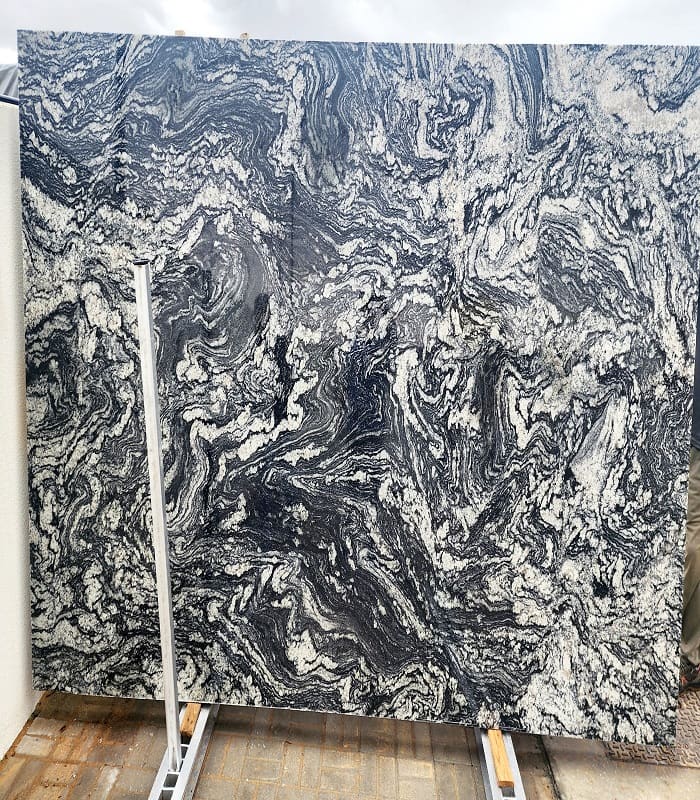
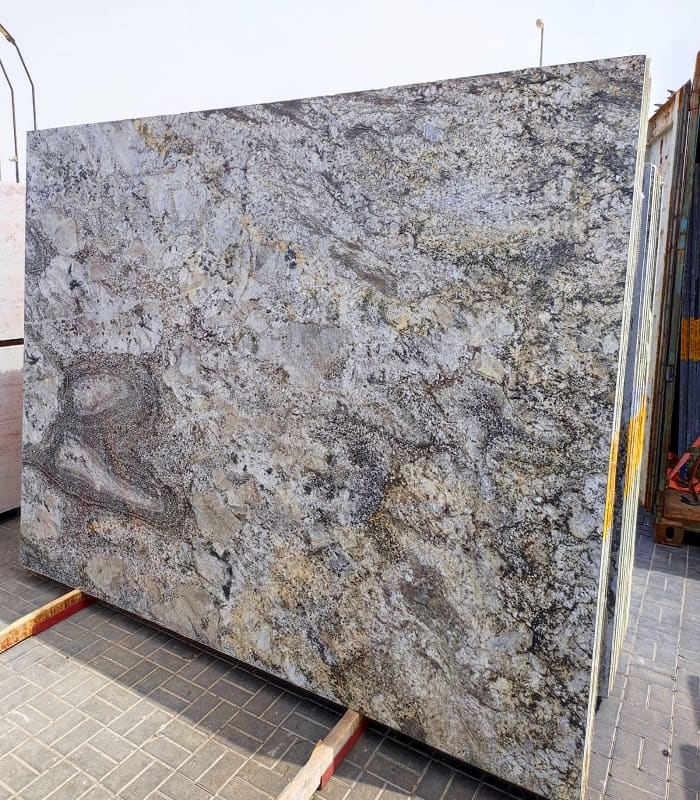
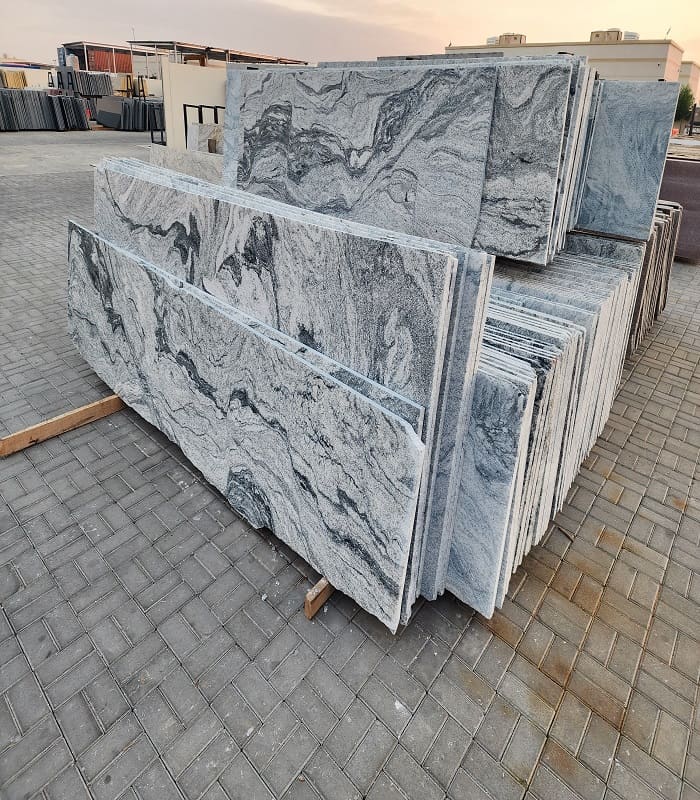
Bookmatching suits high-movement stones on walls, islands and feature panels. In the catalogue, stones whose photographs show strong movement include Black Web, Blue Dunes, Viscon White and Black Forest; whether matched slabs are available depends entirely on current stock.
What can and cannot be promised
Before you design around a bookmatch, ask whether consecutive slabs are available, how they are numbered, and whether you can see them laid out side by side or in photographs taken that way. Agree the layout with your fabricator on the actual slabs before any cutting. More on judging slabs in the natural variation guide.
- Can: a bookmatch from slabs that are confirmed as consecutive from one block, with matching faces finished accordingly, that you have seen.
- Cannot: a bookmatch from slabs that were not cut in sequence, even if they are the same material and look similar.
- Cannot: a perfect mirror. The saw kerf removes a few millimetres between slabs, and the pattern changes slightly through the block.
- Cannot: a bookmatch that survives a poor layout. The fabricator must cut both pieces at the same position on each slab.
Preparing a BOQ for stone supply
A Bill of Quantities lets several suppliers price the same scope. For stone, most pricing problems come from vague descriptions ("black granite, as approved"), mixed units, or supply and installation rolled into one line. Write one line per distinct item, and keep supply separate from fabrication and installation. Stones Forever quotes stone supply; fabrication and installation are not confirmed services, so price those separately.
State for each line: an item reference, the location or drawing reference, the material by exact name, the format, thickness, finish, edge detail if relevant, the size or size range, the quantity, and the unit (m², linear metre or number). Say whether quantities are net or include wastage, and if wastage is included, at what allowance. Add any requirements for slab selection, same-lot supply, bookmatching or approval of a reference slab.
Example BOQ lines
These lines are illustrative. Quantities are left for the contractor to complete, and the materials and formats should be checked against the current catalogue and your quotation. Finishes are written as the buyer's requirement; confirm availability for each material. For larger packages, see BOQ supply.
| Ref | Description | Unit | Qty |
|---|---|---|---|
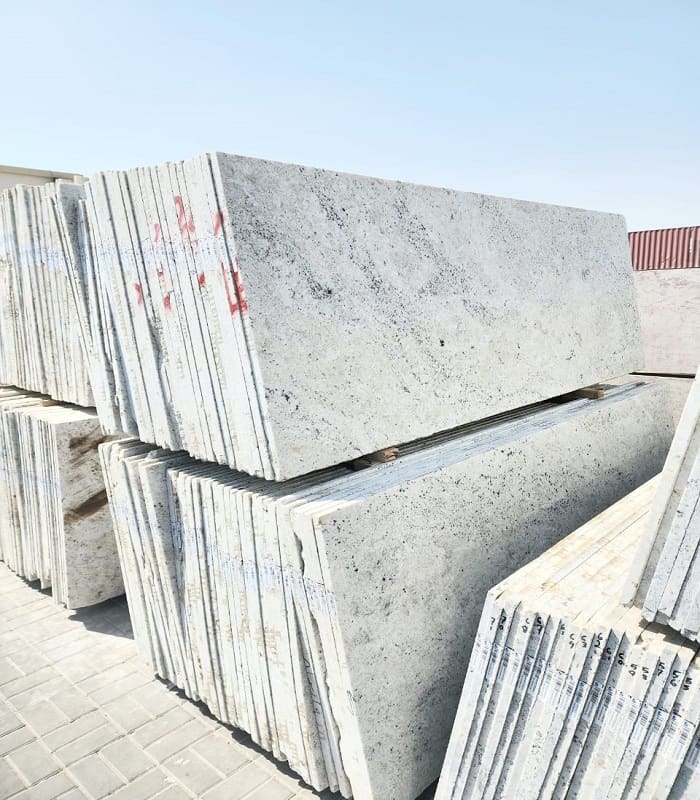
| S-01 | Ground floor lobby flooring. Colonial White granite tiles, 60 × 60 cm, 20 mm, polished. One lot. Net area. | m² | [qty] |
| S-02 | Lobby skirting. Colonial White granite, 60 × 10 cm, 20 mm, polished. Net length. | lm | [qty] |
| S-03 | Main staircase treads. Black Galaxy granite steps, 30 mm, polished, sizes per drawing A-201. | nr | [qty] |
| S-04 | Reception feature wall. Gangsaw slabs, 20 mm, polished, bookmatched pair, consecutive slabs subject to availability and approval of slabs. | nr | [qty] |
Tips that save time
Send the BOQ through the quote page or trade supply. See also the quote checklist.
- Avoid "or equal" for natural stone unless you define how equivalence will be judged; two stones with similar names can look very different.
- Ask for grade to be stated. The catalogue lists Standard, Premium and Extra grades; ask what each means for the material.
- Include drawing references so cut-to-size items can be checked.
- Flag items that need slab approval or a yard viewing before supply.
- State the delivery location, required dates and any site access limits, since delivery or collection is agreed per quotation.
Questions
Can any two slabs of the same stone be bookmatched?
No. Only consecutive slabs cut in sequence from the same block can be bookmatched. Similar-looking slabs from different blocks will not mirror.
Are cutter slabs suitable for bookmatching?
Bookmatched features usually use gangsaw slabs because they are large and cut in sequence from a whole block. Ask what is available for your material.
Should my BOQ quantity include wastage?
Either approach works if it is stated clearly. Say whether quantities are net or include wastage, and at what allowance, so it is not added twice.
This guide is general information about stone, not a specification for a particular project. Stones Forever does not publish test data it does not hold — ask us about documentation for a specific material.