Buying guide
Granite vs marble for a kitchen
Short answer
For a busy kitchen worktop, granite is usually the more forgiving choice: it is generally harder than marble and is not etched by everyday acids such as lemon juice or vinegar. Marble suits people who want its veining and accept that it will etch, mark and develop a patina with use. Either way, choose from the actual slab and plan care around that specific stone.
- Granite is made mostly of quartz and feldspar; marble is mostly calcite, which is softer and reacts with acids.
- Acidic spills leave dull etch marks on polished marble. Sealing reduces staining but does not stop etching.
- Granite still needs basic care: some granites absorb liquids if left unsealed, and edges can chip under impact.
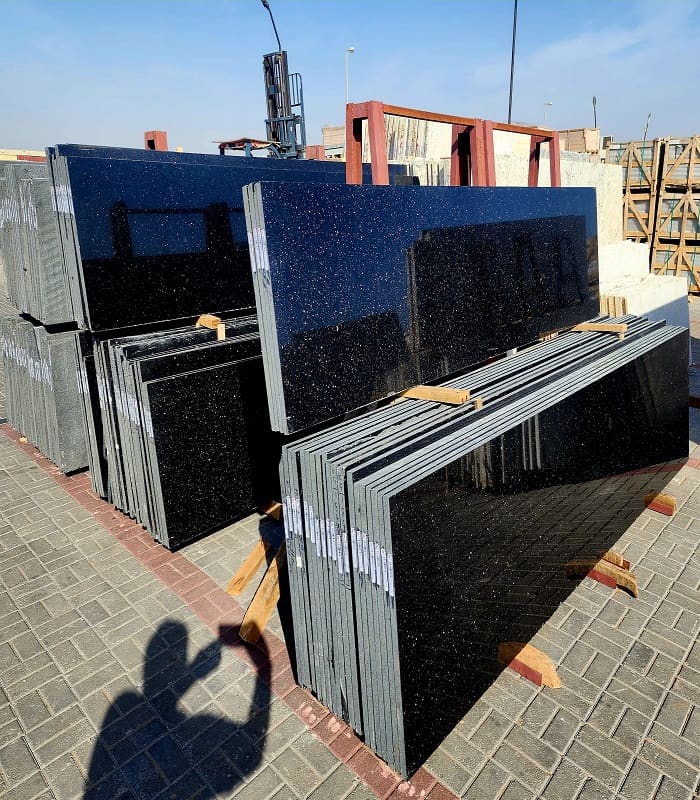
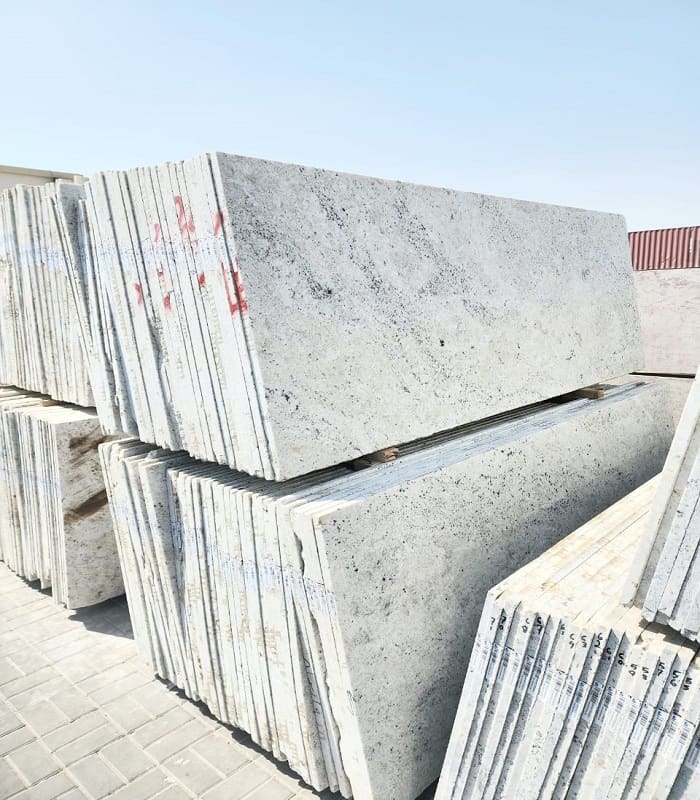
- The Stones Forever catalogue lists 33 granites and one marble, Dark Emperador, so most kitchen enquiries start with granite.
- Natural stone varies from block to block. Look at the actual slab, in the yard or by video, before you confirm.
How granite and marble differ
Granite is an igneous rock that crystallised slowly from molten material deep underground. Its main minerals are quartz and feldspar, with smaller amounts of mica and darker minerals that give the specks and flecks you see on a polished surface. Quartz sits at about 7 on the Mohs hardness scale and feldspar at about 6, which is why granite resists everyday scratching well.
In the stone trade, "granite" is a commercial name rather than a strict geological one. It covers a wider group of hard, quartz- and feldspar-rich stones, including many with flowing bands and swirls. They are grouped together because they cut, polish and behave in broadly similar ways.
Marble is a metamorphic rock: limestone that has been recrystallised by heat and pressure. It is made mainly of calcite (or, in some marbles, dolomite). Calcite is about 3 on the Mohs scale, so a steel knife or grit under a pan can mark it. Calcite also reacts chemically with acids, which is the single biggest practical difference in a kitchen.
Side by side
These are general characteristics of each stone type, not test results for individual products. Stones Forever does not currently hold supplier test reports for its materials, so if a specification needs absorption or strength figures, raise it with your quotation request.
| Granite | Marble | |
|---|---|---|
| Main minerals | Quartz and feldspar | Calcite (sometimes dolomite) |
| General hardness | Hard; resists most everyday scratching | Softer; scratches more readily |
| Lemon, vinegar, wine | Generally not etched | Etches: leaves dull marks on a polished surface |
| Staining | Varies by stone; some absorb oil or coloured liquids if unsealed | Often more absorbent; sealing helps against stains but not etching |
| Heat | Generally heat tolerant, but avoid hot pans directly on the stone and sudden temperature shocks | Use trivets; heat and hot pans can mark or damage it |
| Look | Speckled, flecked, streaked or boldly patterned | Usually veined; softer, flowing patterns |
| Ageing in a kitchen | Keeps its polish well with normal care | Develops a patina of etch marks and wear |
| In the Stones Forever catalogue | 33 granites in slabs, tiles and steps | Dark Emperador, gangsaw slabs in 20 and 30 mm |
What actually happens in a kitchen
It helps to separate two different problems. Staining is a liquid soaking into the stone and leaving colour behind: cooking oil, turmeric, coffee, red wine. Etching is an acid dissolving the surface of calcite and leaving a dull, slightly rough mark. Granite can stain if it is porous and unsealed; marble can stain and etch. A sealer slows absorption, so it helps with staining. It does nothing to stop an acid reacting with calcite.
In a typical UAE kitchen the risks are lemon and lime juice, vinegar-based dressings, tomato, tamarind, soft drinks and some bathroom or kitchen cleaners. On polished marble each of these can leave a mark within minutes. On granite they are generally harmless if wiped up, although strong acidic or alkaline cleaners can degrade a sealer over time.
Heat is the next consideration. Granite generally tolerates heat well, but a very hot pan placed straight on the stone, or a sudden change in temperature, can stress it, and it can also damage the sealer. Use trivets on any stone. Edges near the sink and dishwasher take the most knocks; a slightly rounded or eased edge is less likely to chip than a sharp square one.
When marble still makes sense
Marble is not a wrong choice; it is a choice that comes with different expectations. People who choose it for a kitchen usually accept that the surface will collect etch marks and wear, and see that as character rather than damage. It can work well on a low-use island, a pastry or baking area, a bar top or a wall cladding behind the hob where spills are less frequent.
A honed (matt) finish tends to show etch marks less than a polished one, because there is no gloss to lose. On a dark polished marble, etch marks can appear as pale dull patches, so think about where acids are likely to land.
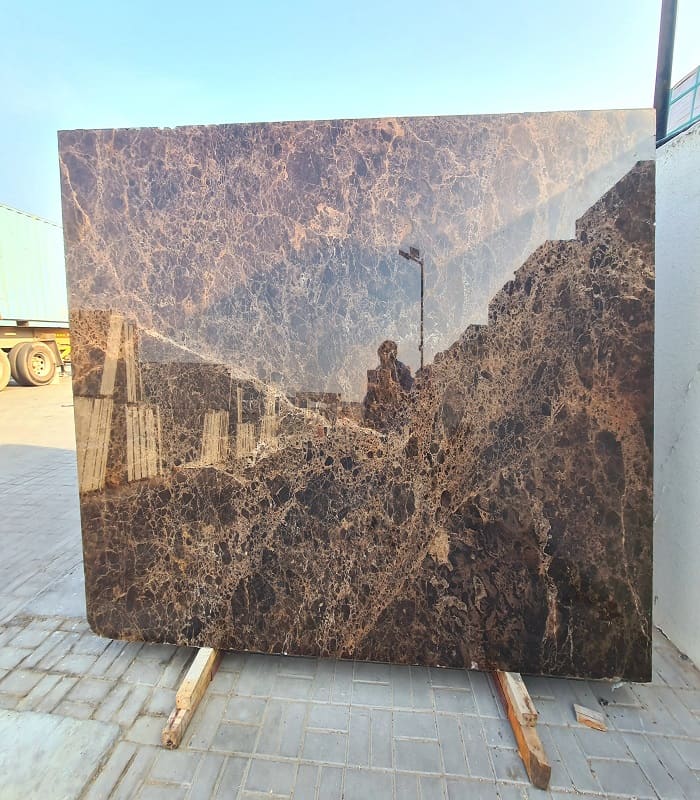
The only marble in the current Stones Forever catalogue is Dark Emperador. It shows a dark chocolate-brown ground netted with lighter tan and beige veins. It is listed as gangsaw slabs in 20 mm and 30 mm.
Choosing a granite for the worktop
If granite suits the way you cook, the next decisions are colour, format and thickness. Even, speckled stones are the easiest to live with and to match to cabinets; boldly patterned stones need to be seen as a full slab. Our guide to granite colours for kitchens groups the catalogue materials by tone and pattern.
For a standard worktop run, many fabricators work from cutter slabs; a deep island usually needs a larger gangsaw slab or a planned joint. The cutter vs gangsaw guide explains the difference, and 2 cm vs 3 cm covers thickness.
If you like the marble look but not the upkeep
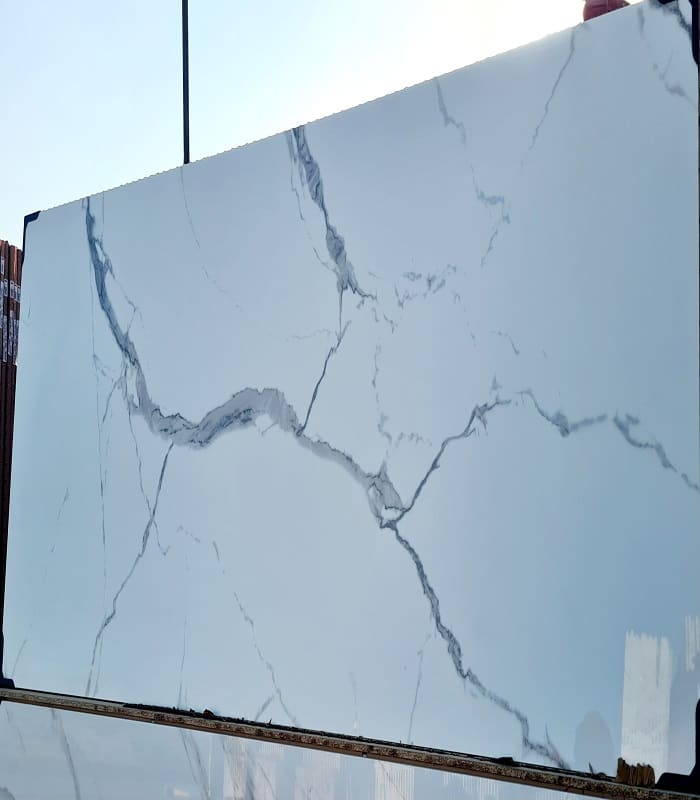
Porcelain is a manufactured ceramic, not a natural stone. The catalogue lists five porcelain designs as 80 × 240 cm slabs at 15 mm, several with marble-style veining, for example Statuario Ice and Bellagio Bianco. Porcelain generally has very low absorption, but its edges and cut-outs need a fabricator experienced with it, and the manufacturer's guidance on worktop use, edge detailing and heat applies.
Before you decide
When you are ready, send the material, format, thickness and rough sizes through the quote page. Prices are given by quotation only.
- Do a simple water-drop test on an offcut or slab edge to see how quickly the stone absorbs (explained in the granite care guide).
- Squeeze a little lemon juice on a marble offcut, wait a few minutes and wipe: you will see what etching looks like.
- View the actual slabs, not only photographs. The yard is at Emirates Industrial City, near Sajja Police Station, Sharjah; remote video viewing can also be requested.
- Ask your fabricator which thickness, edge profile and support they recommend for your layout.
Questions
Is granite better than marble for a kitchen worktop?
For most busy kitchens, yes: granite is generally harder and is not etched by everyday acids. Marble suits people who want its look and accept etch marks and a patina over time.
Does sealing marble stop it etching?
No. A sealer reduces how quickly liquids soak in, which helps with stains. Etching is a chemical reaction between acid and calcite, and a sealer does not prevent it.
Can I put a hot pan on granite?
Granite is generally heat tolerant, but it is best not to. Direct heat and sudden temperature changes can stress the stone and damage the sealer. Use a trivet.
Which marble does Stones Forever supply?
The current catalogue lists one marble, Dark Emperador, as gangsaw slabs in 20 mm and 30 mm.
Is Black Marquina a granite or a marble?
Our catalogue lists Black Marquina under granite. The trade name is also widely used for a black marble, so if the difference matters for your project — for example around acids or polishing — ask us and we will confirm the details for the slabs you are considering.
This guide is general information about stone, not a specification for a particular project. Stones Forever does not publish test data it does not hold — ask us about documentation for a specific material.