Buying guide
How to seal and care for granite
Short answer
Wipe granite daily with warm water and a pH-neutral cleaner, blot spills promptly, and use trivets and chopping boards. Whether it needs sealing depends on the stone: if a few drops of water darken the surface within a few minutes, it is absorbing and a penetrating sealer will help; if water stays beaded for much longer, it may not need sealing yet. Repeat the test from time to time rather than resealing on a fixed schedule.
- Granite care is mostly routine: pH-neutral cleaner, soft cloth, prompt blotting of spills.
- A water-drop test tells you whether the stone is absorbing and whether sealing is worthwhile.
- Sealers slow absorption; they do not make any stone immune to stains, and they do not stop marble etching.
- Avoid acidic, abrasive and harsh alkaline cleaners, hot pans directly on the stone, and cutting on the surface.
- Marble etches with acids; porcelain generally needs no sealing but follow the manufacturer's care guidance.
Daily care
For everyday cleaning, warm water with a few drops of mild washing-up liquid, or a cleaner labelled pH-neutral and safe for natural stone, is enough. Wipe with a soft cloth or microfibre and dry the surface, especially on dark polished stone where water spots and limescale show.
Use a chopping board: cutting directly on granite dulls knives and can mark the surface. Use trivets or pot stands for hot pans and appliances that run hot. Keep oils, spices and acidic bottles on a tray rather than straight on the stone, because rings can form if a bottle leaks.
Does it need sealing? The water-drop test
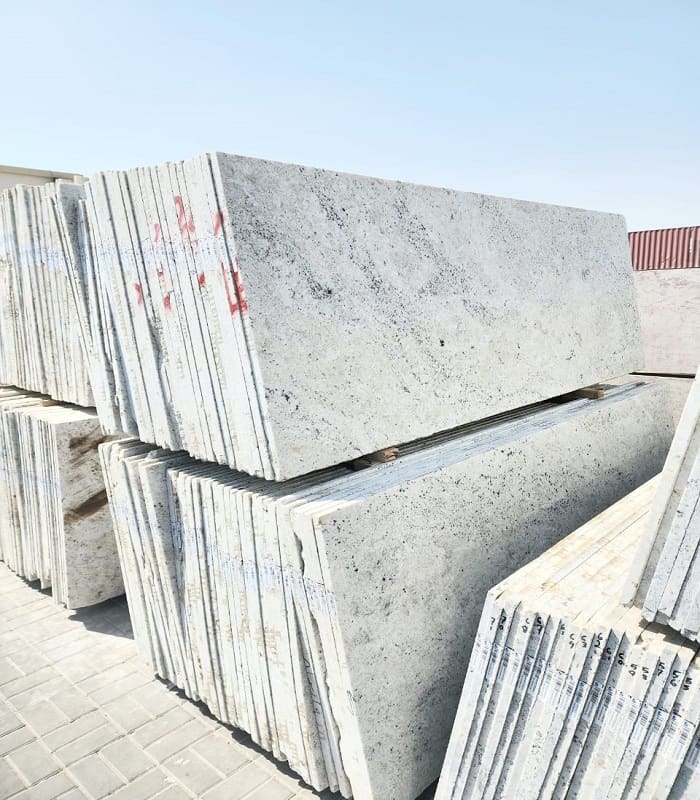
Sealing needs vary widely between granites. Some are dense and absorb very little; others, often lighter or coarser-grained stones, absorb liquids readily. Instead of guessing, test the actual stone.
How to do it: on a clean, dry surface, pour a small pool of water (roughly the size of a coin, a few millimetres deep) in several places, including near the sink and hob. Leave it and watch the stone around and under the water.
If the stone darkens within a few minutes, it is absorbing quickly and sealing is advisable. If it darkens only after 10 to 15 minutes or so, it is moderately absorbent, and sealing will help in a kitchen. If the water stays beaded and the stone has not darkened after about half an hour, it may not need sealing at the moment.
Wipe the water off and let any dark patch dry out; it should disappear. These timings are common rules of thumb rather than a standard. You can also test an offcut before fabrication, which is the easiest way to plan care before the worktop is fitted.
How to seal granite
Sealing is normally done by the fabricator or installer when the stone is fitted, and by the owner afterwards. Stones Forever supplies stone; ask your fabricator what they apply and which product they recommend for maintenance.
- Choose the right product: an impregnating (penetrating) sealer made for natural stone. Avoid surface coatings and waxes on worktops.
- Clean thoroughly with a stone-safe cleaner and let the stone dry fully; trapped moisture stops the sealer soaking in.
- Test first on an offcut or an inconspicuous corner, to check the sealer does not darken or change the look.
- Apply evenly with a lint-free cloth or applicator, following the manufacturer's dwell time.
- Wipe off all the excess before it dries on the surface; left-over sealer leaves a sticky haze.
- Let it cure for the time the manufacturer states before heavy use or wet cleaning, and ventilate the room.
When to reseal
There is no single correct interval. A worktop near a busy sink may need attention sooner than a rarely used island, and some granites may never need much. Repeat the water-drop test every few months in the first year, then at least once a year. When water starts to darken the stone faster than it did after sealing, reseal.
Harsh cleaners wear sealers out faster. If you use multi-surface sprays with bleach, ammonia or acids, expect to reseal more often, or better, switch to a stone-safe cleaner.
Spills and stains
If a stain does not respond, ask a stone restoration specialist before trying stronger chemicals.
| Situation | What to do |
|---|---|
| Oil, ghee, cooking fat | Blot (do not wipe and spread), then wash with warm water and a little washing-up liquid. A set-in oil mark can often be drawn out with a poultice of baking soda and water, left covered for a day. |
| Coffee, tea, wine, turmeric | Blot quickly and rinse. On light granite, a stone-safe poultice may lift a set stain; test on a hidden area first. |
| Lemon, vinegar, soft drinks | Wipe promptly. Granite is generally not etched, but acids can weaken a sealer over time. |
| Hard-water marks | Dry the surface after cleaning. Use a cleaner made for natural stone, not a limescale remover containing acid. |
| Chips on edges | Keep the piece if you can find it. A fabricator can often fill or repair chips with a colour-matched resin. |
What to avoid
Outdoors, also rinse off pool water, fertiliser and irrigation residue regularly, and keep metal furniture feet from rusting onto the stone.
- Vinegar, lemon-based cleaners and bathroom or limescale removers.
- Bleach and ammonia-based sprays used routinely; they can degrade the sealer.
- Scouring pads, abrasive creams and powders, which can dull the polish.
- Hot pans or appliances placed directly on the stone, and sudden temperature shocks.
- Standing, kneeling or sitting on worktops, especially near cut-outs and overhangs.
- Leaving wet cloths, sponges or metal tins on the surface for long periods.
Notes for marble and porcelain
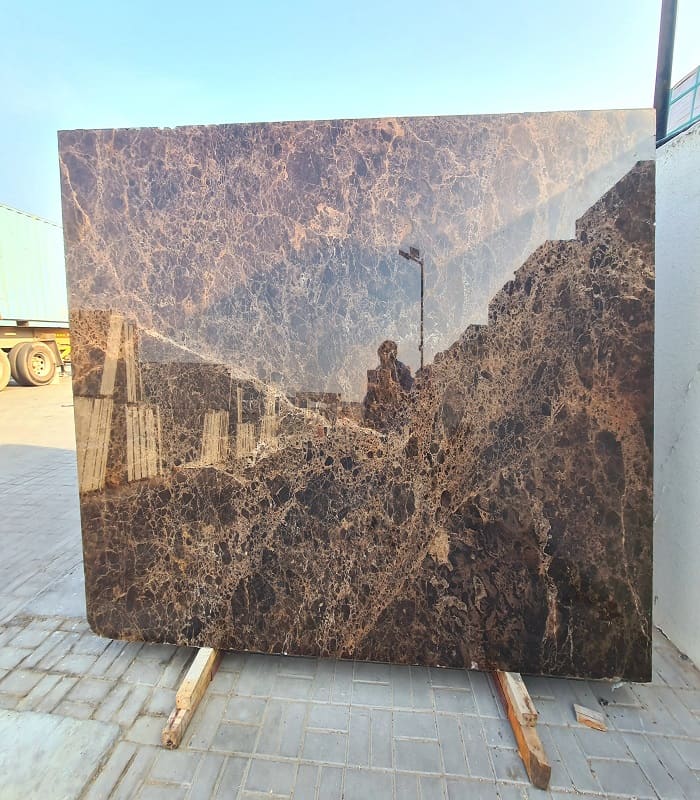
Marble such as Dark Emperador is calcite-based, so acids (lemon, vinegar, wine, many cleaners) etch it, leaving dull marks on a polished surface. Sealing helps against stains but not etching. Use coasters and trays, wipe spills straight away, clean only with pH-neutral stone cleaners, and expect deep etch marks to need professional honing and re-polishing.
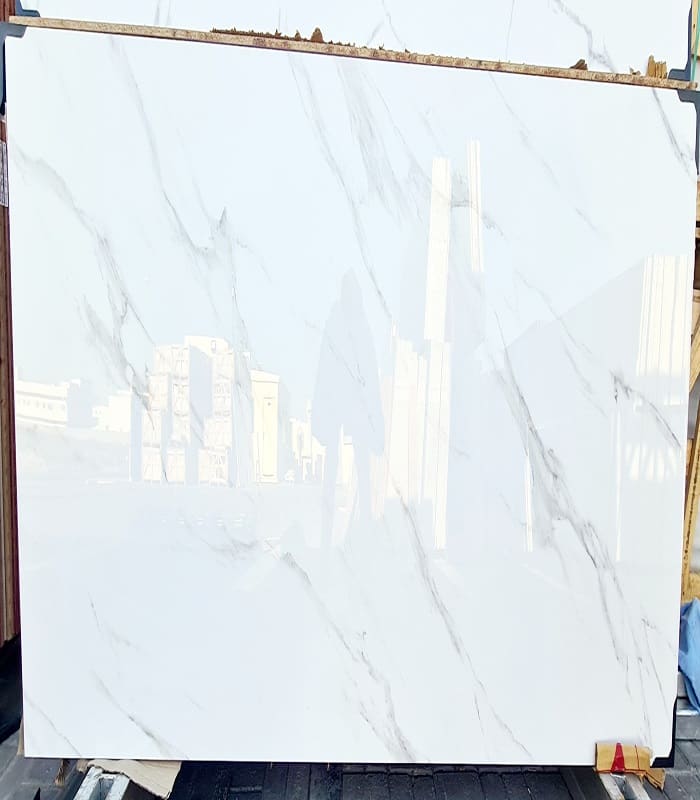
Porcelain slabs are manufactured and generally have very low absorption, so they usually do not need sealing. Follow the manufacturer's care guidance for cleaners, and protect edges from hard knocks, since chips in porcelain are harder to repair invisibly. See the porcelain slabs range.
Questions
How often should granite be sealed?
It depends on the stone and how it is used. Do a water-drop test every few months at first, then at least yearly, and reseal when water darkens the stone faster than before.
Does sealing stop all stains?
No. A sealer slows absorption and gives you time to wipe spills up. Leave a staining liquid long enough and it can still mark a sealed stone.
Can I clean granite with vinegar?
It is best not to. Vinegar is acidic and can weaken the sealer over time; on marble it etches the surface. Use a pH-neutral stone cleaner.
Does every granite need sealing?
No. Some dense granites absorb very little. The water-drop test on the actual stone tells you whether sealing is worthwhile.
Does Stones Forever seal the stone?
Stones Forever supplies stone. Sealing is normally done by your fabricator or installer during fitting; ask them which sealer they use.
This guide is general information about stone, not a specification for a particular project. Stones Forever does not publish test data it does not hold — ask us about documentation for a specific material.