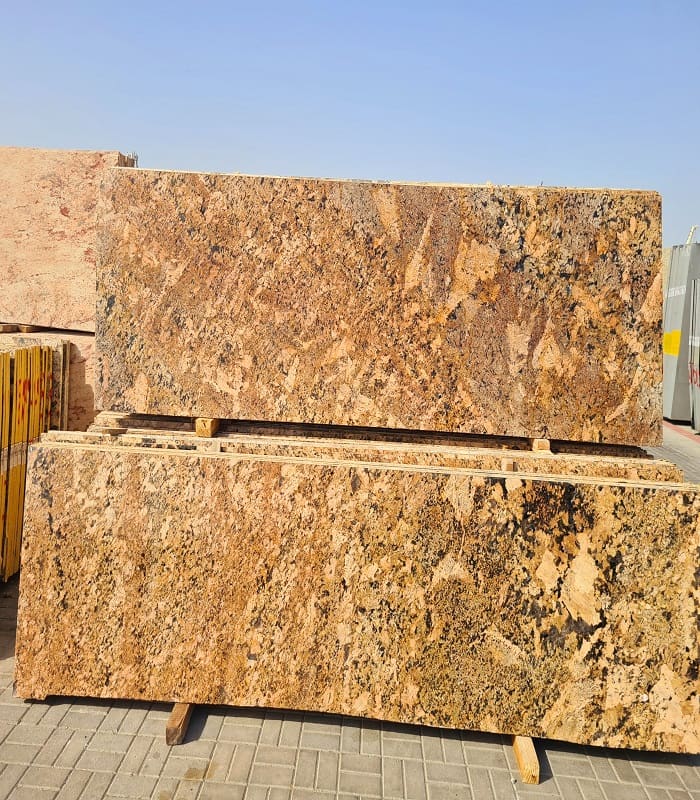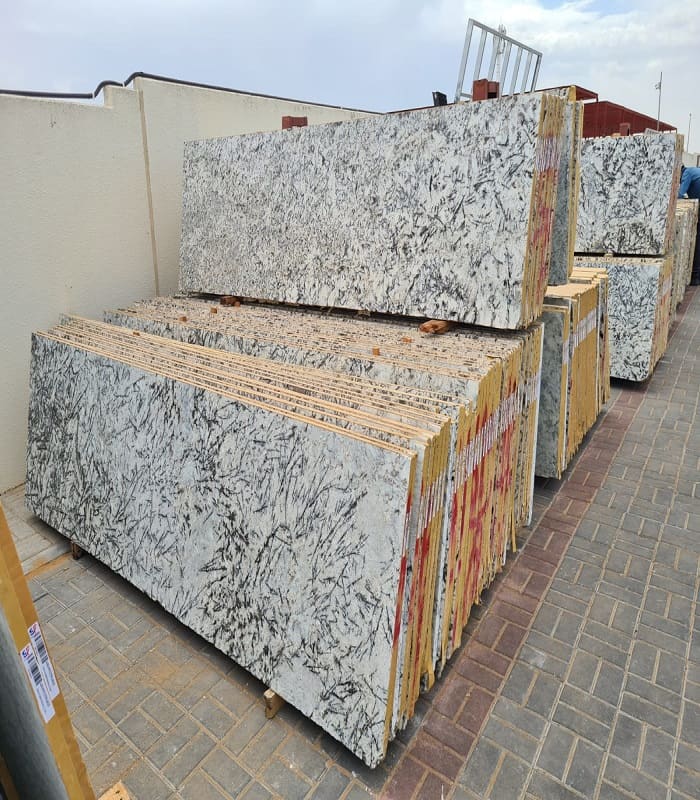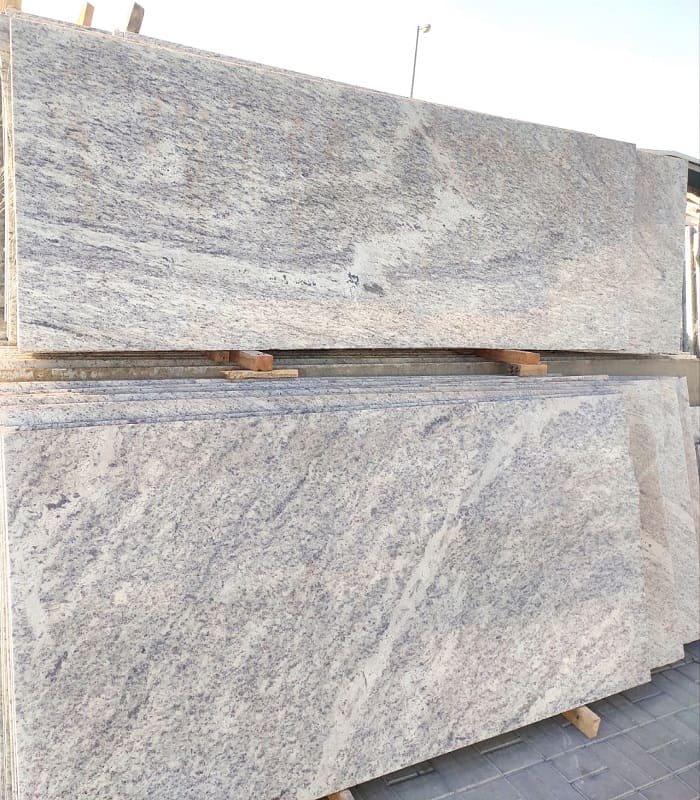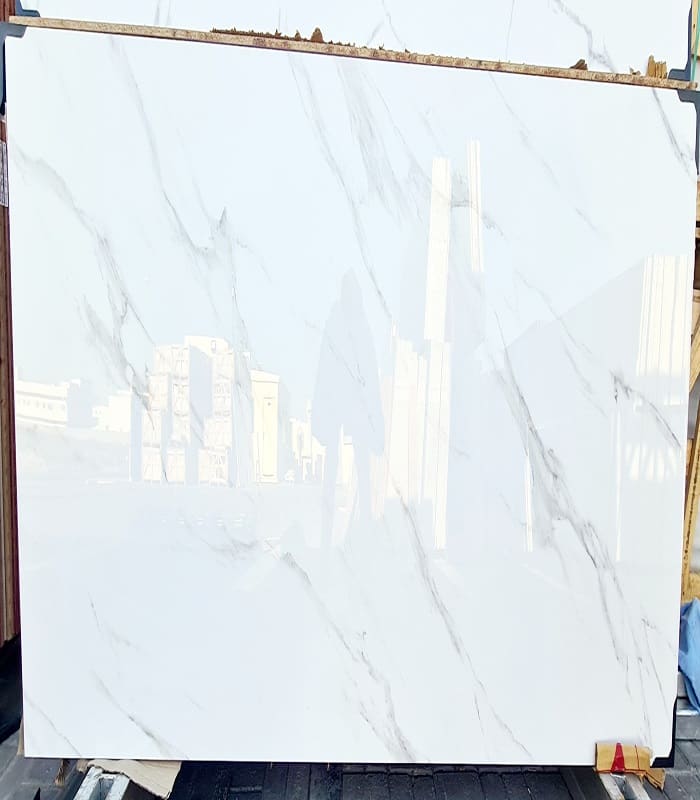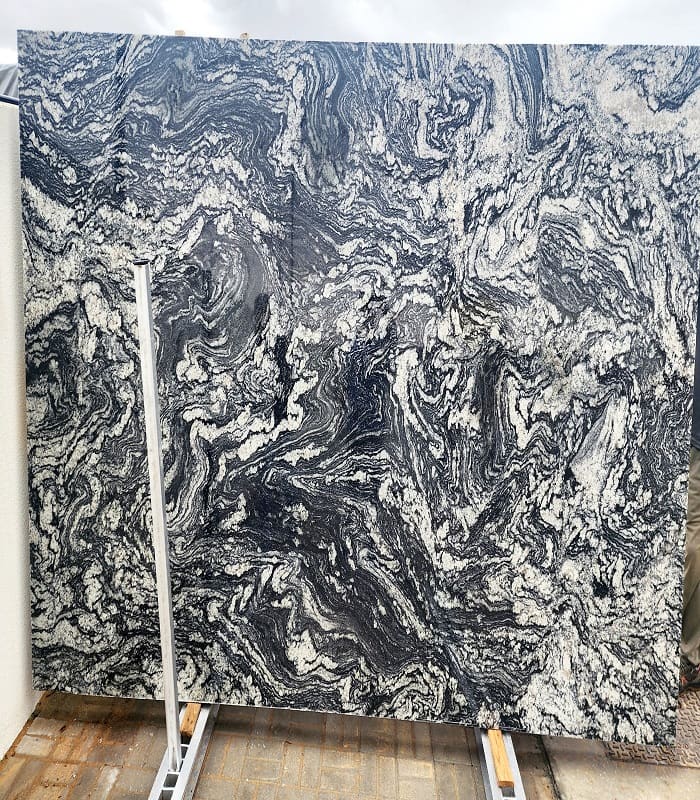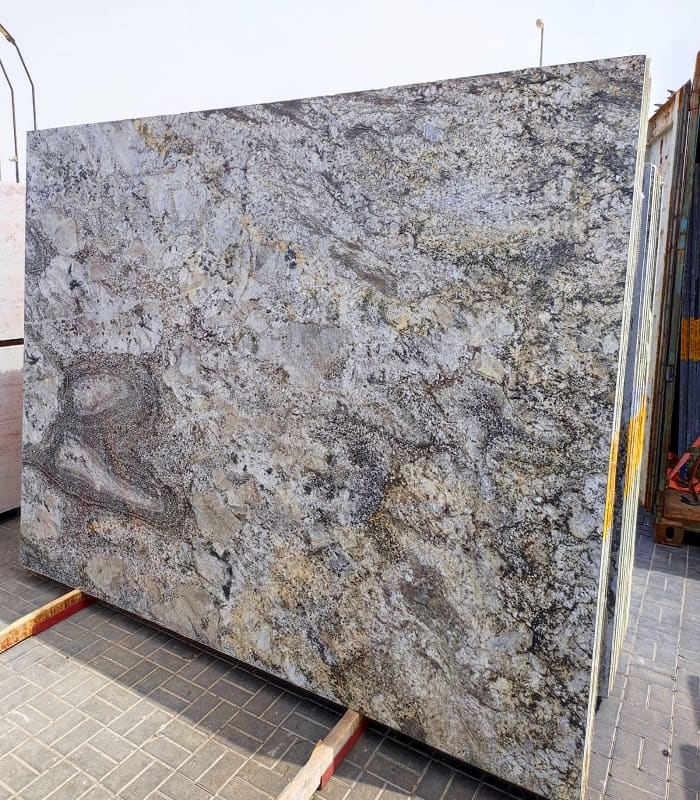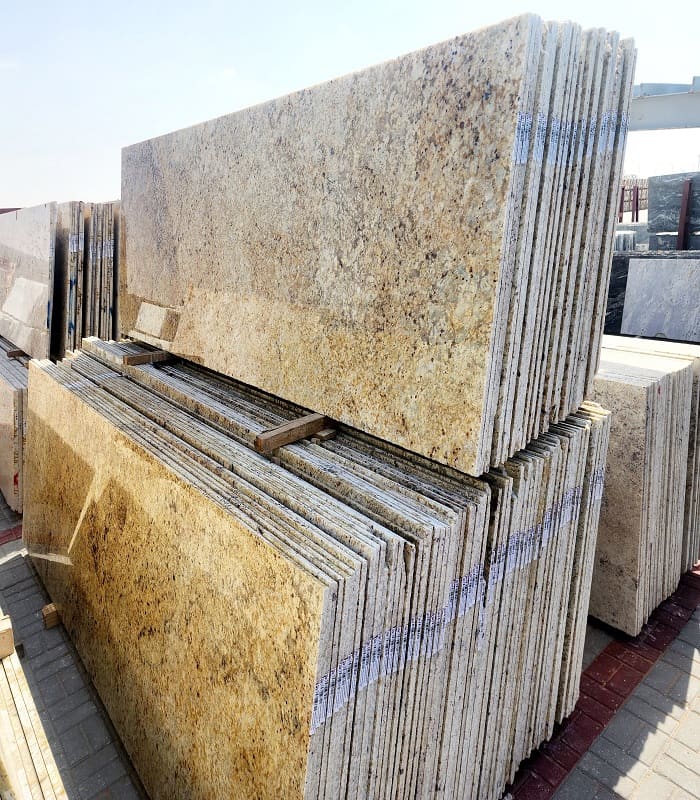
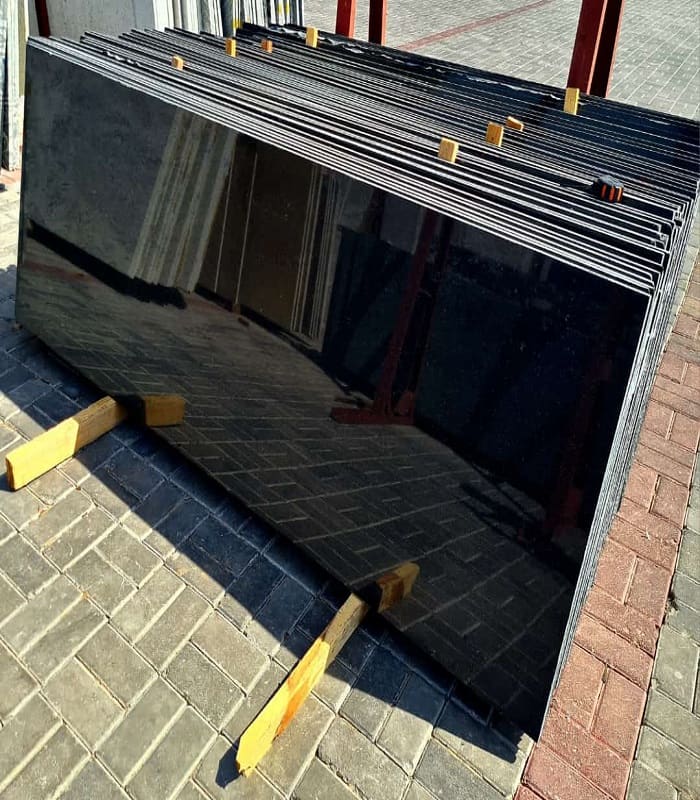
Granite · 6 variants
Application
Foot traffic, finish and joint layout.
For floors, the format decides most of the practical questions. We supply granite tiles in 60 × 60, 60 × 30 and 60 × 10 cm (mostly 20 mm, with some 60 × 30 cm tiles in 30 mm), granite slabs that can be cut to larger floor pieces, Dark Emperador marble slabs and porcelain slabs at 80 × 240 cm and 15 mm.
This page covers foot traffic, finish and slip, joint layout, floor build-up and how to state quantities. It is general guidance for buyers and contractors: bedding method, movement joints and slip safety are for your installer and designer to decide. Stock and price are confirmed in your quotation.
In the UAE, fine sand carried in on shoes acts like abrasive paper on a floor. Entrances, corridors and lift lobbies wear first. Granite is generally hard-wearing, but polished faces still lose gloss in walking lines over time. Plan entrance matting from the start.
Polished stone floors can be slippery when wet or dusty. Kitchens, bathrooms, entrances that get rain or cleaning water, and areas near pools need particular thought. The slip requirement for a floor is set by your designer or specifier; we hold no slip-resistance test data.
Set out the floor from a main doorway or the room centreline so cut tiles fall at the edges, not in the middle of the view. Decide between a stack bond and an offset for 60 × 30 cm tiles, and the direction of tiles relative to the main light source. Joint width is set by your installer.
Tiles are ready to lay and quick to replace. Larger pieces cut from slabs give fewer joints but add cutting, handling and the need for a very flat substrate. Large pieces also show lippage (uneven edges) more, so they demand a skilled installer.
Stone thickness plus the bedding layer sets the finished floor level. Check door clearances, thresholds into other rooms and the meeting point with existing floors before choosing between 20 mm and 30 mm.
Dark Emperador marble is softer than granite: in busy, sandy areas a polished marble floor will scratch and dull in walking lines, and acids etch it, so it usually needs periodic professional re-polishing. Floors in wet areas, commercial kitchens, near pools or at external doors involve slip safety that must be specified by a designer with test evidence, which we do not hold. Floors over raised access systems, timber or suspended structures, floors carrying trolleys or vehicles, and floors with underfloor heating need installer or engineer review. Black Marquina’s family is unconfirmed (the trade name usually means a marble), so do not assume granite behaviour. Send any of these cases for technical review.
Finishes are not recorded in our catalogue, so each product’s finish is confirmed in your quotation. In general, polished floors reflect light and are easy to mop, but show scratches from grit and are slippery when wet. Honed floors have a matt look, hide minor scratches and are usually less slippery than polished, though not automatically safe for wet areas. Textured finishes such as flamed or brushed are rougher underfoot but are harder to clean; whether they are available for a given product must be confirmed. See our finishes guide.
Our granite tiles are mostly 20 mm, with three 60 × 30 cm products in 30 mm. Granite and marble slabs are offered in 20 mm and 30 mm, and porcelain slabs in 15 mm. A 20 mm tile is a common interior floor thickness; 30 mm adds weight and height and is sometimes chosen for heavier use or where a contractor’s detail calls for it. The right thickness depends on the substrate, bedding method and load, which your installer or engineer confirms.
Measure each room separately in metres (length × width), and list rooms with recesses or angled walls as separate rectangles. Note which rooms connect, so the layout can run continuously. Approximate figures are fine for an initial quotation.
State the floor area in square metres (m²) per room and in total. Your installer will add an allowance for cutting waste: it is usually smaller for a straight layout in rectangular rooms and larger for diagonal patterns, herringbone or rooms with many corners. Ask your installer for their figure rather than guessing. Consider ordering a small reserve of spare tiles from the same lot for future repairs, because a later lot may not match.
We supply tiles and slabs. Laying, bedding, grouting, movement joints, cutting on site and any polishing after installation are carried out by your contractor or installer. Some past deliveries have included cut items such as skirting and landings; if you need skirting or thresholds cut to size, list them and we will confirm whether that can be arranged before quoting.
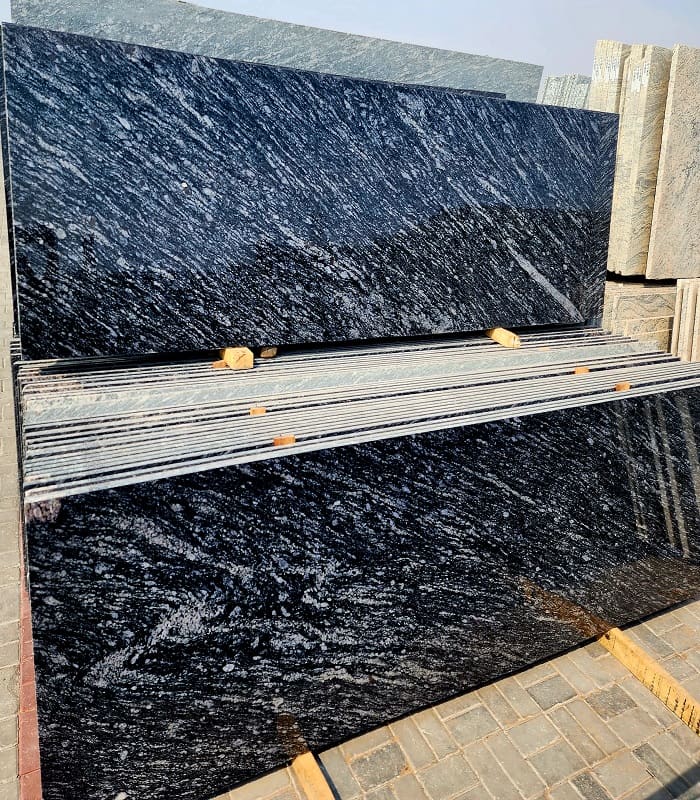
Floor tiles are cut from many blocks, so shade and pattern vary from tile to tile and crate to crate. Installers commonly mix tiles from several crates as they lay, so variation spreads evenly instead of appearing as patches. Order the whole floor at once where possible and ask for a single lot. Speckled materials such as Colonial White or Black Galaxy generally hide variation better than strongly moving ones such as Black Forest. See natural variation.
If your designer, consultant or client needs technical documents such as test reports, data sheets or certificates, list them in your request and we will tell you what can be provided for the materials you choose.
Tiles usually arrive in crates or on pallets that are heavy for their size. Check where they will be offloaded and stored, keep them dry and flat, and spread the load on upper floors rather than stacking all crates in one spot. Open and check crates before laying begins, not after. Delivery terms are confirmed in your quotation; see delivery preparation and granite flooring in UAE heat.
Ask whether a sample tile or a yard visit is possible. For floors, seeing several tiles side by side is more useful than one piece, because it shows the range of shade you will actually get.
Remove grit daily with a dry dust mop or vacuum, and use mats at entrances. Mop with a pH-neutral stone cleaner; avoid vinegar, bleach and acidic tile cleaners, especially on marble. Wipe spills promptly. Check whether the floor and grout need sealing with a water-drop test. Plan for polished floors to need occasional professional restoration in the busiest areas. See the granite care guide.
Our porcelain slabs (80 × 240 cm, 15 mm) give large, marble-look pieces with fewer joints and a manufactured, more repeatable pattern; their floor suitability and slip performance depend on the product and finish, which should be confirmed with the manufacturer’s data. Dark Emperador marble gives warmth and veining but needs more care than granite; see granite vs marble. Granite tiles are generally the most robust choice in our range for busy interiors, while cut granite slabs suit statement areas such as entrance halls.
It is mostly a design and layout choice. 60 × 60 cm gives a calmer grid; 60 × 30 cm allows offset patterns and fits narrow corridors with less cutting. The 60 × 10 cm format suits borders and details. Availability by material differs, so check each product.
Polished stone can be slippery when wet. Whether a floor finish is acceptable in a wet area is a question for your designer, ideally with slip test data, which we do not hold. Many people use a non-polished finish in bathrooms.
Ask your installer, because it depends on room shapes and the pattern. Also keep a few spare tiles from the same lot for future repairs.
Stone generally feels cool underfoot indoors where the air is conditioned. Our granite flooring in UAE heat guide explains what to expect.
From the catalogue
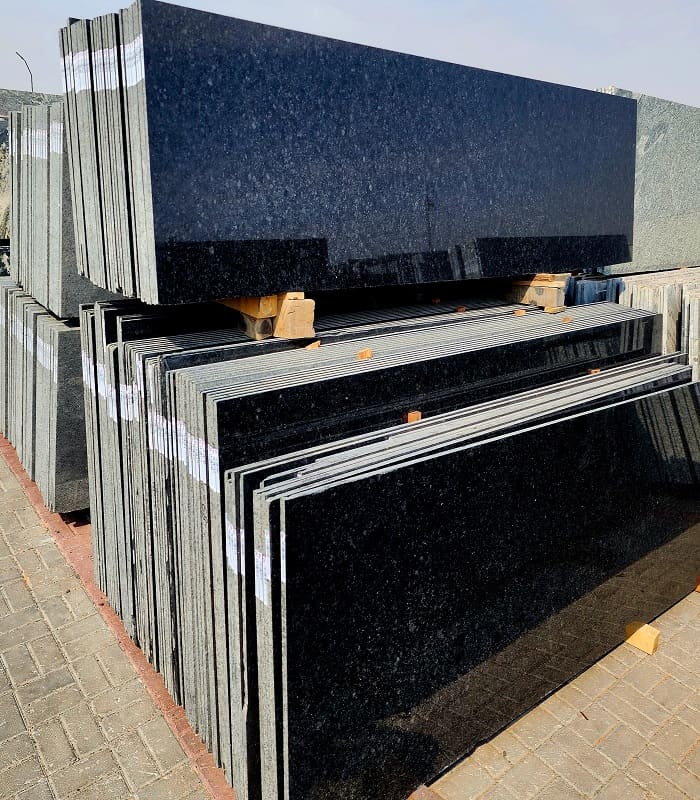
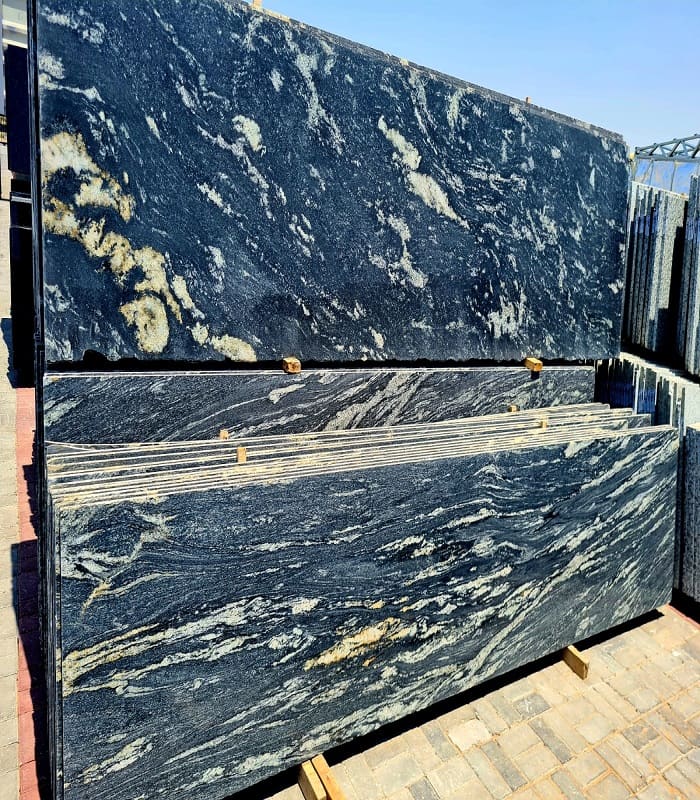
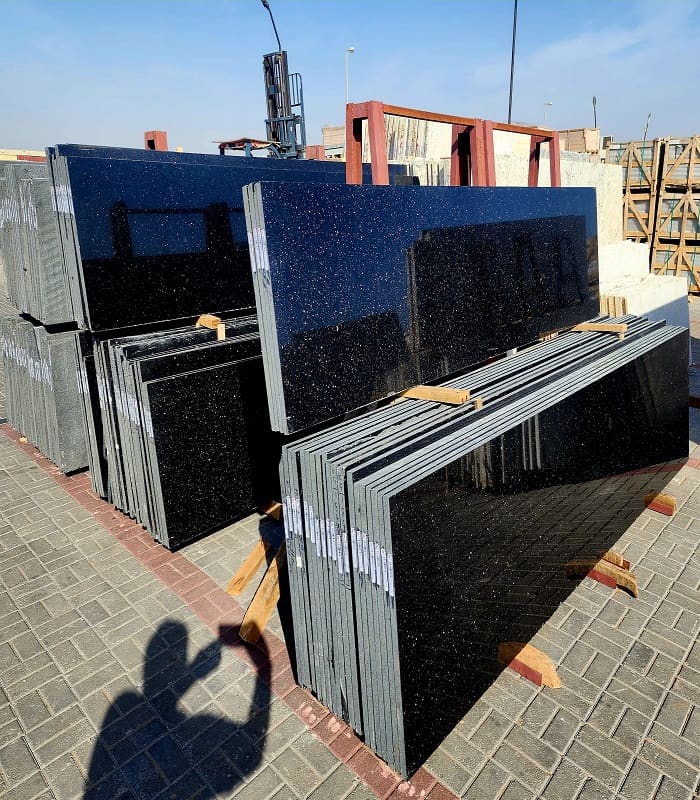
Shown because they are offered as tiles or as slabs that can be cut into floor pieces. Listing does not mean a material has been assessed for your traffic level, finish or slip requirement — confirm with your designer and installer.