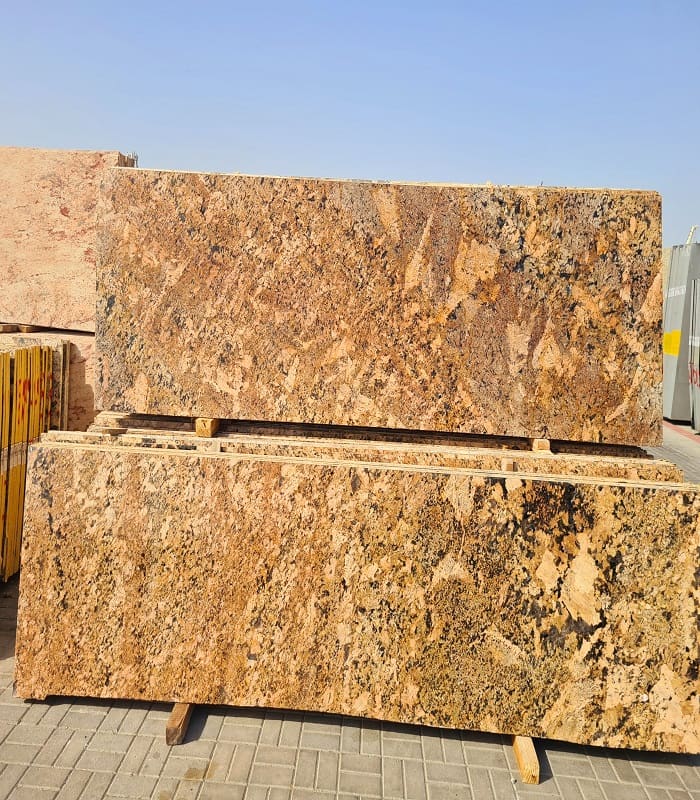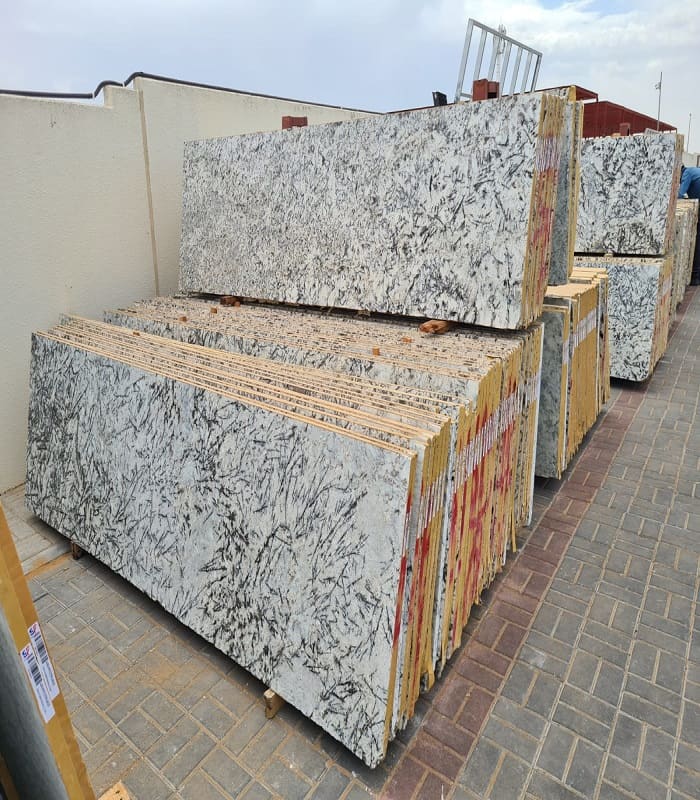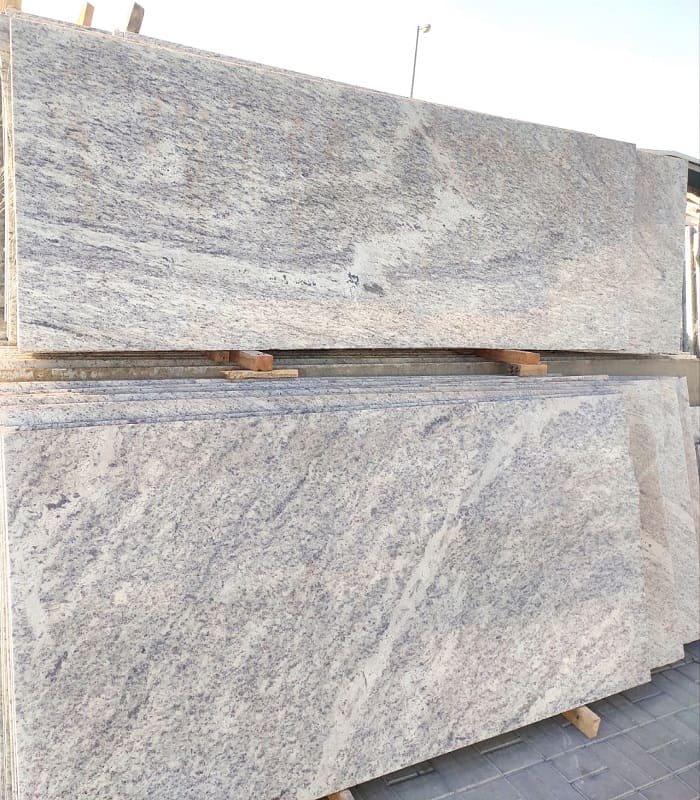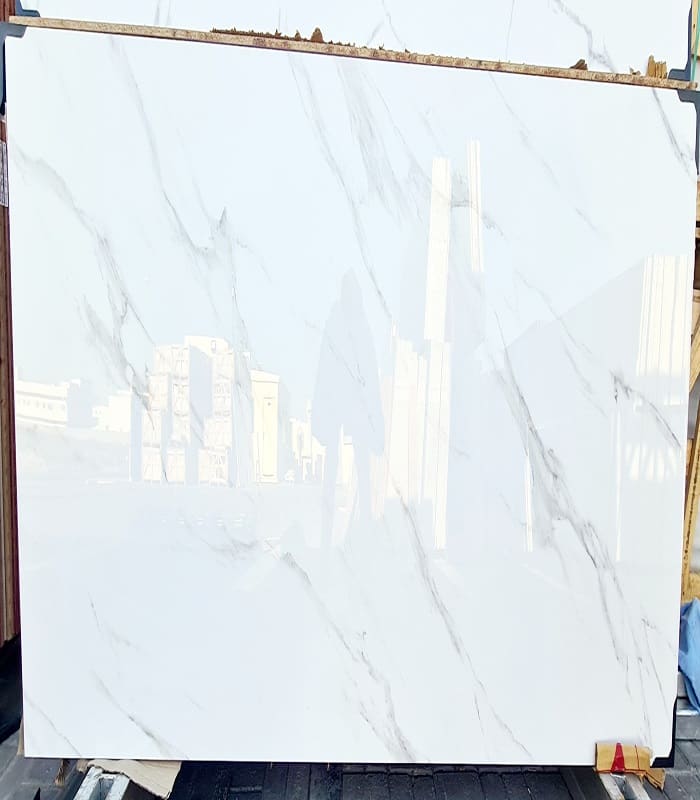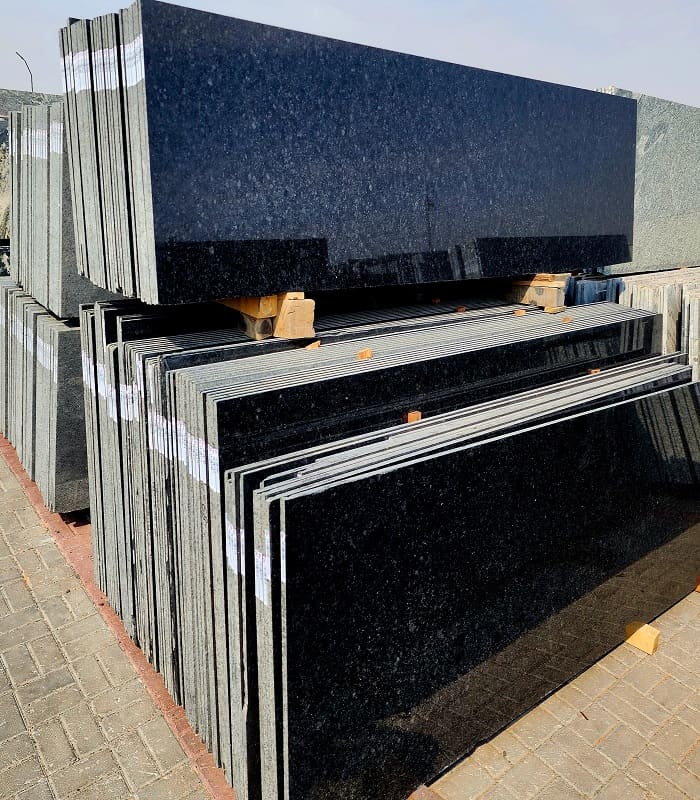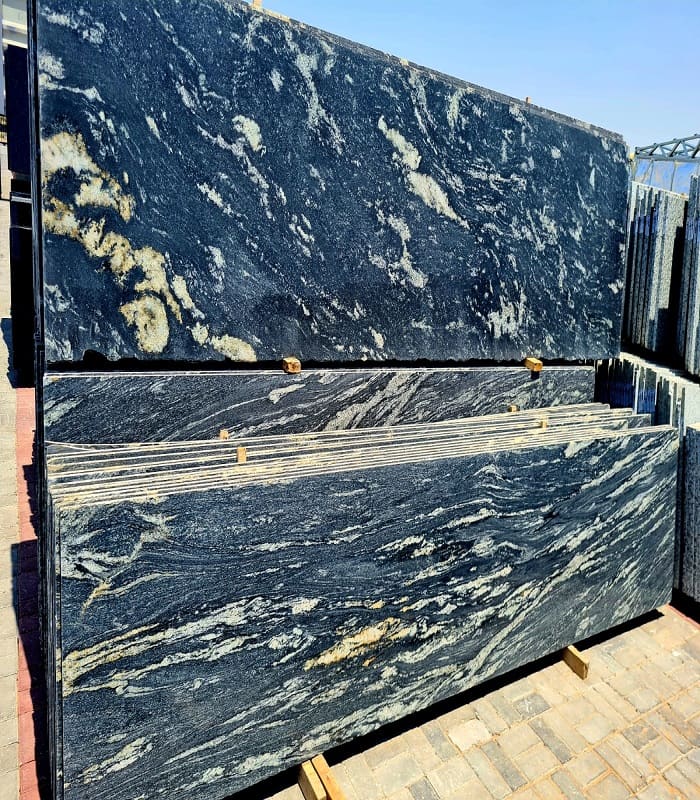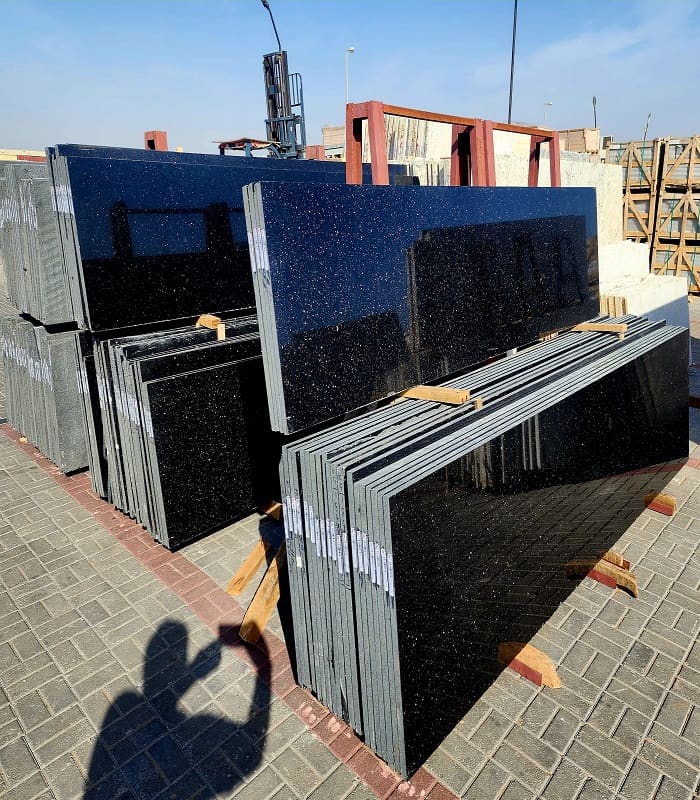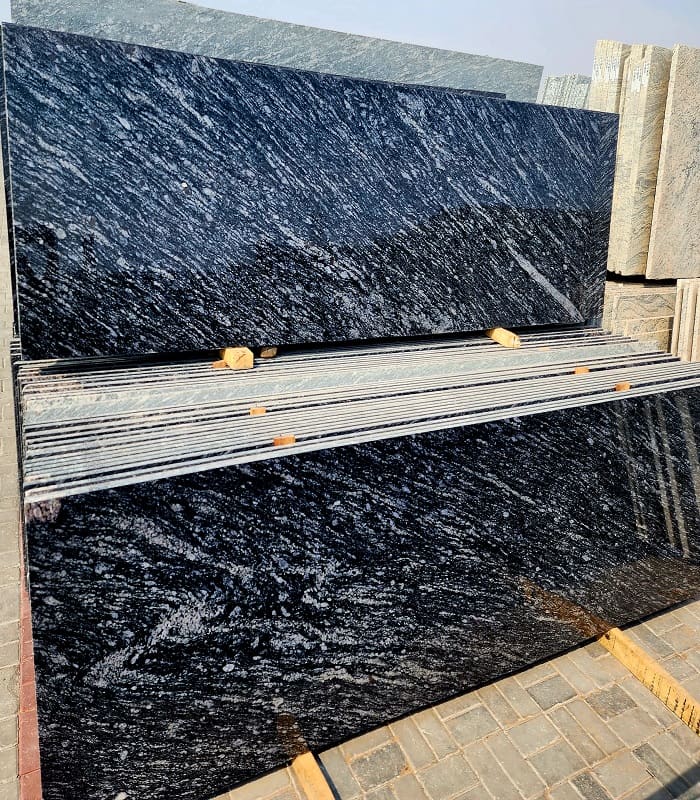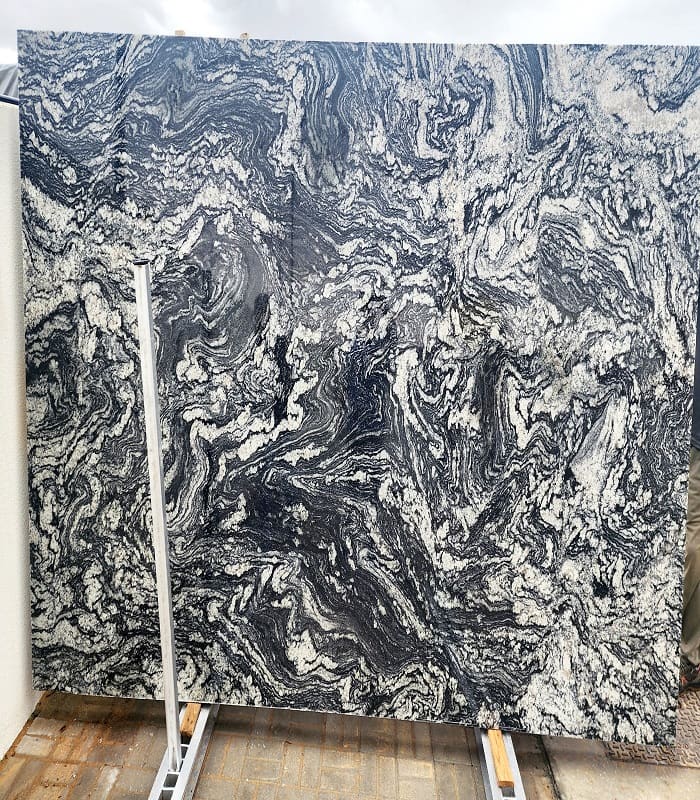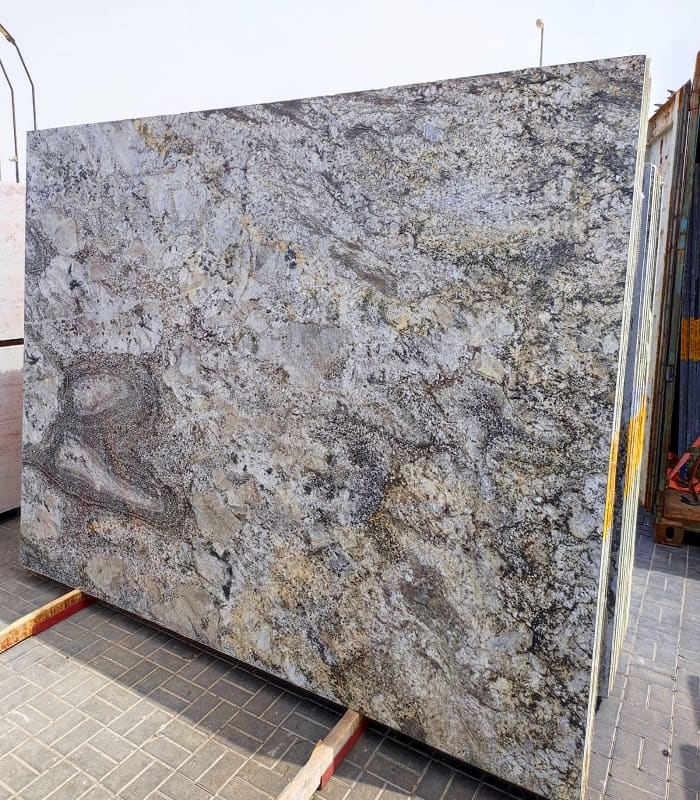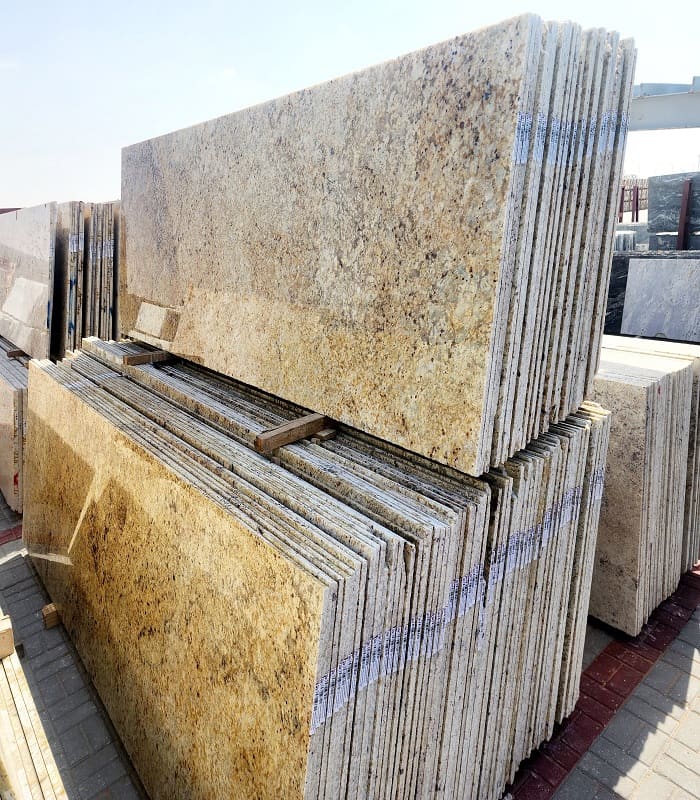
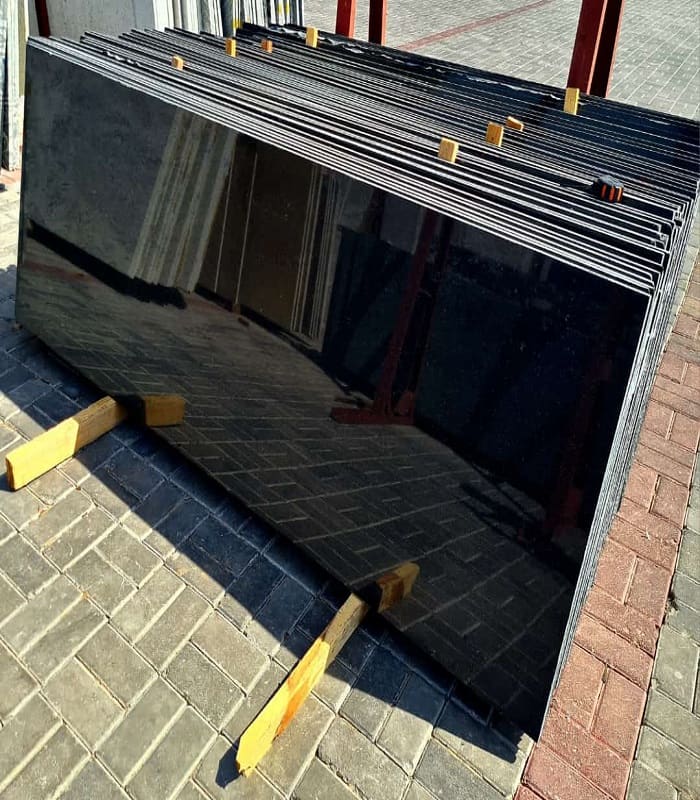
Granite · 6 variants
Application
Moisture, cleaning and sink cut-outs.
A vanity top is a small piece of stone that works hard: it sits under running water, collects toothpaste and cosmetics, and is cleaned with whatever is under the sink. We supply granite cutter slabs and gangsaw slabs, Dark Emperador marble and porcelain slabs that your fabricator can cut into vanity tops.
Because vanity tops are short, several can often be cut from one slab, which helps when you are fitting out more than one bathroom. This page explains what to decide before cutting: basin type, tap position, moisture, cleaning products and support. Supply, slab sizes and price are confirmed in your quotation; fabrication is by your fabricator unless we confirm otherwise in writing.
Water pools around tap bases, behind the basin and along the back edge. Ask for a slight fall towards the basin where the design allows, and a well-made silicone joint where the top meets the wall. Standing water on light, absorbent stone can leave darker patches until it dries.
Many bathroom cleaners and limescale removers are acidic or contain bleach. They can etch marble, dull polished surfaces and wear away sealers. The cleaning routine your household or housekeeping team actually uses should influence the material choice.
An undermount basin needs a cut-out with a finished, polished edge, made to the basin manufacturer’s template. A vessel basin needs only a waste hole and a tap hole. An integrated or moulded basin is a fabrication job in its own right. Choose the basin before ordering stone.
Deck-mounted taps need holes drilled in the top, and their spacing comes from the tap model. Wall-mounted taps keep the stone simpler but must be plumbed before the top is fitted. Changing your mind after cutting usually means a new top.
A wall-hung top relies on brackets or a frame fixed into the wall. Stone is heavy, and the wall type (block or drywall) matters. The bracket design is for your fabricator, joiner or contractor, not something to improvise on site.
Dark Emperador is a marble and is commonly used for vanities, but perfume, some cosmetics, hair products and acidic cleaners can leave dull etch marks on a polished face. Choose it if you accept that it will show use. Black Marquina is listed as granite by the source catalogue, but its trade name is usually associated with marble, so treat its family as unconfirmed. Our porcelain slabs are 15 mm thick; drilling and cutting thin porcelain needs suitable tools and careful handling, and the manufacturer’s guidance is not held by us. Shower walls, shower trays, benches inside showers and wet-room floors are a different application involving waterproofing and slip safety: send those details for technical review with your designer or installer rather than treating them as a vanity.
Finishes are not documented in our catalogue and are confirmed per quotation. A polished vanity top is the easiest to wipe, but on dark stone such as Absolute Black or Black Galaxy it shows white water spots and limescale from hard water quickly. Honed surfaces hide scratches and glare, but they are usually more open, show water rings and may need sealing more often. In a guest washroom that is cleaned daily, polished stone is usually easier to keep looking consistent. See our finishes guide.
Granite and marble slabs are offered in 20 mm and 30 mm, and porcelain slabs in 15 mm. Many vanity tops are 20 mm with a thicker-looking front edge built up by the fabricator. A 30 mm top looks heavier without a built-up edge, but it also puts more weight on wall brackets. The 15 mm porcelain gives a slim profile and usually needs continuous support. Thickness, edge build-up and bracket spacing are decided with your fabricator and installer.
List each vanity separately. Measure the top as it will be finished, including any overhang beyond the cabinet, and note which edges meet a wall. Give figures in metres or millimetres and say which (for example 1.20 m × 0.55 m).
For vanities we ask for a count of pieces, grouped by size: for example “6 tops at 1.20 × 0.55 m, 2 tops at 0.90 × 0.50 m”, plus any upstands. If you are fitting out a building, give the count per bathroom type. From the piece list we can check how many tops each available slab can yield; the final slab count is confirmed with your fabricator’s cutting plan.
We supply the stone. Cutting the tops, basin cut-outs, tap holes, edge polishing and fitting are usually carried out by your fabricator. Some past deliveries have included pieces cut to size, so if you need cut tops rather than slabs, ask in your request and we will confirm whether it can be arranged before quoting.
Natural stone varies across a slab, so two tops cut from opposite ends of the same slab can differ. For one bathroom this rarely matters. For a building with many identical bathrooms, tops will come from several slabs and possibly more than one lot, so decide early whether visible variation is acceptable, and ask for one lot where it matters. Porcelain is manufactured, so its pattern repeats from slab to slab; whether that repeat is noticeable depends on the design. See natural variation.
If your designer, consultant or client needs technical documents such as test reports, data sheets or certificates, list them in your request and we will tell you what can be provided for the materials you choose.
Most vanity stone goes as slabs to the fabricator. If cut pieces are being delivered to site, they should be packed flat or on edge with protection, with cut-outs supported, because the thin strip in front of a basin cut-out is fragile. Tell us the address, offloading arrangements and the receiving contact. Terms are confirmed in your quotation; see delivery preparation.
Ask whether a sample or a yard visit is possible for your shortlisted materials. For vanities, a sample is useful for a simple home test: try your usual soap, toothpaste and cleaner on it and see how it reacts before you commit.
Wipe the top dry after use, especially around tap bases. Use a pH-neutral cleaner; keep limescale removers, bleach and acidic sprays off stone, and rinse if they are spilt. Put perfume bottles and cosmetics on a tray. Check sealing with a few drops of water: if the stone darkens quickly, ask about resealing. Inspect the silicone joint along the wall each year and replace it if it cracks. See the granite care guide.
For a marble look without etching, our porcelain slabs offer Statuario-style and other veined designs at 15 mm; they are dense but thin, so cutting and support need care. Granite is generally harder-wearing than marble and less sensitive to acids, with a more granular look; compare in granite vs marble. If you want a perfectly consistent colour across many bathrooms, engineered quartz is the usual option: see our quartz range, and the granite vs quartz guide sets out the differences.
It is common, but it shows wear. Marble is softer than granite and is etched by acids found in some cosmetics and cleaners. If you want a vanity that keeps an even polish with less attention, granite or porcelain is usually easier.
Often, yes. It depends on the slab size in your chosen lot and on your piece sizes. Send the list and we will check against the slabs available.
Not necessarily. Many floating tops are 20 mm with a built-up front edge. The deciding factors are the bracket design, the wall and the overhang, which your fabricator or installer should assess.
Our standard supply is slabs. If you need cut tops, ask in your request and we will confirm whether it can be arranged before quoting.
From the catalogue
Shown because they are offered in slab formats that can be cut into vanity tops. Being listed here does not mean a material has been assessed for your bathroom — confirm the choice with your fabricator.