Granite · 6 variants
Application
Tread dimensions, edges and slip considerations.
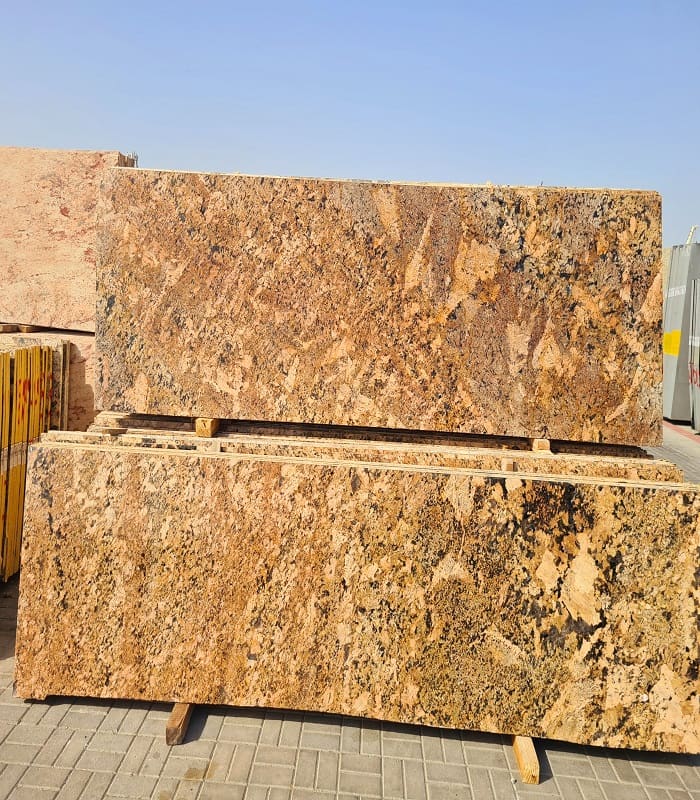
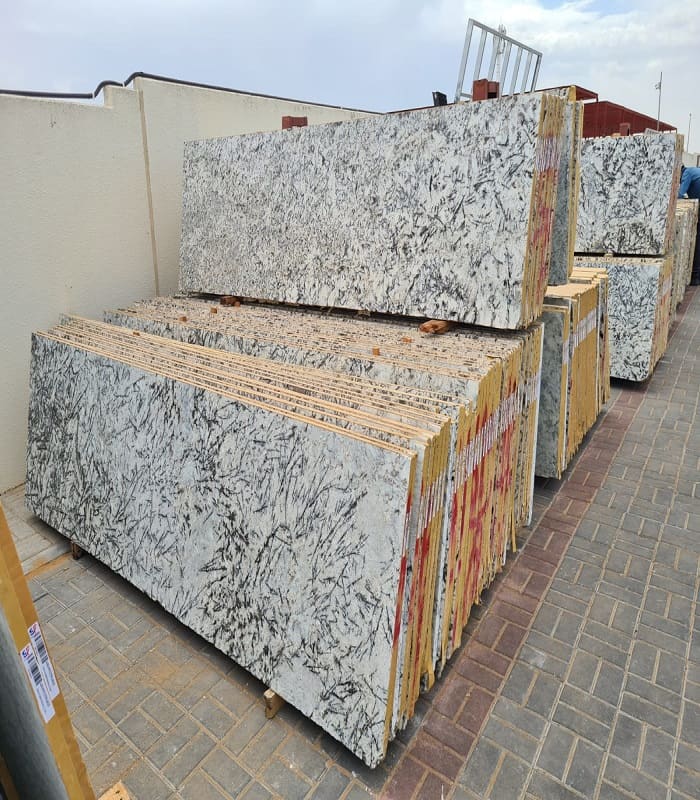
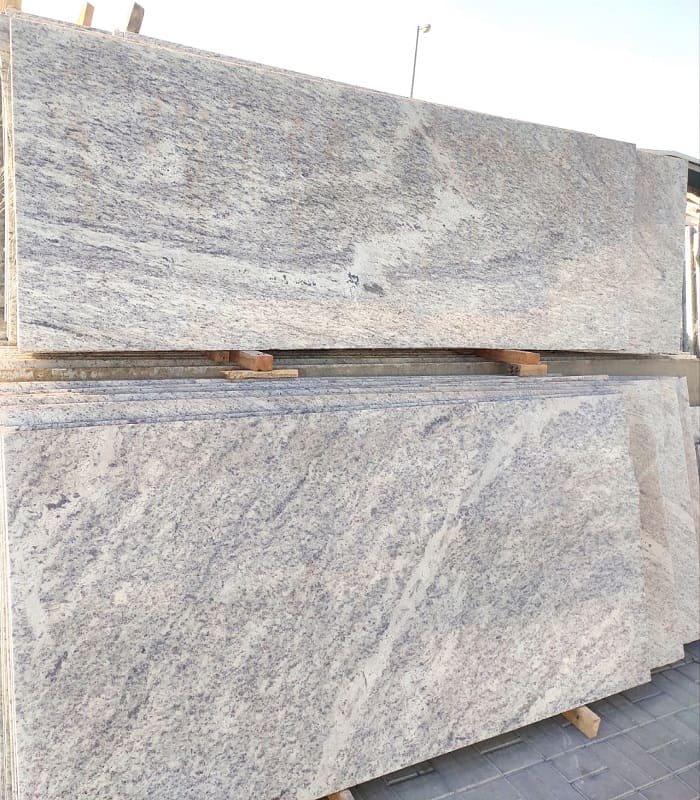
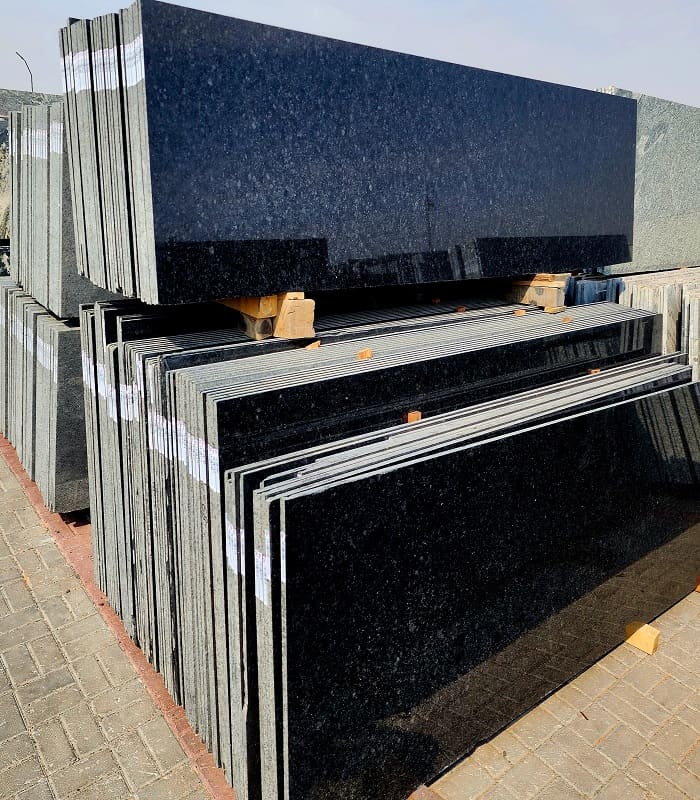
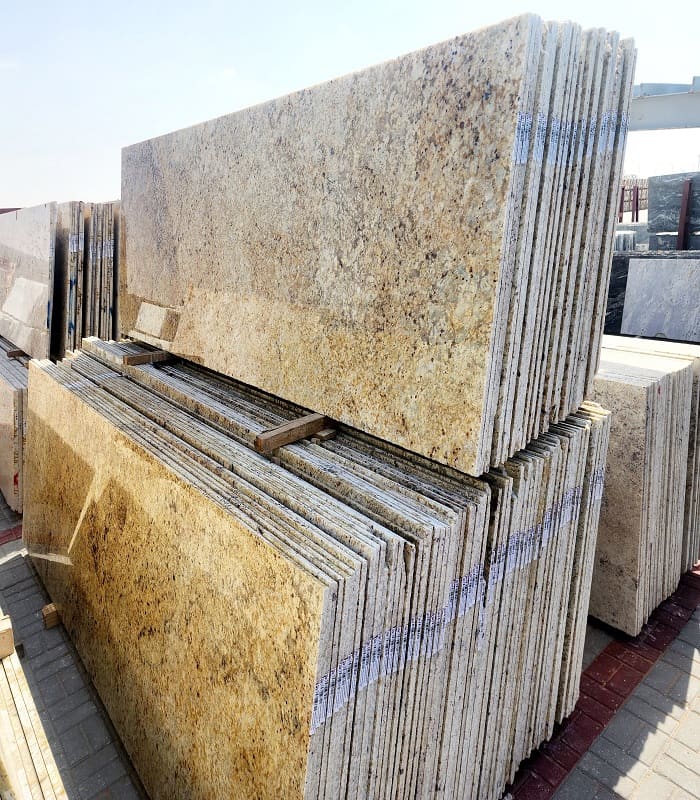
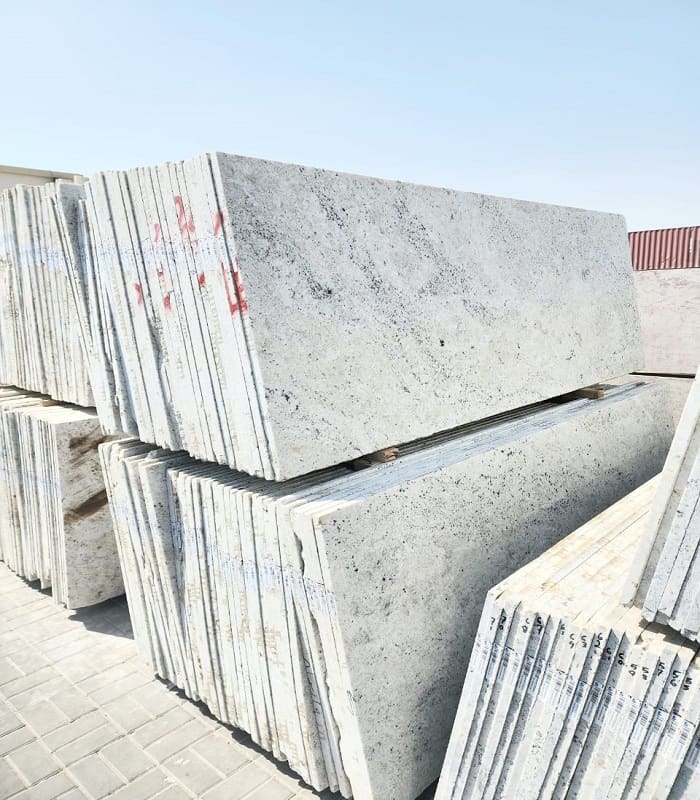
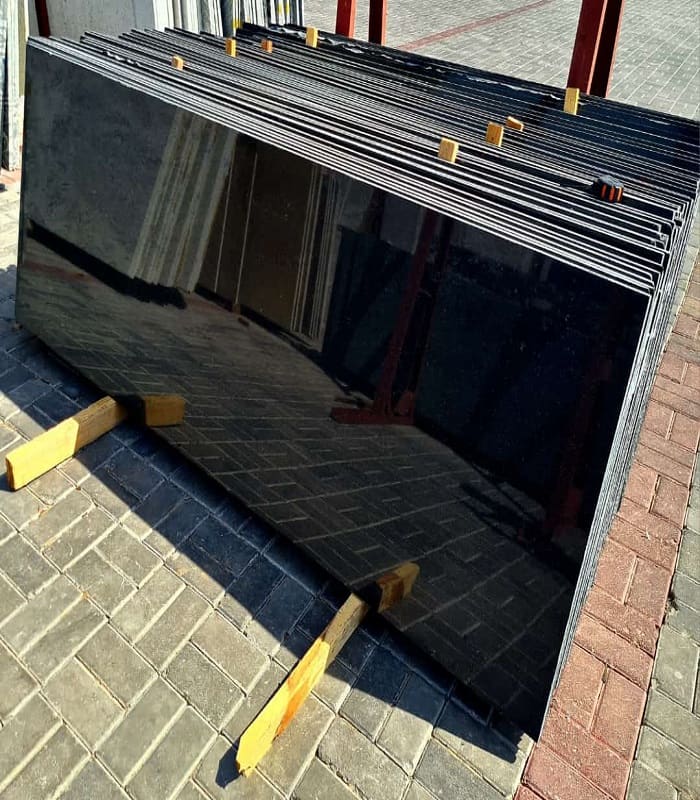
Our catalogue lists granite steps in four materials, all 30 mm: Black Galaxy, Colonial Gold, Colonial White and Viscon White. For other granites, treads, risers and landings can be cut by your fabricator from cutter slabs or gangsaw slabs. Step sizes are confirmed with your quotation.
Stairs are where small errors are most noticeable and most risky. This page covers measuring each step, nosing and edge choices, slip considerations and how to list pieces. Slip safety and any structural question about a stair are for your designer or engineer, not something the stone choice settles.
Concrete stairs are rarely perfectly regular. Measure the width, going (depth) and rise of each step rather than assuming they match, and number them from the bottom. Uneven risers are a trip hazard that stone cannot hide, so they should be corrected in the structure or bedding.
The front edge takes the knocks. Common options are a rounded or bullnose edge, a small chamfer, or a square edge with a slight arris; the fabricator cuts these. Decide how far the nosing projects over the riser, and keep it the same on every step.
Most slips on stairs happen at the front edge. Grooves cut near the nosing, inserted anti-slip strips or a textured band are common measures. Which one is needed depends on use and on whether the stair can get wet, which your designer decides.
Landings are larger than treads and may need cutting from slabs, which affects material choice. Decide whether risers and stair skirting (stringers) are in the same stone, and which way any pattern runs, before ordering.
Strongly patterned or very dark treads can make the edge of each step hard to see. A contrasting nosing strip or lighting is sometimes added for that reason; ask your designer.
External stairs, stairs near pools, and stairs in public or commercial buildings have slip and safety requirements set by the designer and local authority; we hold no slip test data, so those cases need technical review with test evidence. Cantilevered, floating or spiral stairs, and any tread spanning between supports rather than bedded on concrete, are structural and must be designed by an engineer. Dark Emperador marble is softer than granite and its nosings wear and dull faster on a busy stair. Our porcelain slabs are 15 mm and are not offered as stair treads; porcelain stair products are specific manufactured items. Black Marquina’s family is unconfirmed, so check it before relying on granite assumptions.
Finishes for the listed steps are not documented and are confirmed in your quotation. In general, polished treads look sharp but can be slippery when wet, dusty or in socks; honed treads are less reflective and usually less slippery, though not automatically suitable for wet stairs. A polished tread with grooves or a textured strip near the nosing is a common compromise indoors. Agree the finish with your designer; see our finishes guide.
The four step products are 30 mm. Treads cut from slabs can be 20 mm or 30 mm. A 30 mm tread is common on stairs because it gives a solid nosing and tolerates impact; a 20 mm tread is usually fully bedded and may be given a built-up front edge. A tread that bridges a gap, overhangs significantly or forms part of a floating stair needs an engineer’s design, whatever the thickness.
Number the steps from the bottom and measure each one. Give widths and depths in metres or millimetres (say which), and note any tapered or winder steps separately with a sketch. Include landings and the side skirting if they are in stone.
List stair items as pieces: the number of treads, risers and landings, each with its size, and any skirting in linear metres. Treads of the same size can be grouped (“14 treads at 1.20 × 0.33 m”). Ask your contractor whether to order one or two spare treads from the same lot, since a broken nosing is hard to match later.
We supply steps and slabs. Cutting treads to the sizes of your stair, nosing profiles, grooves and fixing are normally done by your fabricator and installer. Some past deliveries were cut-to-size steps, landings and skirting, so if you need pieces cut to your schedule, ask and we will confirm whether it can be arranged before quoting.
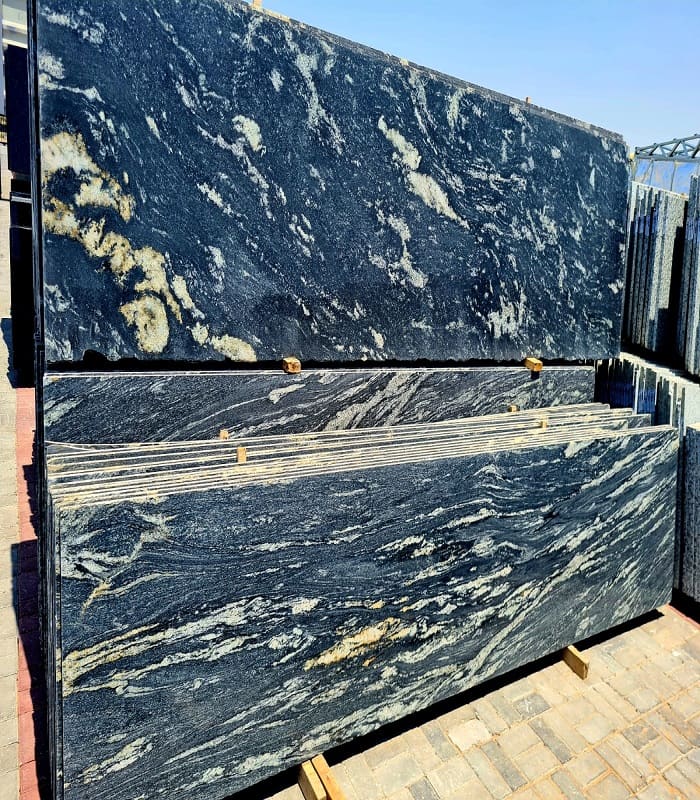
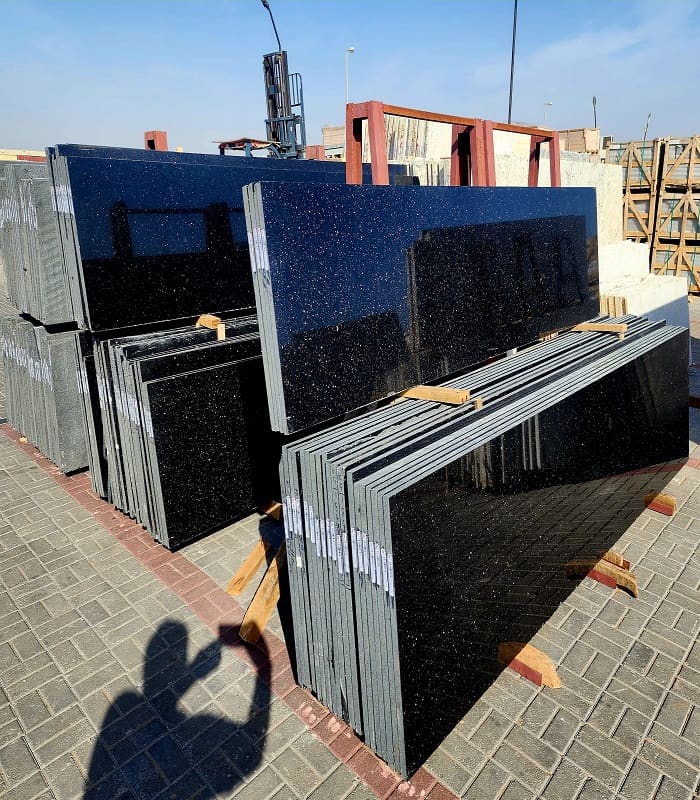
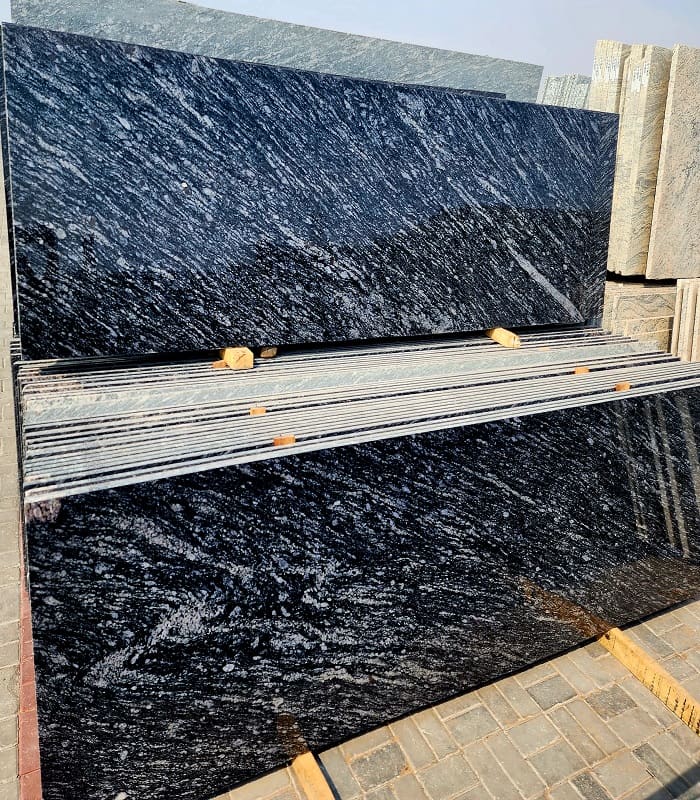
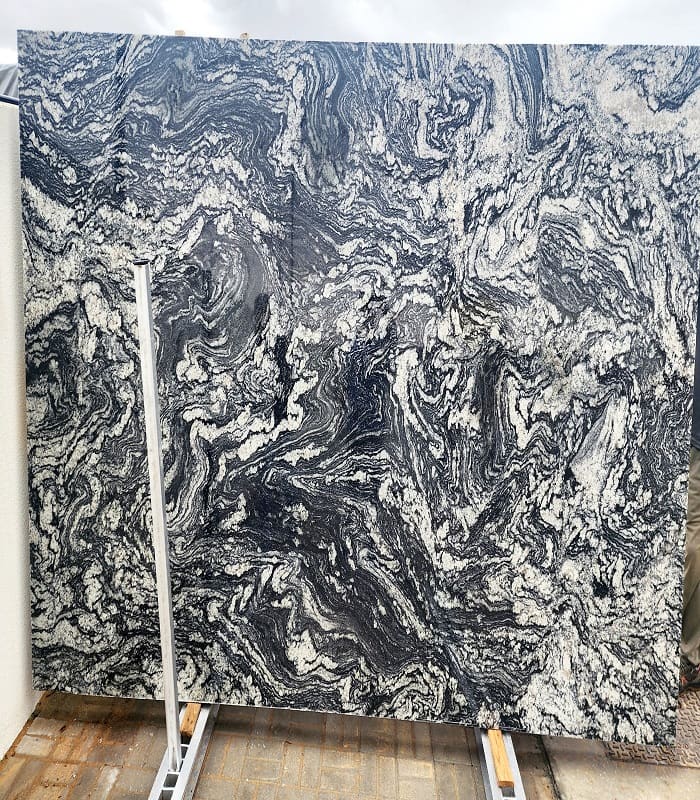
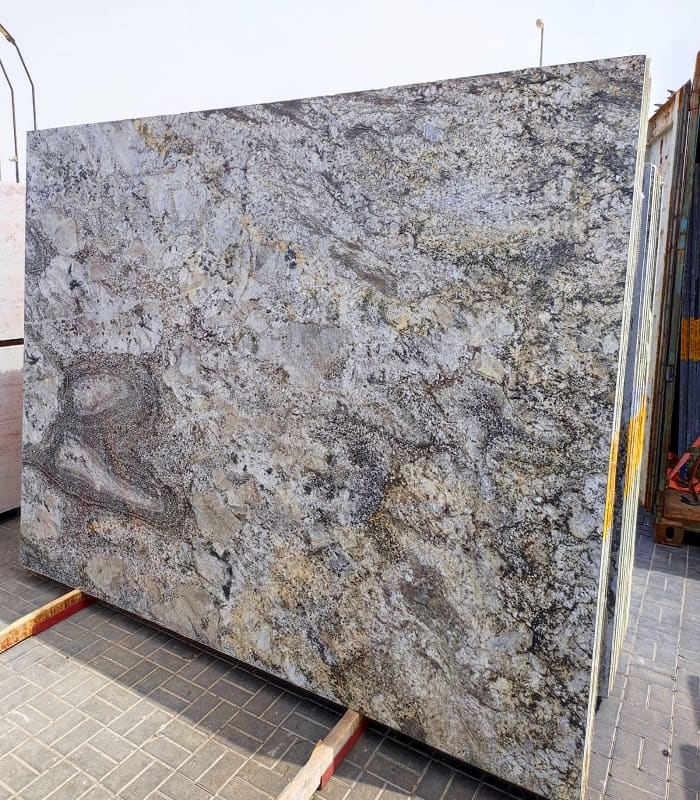
On a stair, treads sit side by side and one above another, so differences between pieces are easy to compare. Even, speckled materials such as Black Galaxy and Colonial White generally hide variation better than strongly patterned ones such as Viscon White, whose bands change markedly from slab to slab in our photographs. Lay out the treads before fixing and arrange them so that changes are gradual. See natural variation.
If your designer, consultant or client needs technical documents such as test reports, data sheets or certificates, list them in your request and we will tell you what can be provided for the materials you choose.
Treads are heavy and their finished nosings chip easily, so they should travel with edge protection and be stored flat or on edge on timber, not on bare concrete. If pieces are cut to a schedule, ask for each one to be labelled with its step number. Agree who carries them to upper floors. Terms are confirmed in your quotation; see delivery preparation.
Ask whether a sample or a yard visit is possible. For stairs, seeing a full step piece is particularly useful, because it shows the nosing thickness and how the pattern sits at the front edge.
Grit wears nosings first, so sweep or vacuum stairs regularly. Clean with a pH-neutral cleaner and do not leave stairs wet after mopping; clean one side at a time if the stair is in use. Check anti-slip grooves or strips and keep them free of dirt and wax. Avoid polishes that increase gloss, which can make treads more slippery. See the granite care guide.
Ready steps in Black Galaxy, Colonial Gold, Colonial White or Viscon White are the most direct option in our range. Treads cut from slabs widen the choice of colour, at the cost of fabrication. Marble treads give a softer, warmer look but wear faster at the nosing; see granite vs marble. For external steps, also read our landscape detailing and outdoor paving pages, and involve your designer early.
Our catalogue lists four step products, all 30 mm. Send your tread schedule and we will confirm what is available and whether the pieces suit your stair.
Usually your fabricator can cut treads from cutter or gangsaw slabs of that granite. Send the material name and your sizes so we can check slab availability.
It depends on who uses the stair, whether it can get wet and the finish. Your designer should decide, ideally with test data for the chosen finish. We do not hold slip ratings.
They often do, but a contrasting riser can help people see each step. It is a design decision; let us know so the riser quantity is included.
From the catalogue
Shown because they are offered as ready steps or as slabs that fabricators commonly cut into treads, risers and landings. Listing does not confirm that a material or finish meets the slip or structural requirement of your stair — your designer confirms that.