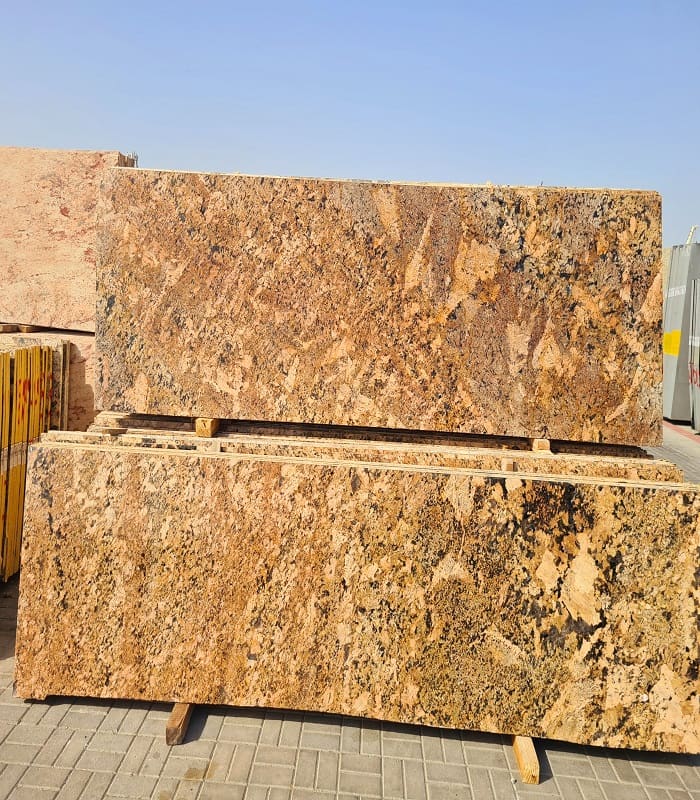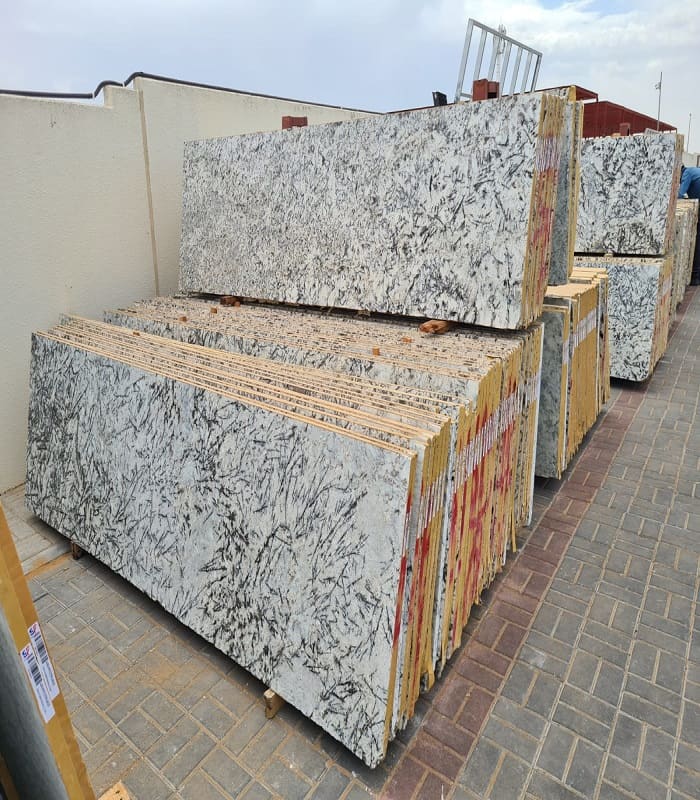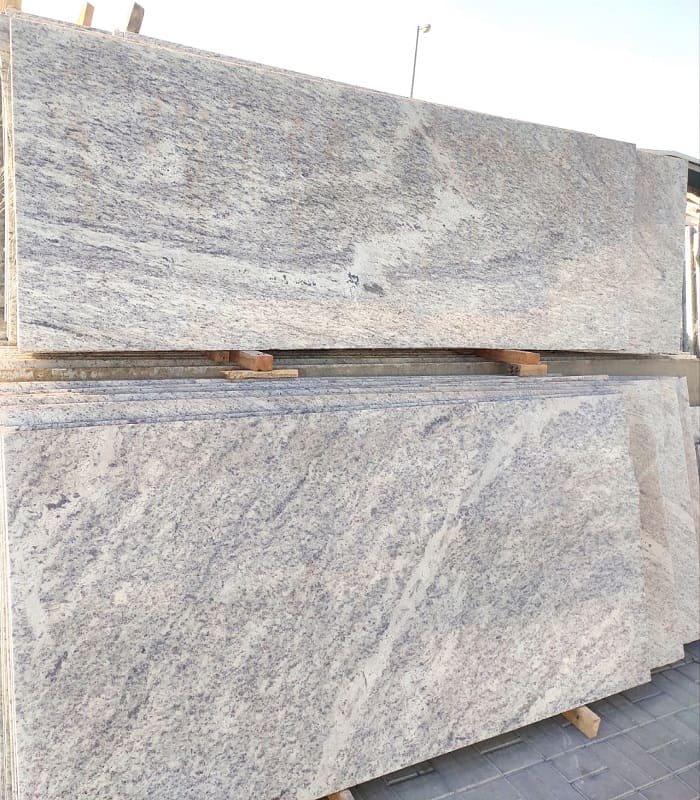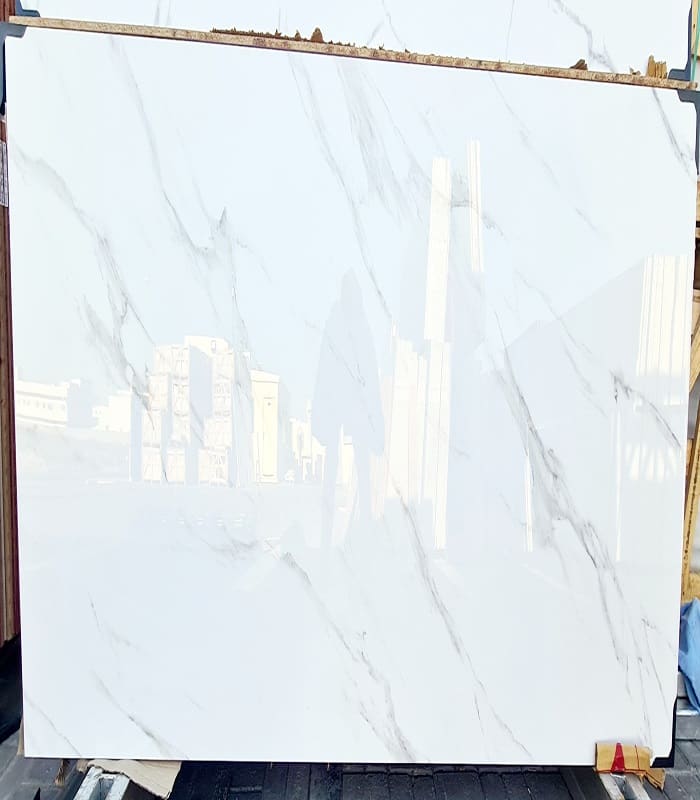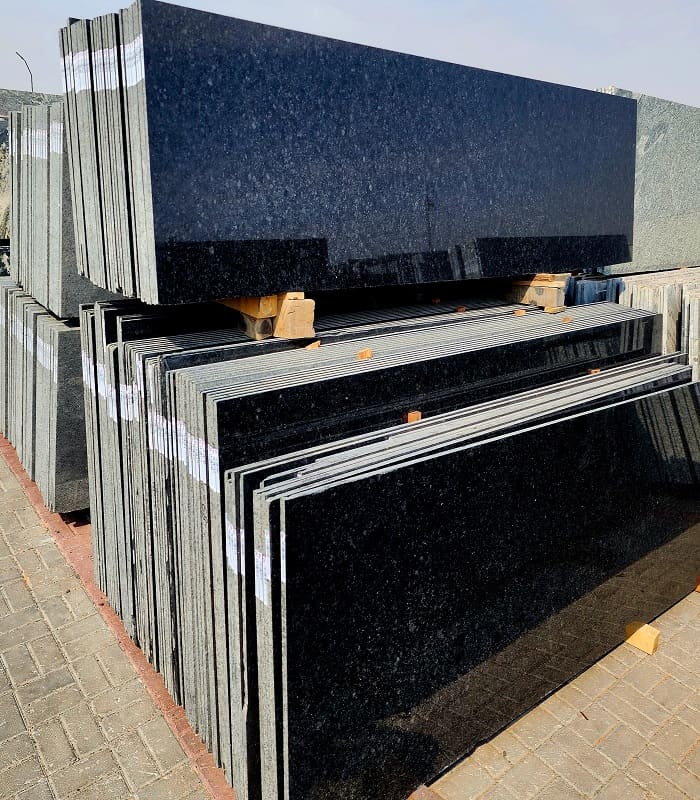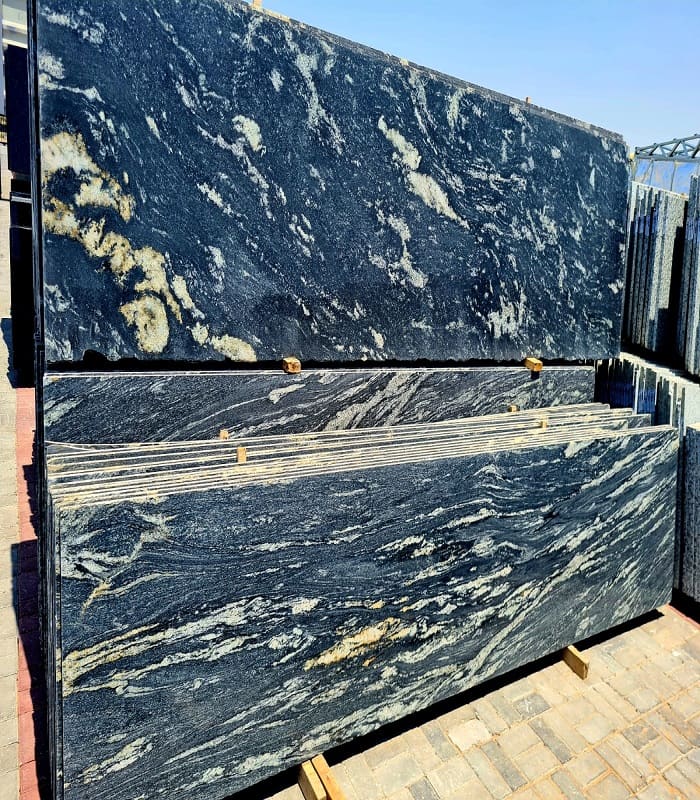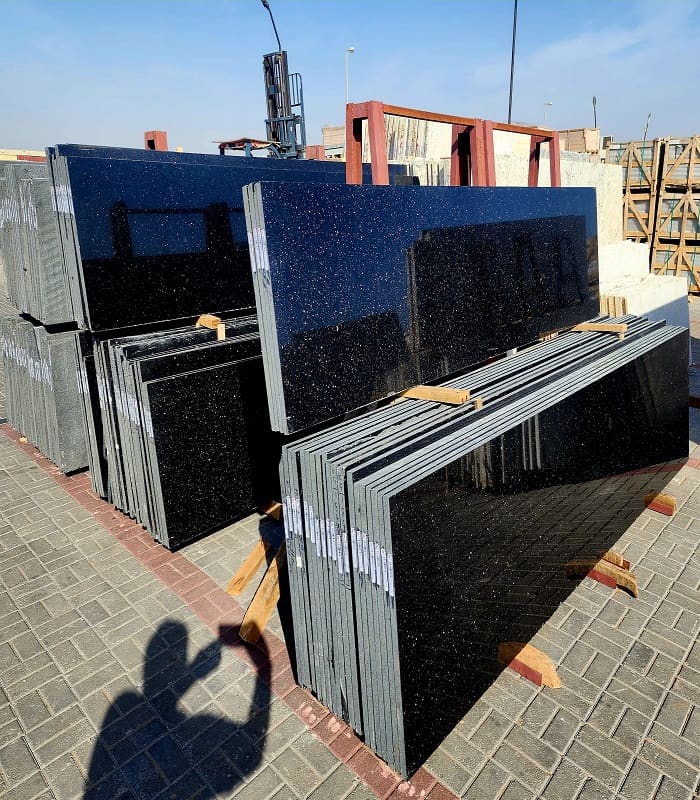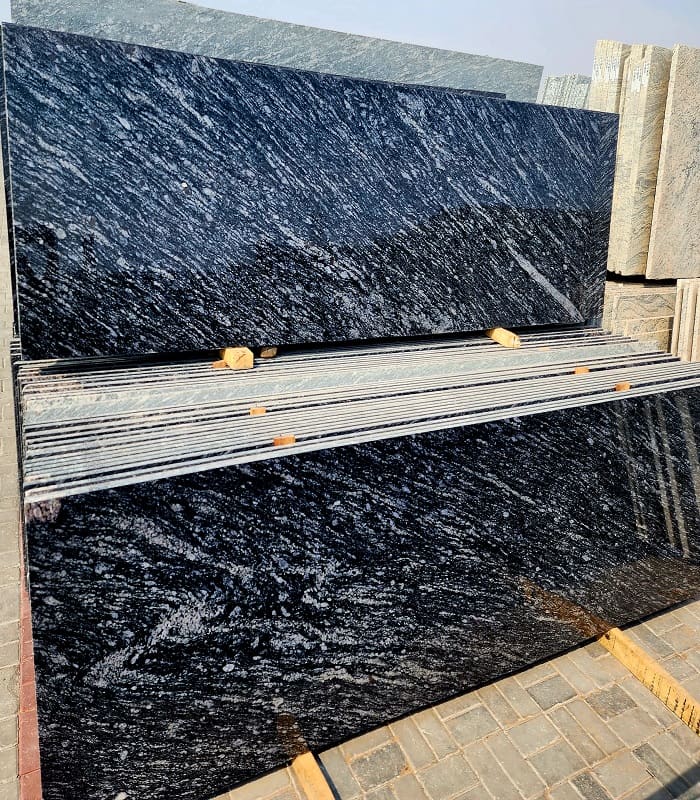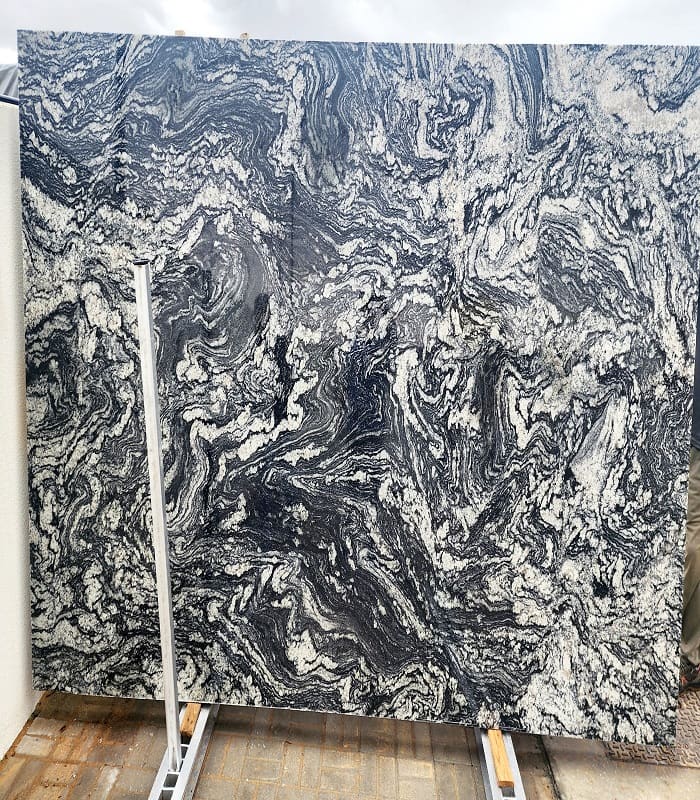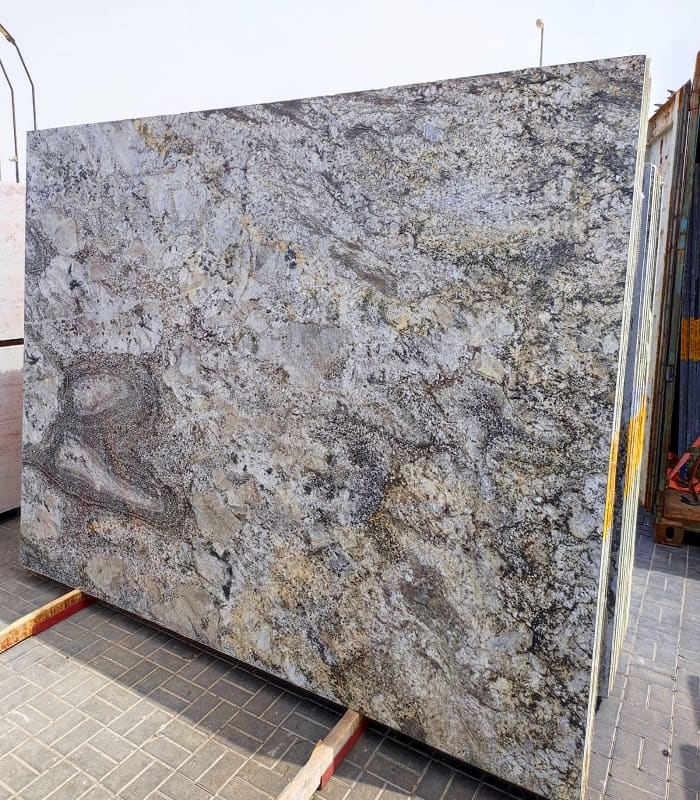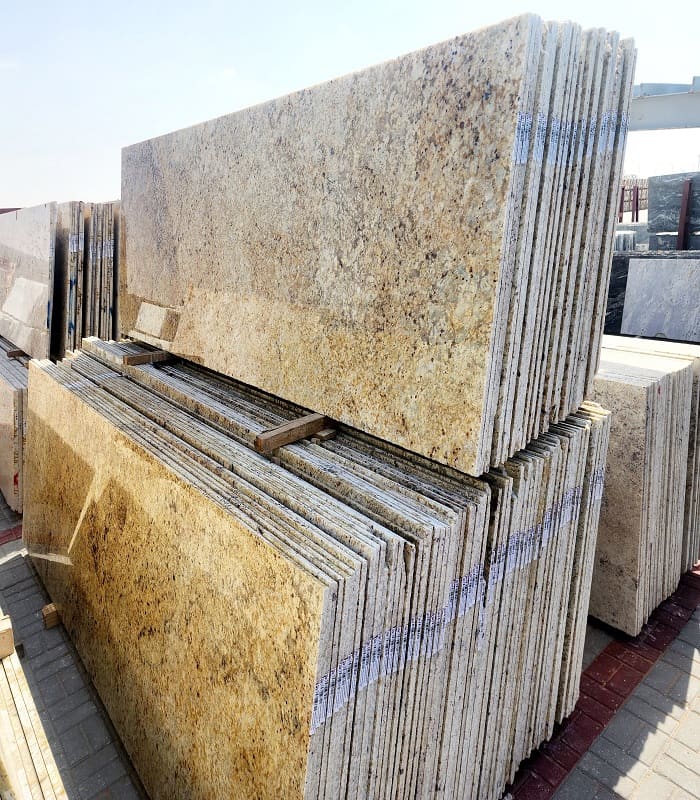
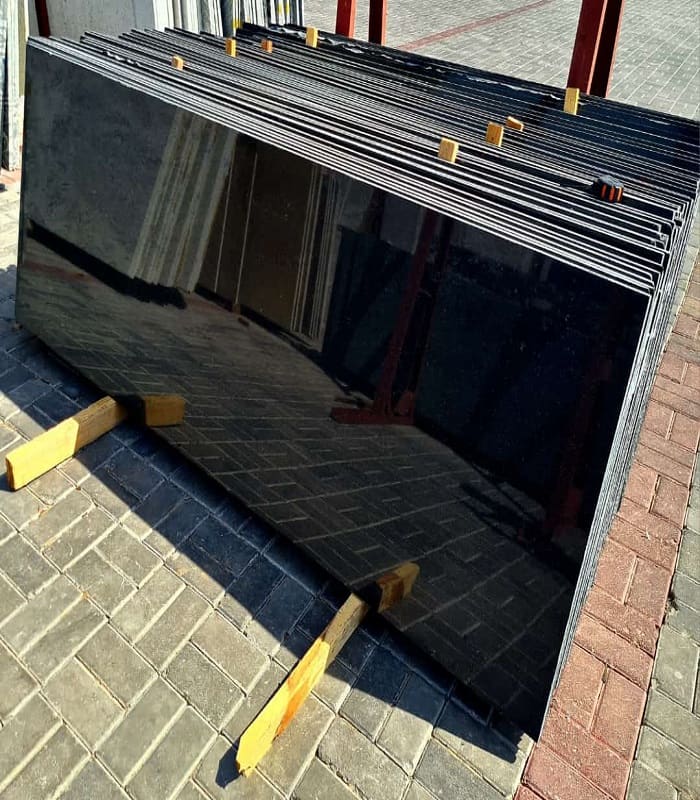
Granite · 6 variants
Application
Public wear, branding and joint placement.
A reception counter is the first surface visitors touch. It takes bags, keys, elbows and leaning all day, and it is usually longer than a single slab. We supply granite gangsaw and cutter slabs, Dark Emperador marble and porcelain slabs that a fabricator or joinery contractor can make into counter tops, fronts and side panels.
This page covers the practical side: where wear happens, how branding is handled, and where joints should fall on a long counter. The counter frame, fixings and any cantilevered ledge are designed by your joiner, fabricator or engineer; stock and price are confirmed in your quotation.
The transaction ledge and its front edge take most of the wear: bags are dragged across it, rings and keys scratch it, and corners get knocked by luggage and trolleys. Rounded or slightly eased edges and corners chip less than sharp ones.
Logos can be engraved, inlaid or cut by water-jet, but that is specialist fabrication. Natural stone also cannot be matched exactly to a brand colour; if the counter must match a brand palette, choose the stone from the actual slab, not from a colour reference.
Most reception counters are longer than one slab. Place joints where they line up with the frame supports and away from the main transaction point, and keep top and front joints aligned. On veined stone, plan the slab sequence so the pattern continues.
Stone fronts and tops are heavy, so the joinery frame must be designed for them, with access panels for cables, power and IT. Agree who designs the frame and who fixes the stone before ordering.
Many counters include a lower section for wheelchair users and children. Its height and knee space are a design requirement for your architect; it also changes the number and size of stone pieces.
Cantilevered transaction ledges, overhanging tops and heavy stone fronts on joinery frames need brackets and frames designed by your fabricator, joiner or an engineer. Backlit counters are not possible with these materials, which are opaque. Dark Emperador marble on a busy transaction top will show scratches and etch marks from drinks and hand sanitiser, so it is usually better on fronts and side panels than on the working surface. Thin 15 mm porcelain needs continuous support and careful edge detailing. Black Marquina’s family is unconfirmed. Curved counters need fabricator templating and may waste a lot of stone. Send drawings for technical review where any of this applies.
Finishes are not recorded in our catalogue and are confirmed in your quotation. A polished top is easy to wipe and looks crisp, but it shows fingerprints and scratches, especially on dark stone, and it reflects ceiling lights into the eyes of staff. A honed top hides marks and glare but needs more attention to spills. Many counters use one finish on the top and another on the front; ask your designer. See our finishes guide.
Slabs are offered in 20 mm and 30 mm, porcelain in 15 mm. Tops are often 30 mm, or 20 mm with a built-up edge, for a solid look and impact resistance at the front edge; fronts and side panels are often thinner to save weight on the frame. Your fabricator and joiner decide the thickness for each piece based on the frame, spans and edge details.
Send a plan and a section of the counter if you have them. Otherwise measure the length along the front, the height and the depth of the top and the transaction ledge, in metres, and sketch any corners or curves.
We ask for reception counters in linear metres (lm) of counter, together with the plan and section, because the stone is a set of related pieces (top, ledge, front and sides) rather than a simple area. From that we can check slab sizes and estimate how many slabs the pieces need; your fabricator confirms the final count from the cutting plan.
We supply the slabs. The joinery frame, cutting, edge work, branding details and installation are by your joinery contractor or fabricator. If you need pieces cut to size, ask in your request and we will confirm whether it can be arranged before quoting. We do not design counter frames or fixings.
On a long counter, adjoining pieces are seen together at close range, so differences between slabs are obvious. Ask for slabs from the same lot and, if possible, consecutive slabs for veined materials. Even or finely speckled stone generally makes joints easier to hide than bold movement. See natural variation.
If your designer, consultant or client needs technical documents such as test reports, data sheets or certificates, list them in your request and we will tell you what can be provided for the materials you choose.
Counters in malls, hotels and offices are often delivered outside trading hours through service routes with limited lift sizes. Confirm the route, booking requirements and the longest piece that can pass through it before cutting. Delivery terms are confirmed in your quotation; see delivery preparation.
Ask whether a sample or a yard visit is possible. For a branded counter, a sample is useful to check the stone next to your brand colours and other finishes under the lighting you plan to use.
Wipe the counter daily with a soft cloth and a pH-neutral cleaner. Hand sanitiser, coffee and soft drinks should be wiped off promptly, especially on marble. Avoid sticky tape for temporary signs, which can leave residue on honed stone. Use felt pads under card terminals and display stands. See the granite care guide.
Granite is generally the harder-wearing choice for the working top; marble suits fronts where it is touched less. Porcelain slabs give a lighter, marble-look front panel and a repeatable pattern across several branches, but need careful edge detailing. For a uniform brand colour that natural stone cannot match, engineered quartz is a common alternative: see our quartz range, and the granite vs quartz guide explains the differences.
Only if each piece fits within one slab. Long counters usually need joints; a skilled fabricator places and matches them so they are discreet.
Logo work is specialist fabrication. We supply the stone; ask your fabricator, and tell us in your request if you need us to check whether cutting can be arranged.
Marble shows wear on working surfaces. Many designers use marble on fronts and side panels and a harder-wearing granite on the top.
Send a plan and section, or the length in linear metres with the height and depths. A sketch is fine for a first quotation.
From the catalogue
Shown because they are offered as slabs that can be cut into counter tops and panels. Inclusion is not an assessment of any material for heavy public use — confirm with your designer and fabricator.