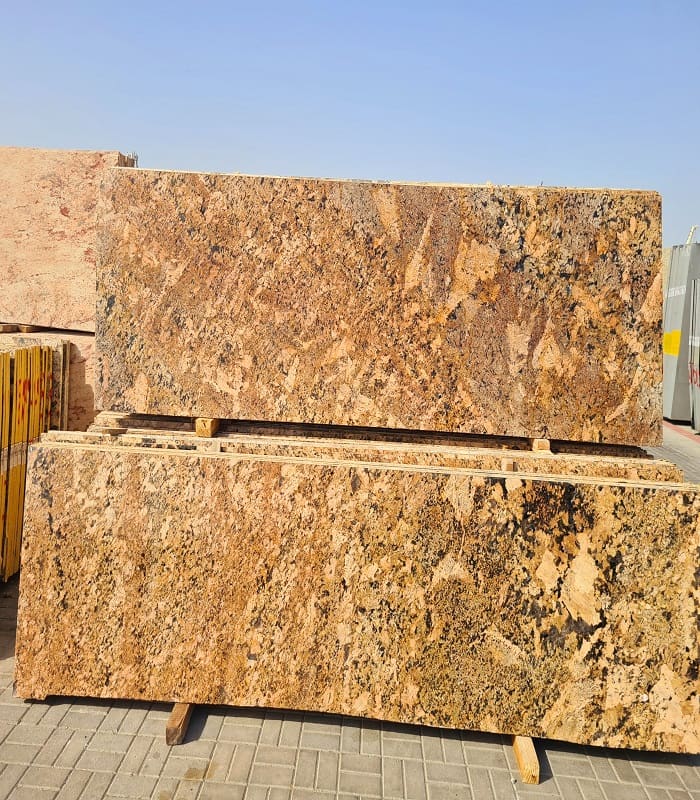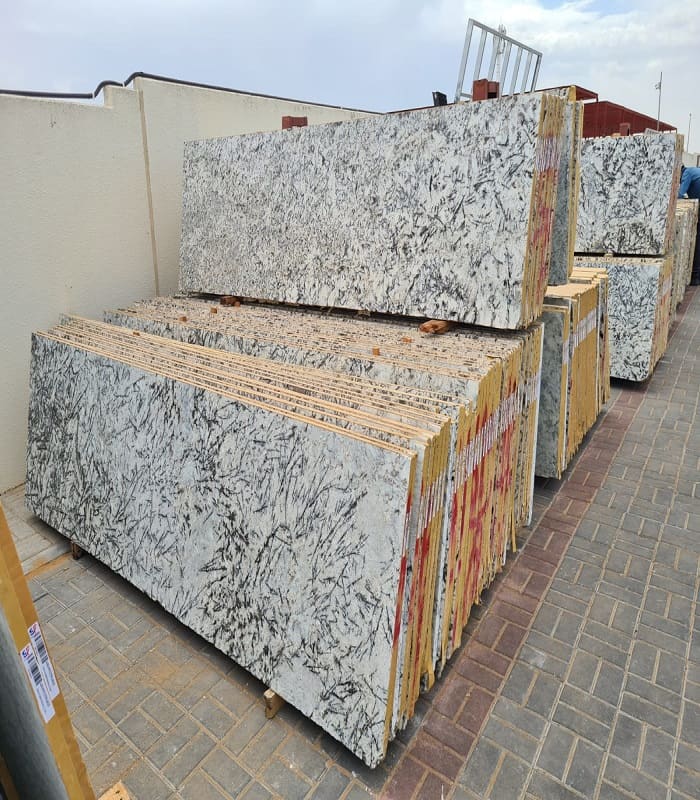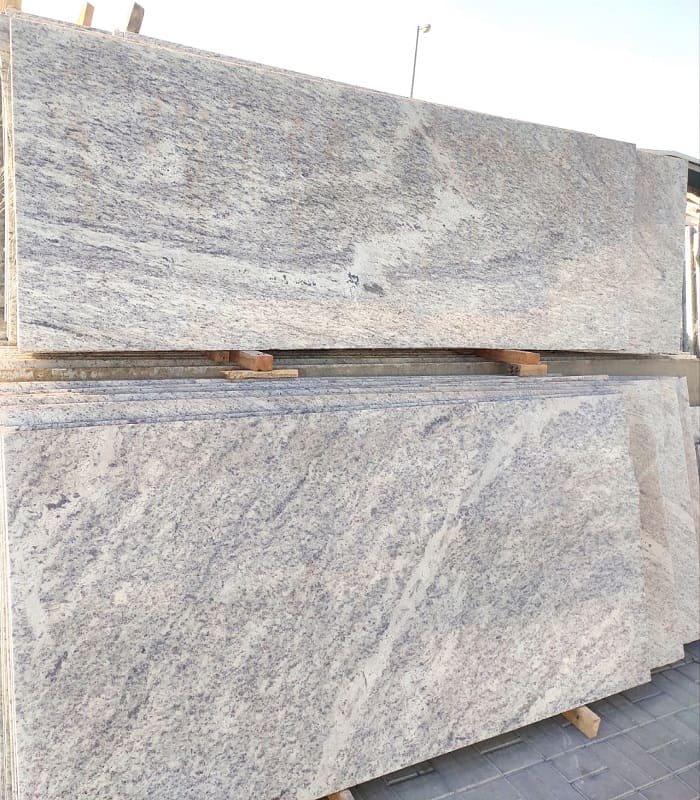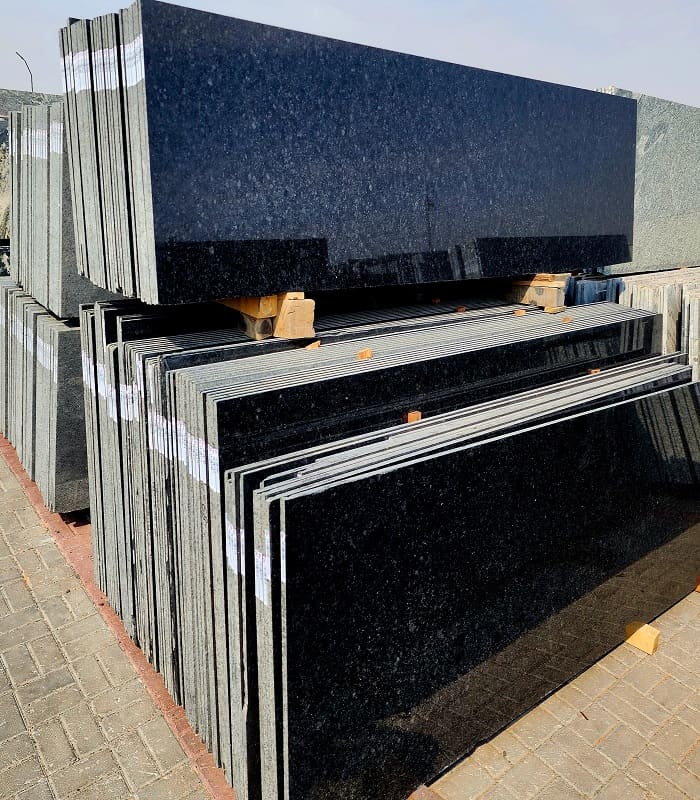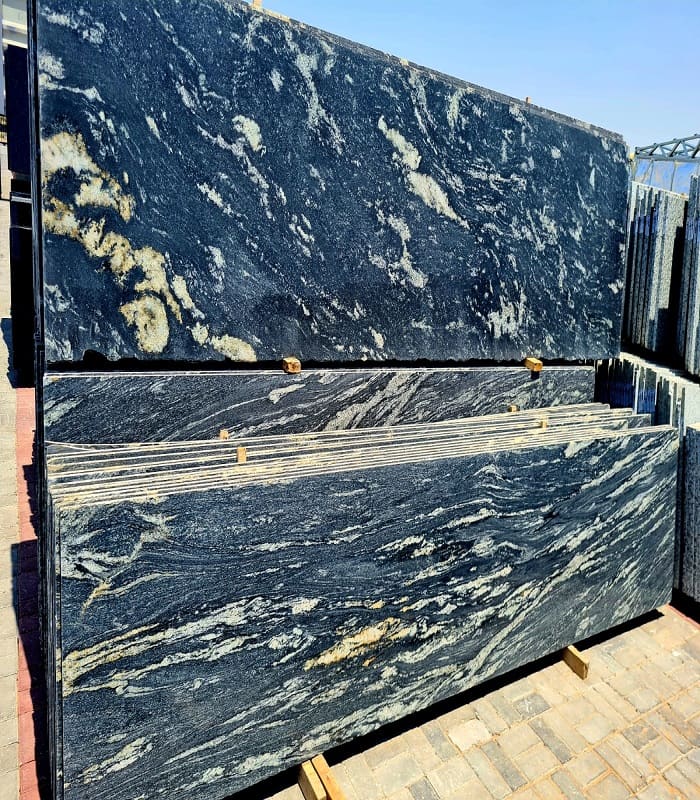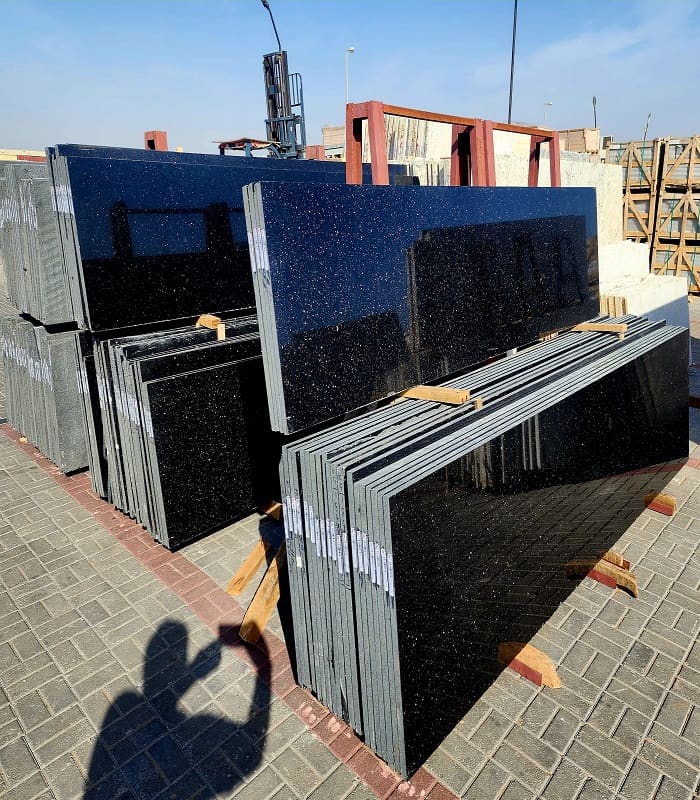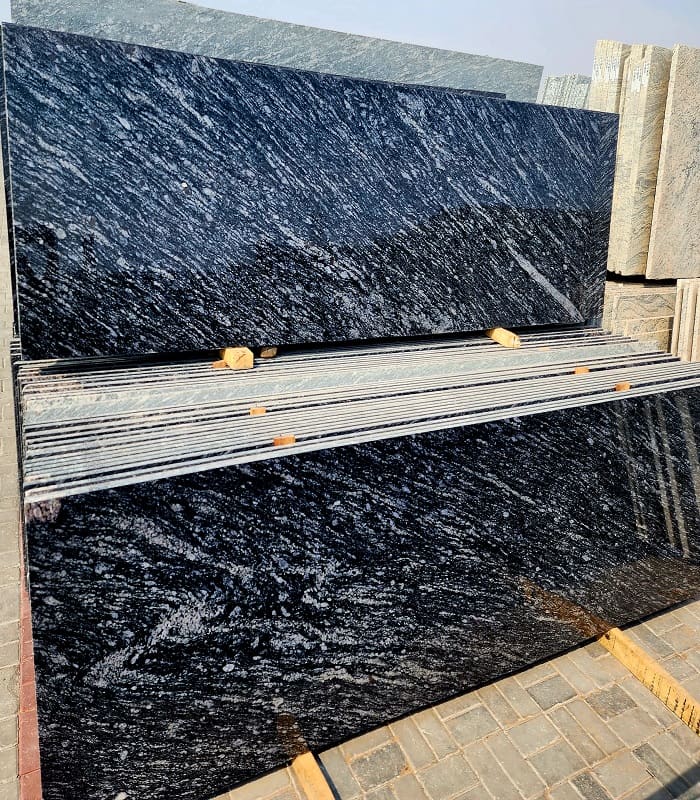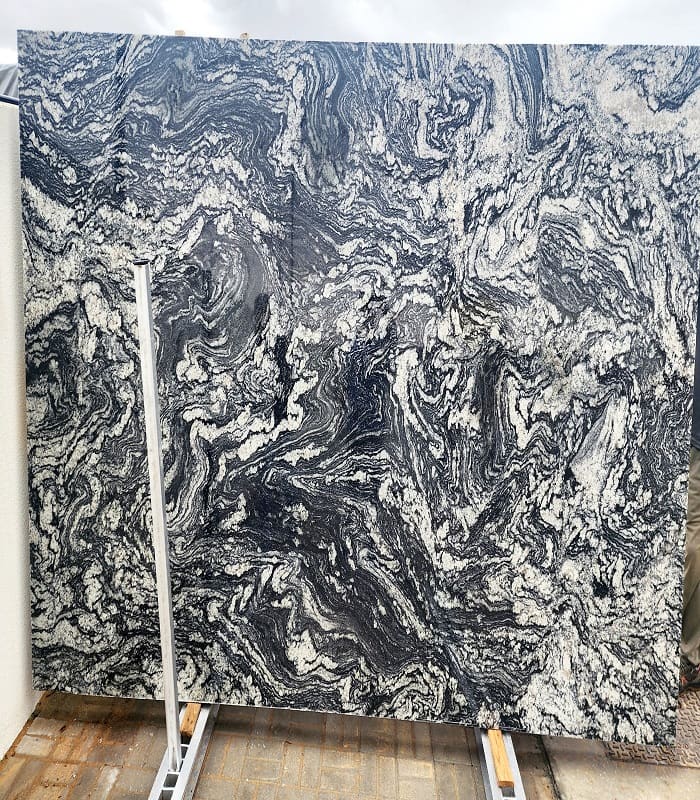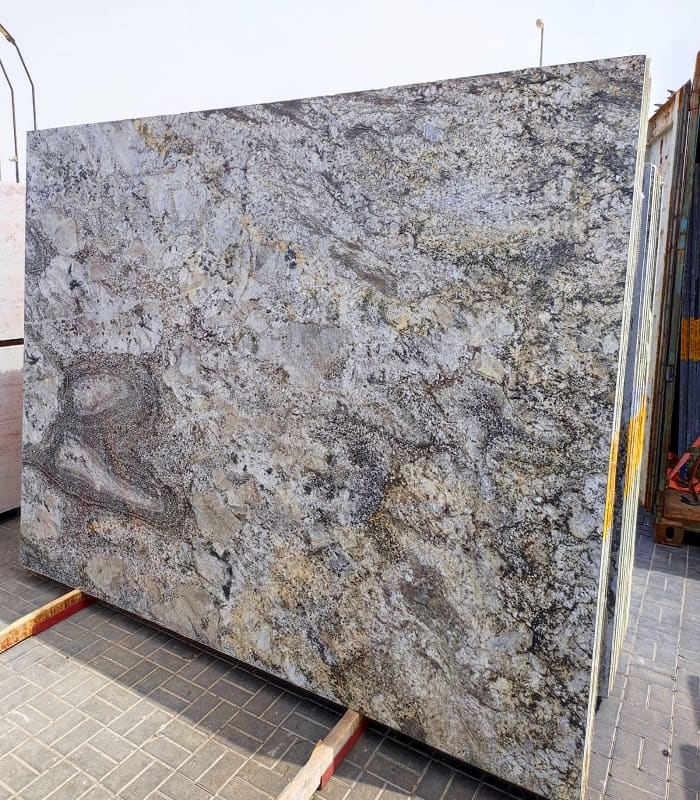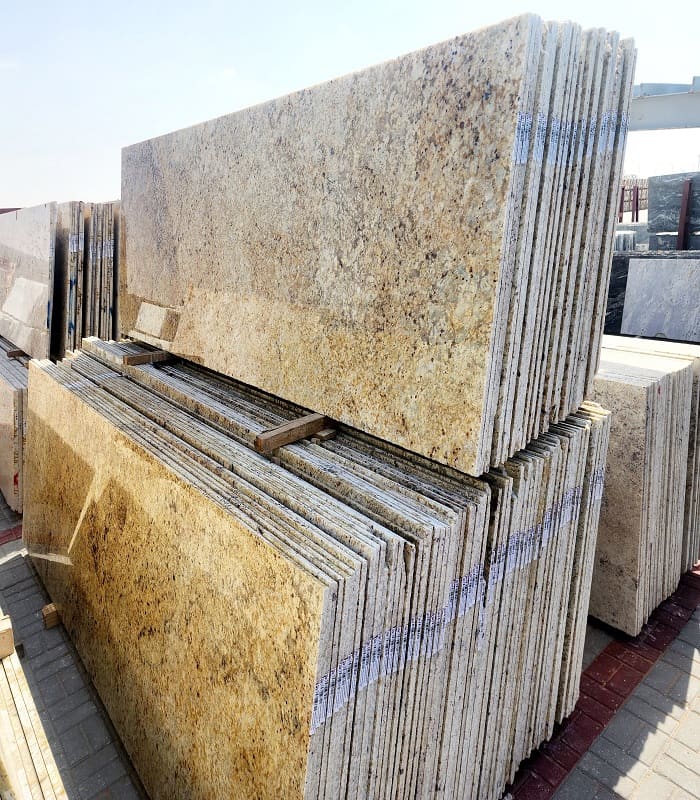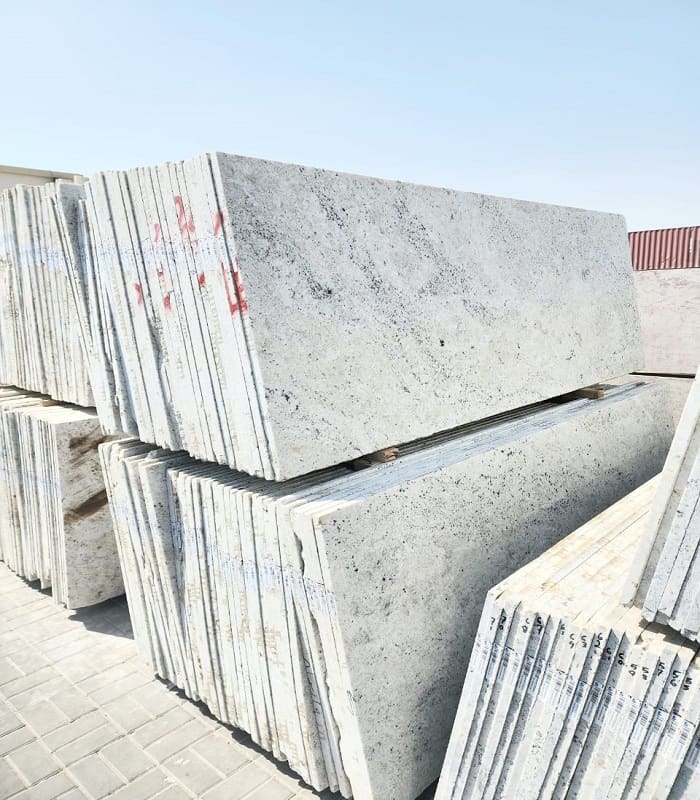
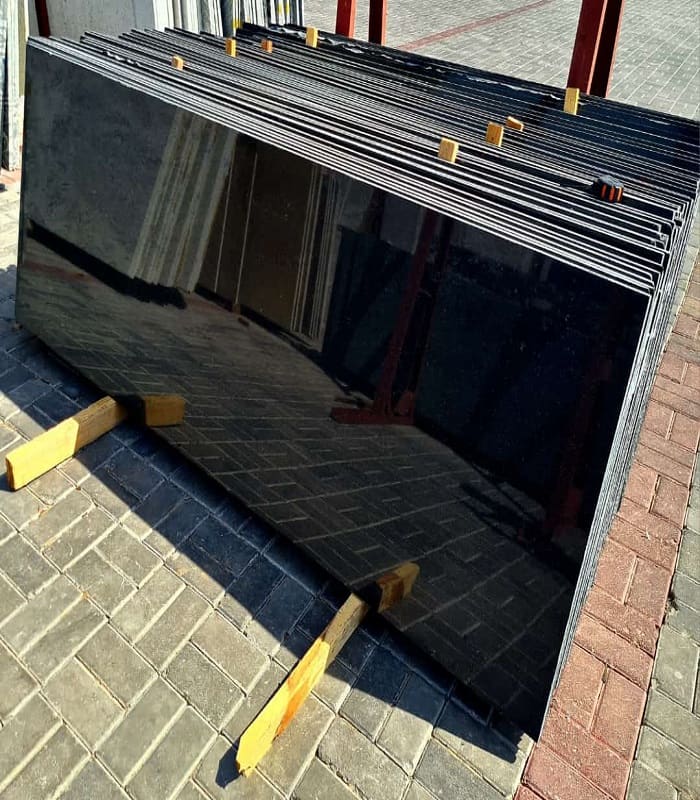
Granite · 6 variants
Application
Exposure, drainage and stone format.
Landscape details are the linear pieces that finish a garden: wall copings, planter caps, edging, borders, garden steps and seat tops. They sit in sun, irrigation spray and soil, and are usually measured in linear metres rather than area. Our granite range includes steps in 30 mm, a 60 × 10 cm tile suited to borders, and slabs that a fabricator can cut into copings and caps.
This page covers exposure, drainage and choosing the right format for each detail. Retaining walls, free-standing seats, water features and pool edges need input from your landscape designer or engineer; stock and price are confirmed in your quotation.
Wall caps and seat tops in full sun get hot enough to be uncomfortable to sit on, especially dark stone. Lighter colours, shade from planting or pergolas, and timber seat inserts are common ways to manage this.
Sprinklers and drip lines wet stone daily, and hard or recycled water can leave white or rust-coloured marks. Soil and fertiliser in contact with stone can stain it. Keep irrigation aimed at the planting, and detail a gap or membrane where stone meets soil.
Copings should shed water away from the wall face, often with a slight fall and a drip groove under the overhang. Planters need waterproofing and drainage so water does not seep through joints and stain the stone below.
Ready steps suit garden steps of standard size; the 60 × 10 cm tile works for narrow borders and edging; copings, wide caps, bench tops and curved pieces are cut from slabs. Matching the format to the detail reduces cutting and waste.
Exposed edges beside paths and play areas are kinder when eased or rounded. Joints in long copings need to allow for movement in sun and should line up with joints in the wall below where possible.
Retaining walls, free-standing or cantilevered seats and anything supporting a load beyond a bedded coping must be designed by an engineer. Pool copings and water-feature edges involve slip, chemicals and constant wetting, and need your designer’s input with test evidence, which we do not hold. Dark Emperador marble is generally not recommended for exposed landscape details because it weathers and is etched by acids. Our 15 mm porcelain slabs are not offered for outdoor use. Black Marquina’s family is unconfirmed. Send these details with drawings for technical review.
Finishes are not documented in our catalogue and are confirmed in your quotation. For tops that people walk or step on, a textured finish generally gives more grip than polished. On wall caps and planter edges, a polished face looks sharp at first but generally dulls outdoors with sun and sand; honed or textured finishes change less visibly and hide water marks. See our finishes guide.
Steps are 30 mm; the 60 × 10 cm tile is 20 mm; slabs are 20 mm or 30 mm. Copings and garden steps often use 30 mm for robust edges and overhangs, while 20 mm suits bedded borders. Any piece that spans or overhangs significantly, such as a bench top, needs its thickness and support set by your designer or engineer.
Measure each run of coping, edging or border in linear metres and note its width; count steps and caps as pieces with their sizes. A garden plan with the details marked is the most useful thing to send.
State copings, caps, edging and borders in linear metres (lm) with their width, and steps and seat tops as pieces. Corners, mitres and curves increase cutting and waste, so list how many there are. Any paving areas are best given separately in square metres.
We supply steps, tiles and slabs. Cutting copings, drip grooves, curves and mitres, and installation, are by your fabricator and landscape contractor. If you need pieces cut to size, list them and we will confirm whether it can be arranged before quoting.
Long copings are seen as continuous lines, so changes in shade from piece to piece are noticeable. Lay pieces out before fixing and arrange them so the colour changes gradually. Order the full length from one lot where possible. See natural variation.
If your designer, consultant or client needs technical documents such as test reports, data sheets or certificates, list them in your request and we will tell you what can be provided for the materials you choose.
Narrow pieces such as copings and edging break easily if carried flat without support, so move them on edge and store them on timber off the soil. Plan a drop point with firm ground. Keep pieces covered from cement and irrigation until fixed. Terms are confirmed in your quotation; see delivery preparation.
Ask whether a sample or a yard visit is possible. If you can get one, leave it outdoors for a few days in the sun and under irrigation spray to see how it looks wet, dry and hot.
Rinse sand and soil off copings and edging regularly. Clean with water and a pH-neutral cleaner; avoid acids, which can damage stone and mortar joints. Adjust sprinklers that wet the stone, and remove fertiliser spills promptly. Check joints in copings each year and repair open ones before water gets behind. See the granite care guide.
Lighter granites in a textured finish are generally more comfortable for seats and caps in full sun than dark polished stone. For edging, the 60 × 10 cm tile can save cutting compared with slabs. Manufactured outdoor products such as precast copings or porcelain pavers are other options; we do not supply them. For larger areas and garden paths, see the outdoor paving page and our guide to granite in UAE heat.
It is a narrow format that suits borders, edging and details. Availability is limited to one product in our catalogue, so check it before designing around it.
Our 30 mm steps are a common starting point for garden steps, but the finish and slip requirements outdoors should be agreed with your designer, and the base and bedding with your contractor.
Hard or recycled water can leave marks on many stones. Keep sprinklers off the stone where possible and clean marks early.
Copings are cut by your fabricator. If you need cut pieces from us, ask and we will confirm whether it can be arranged before quoting.
From the catalogue
Shown because steps, narrow tiles and slabs are the formats commonly cut or used for copings, edging and garden steps. This is not a statement that any material suits a particular outdoor detail — confirm with your landscape designer or contractor.