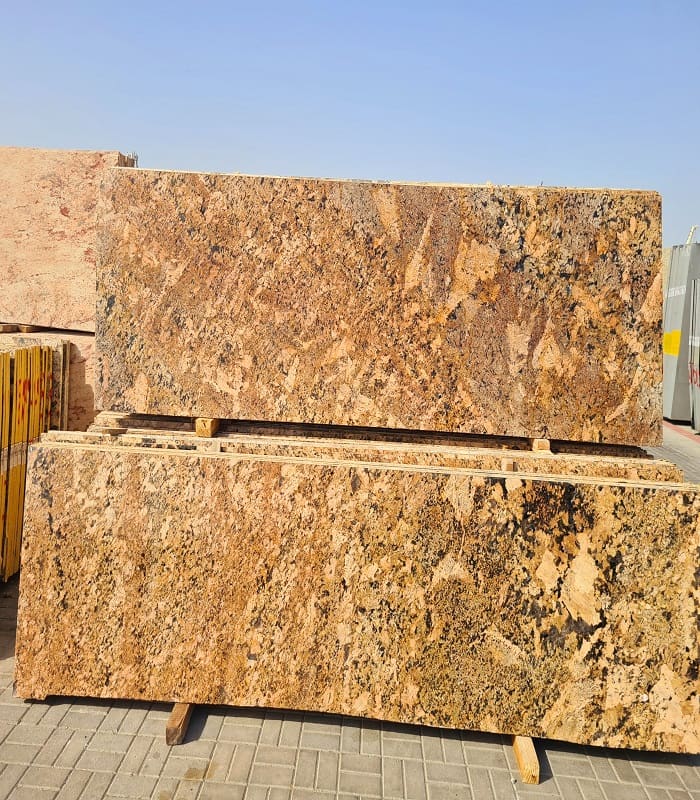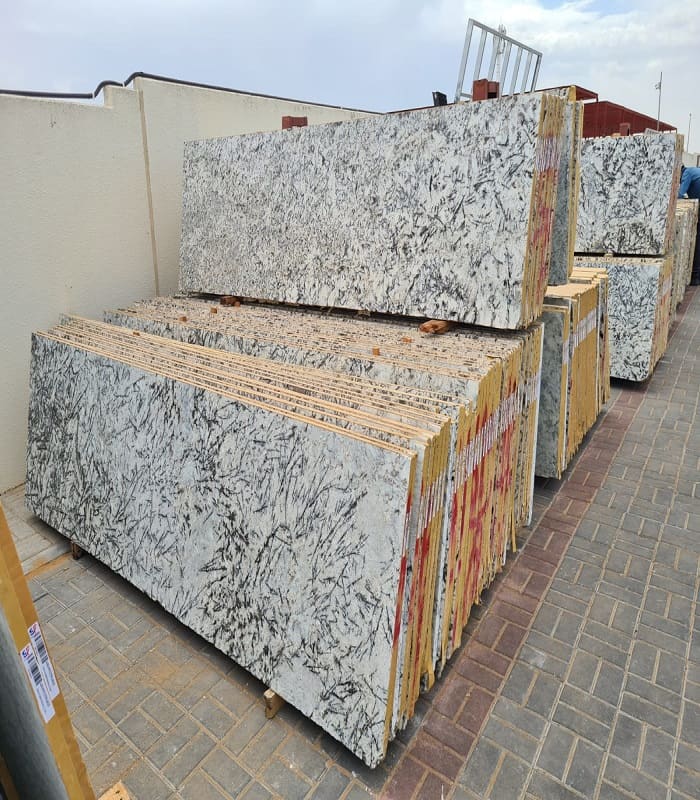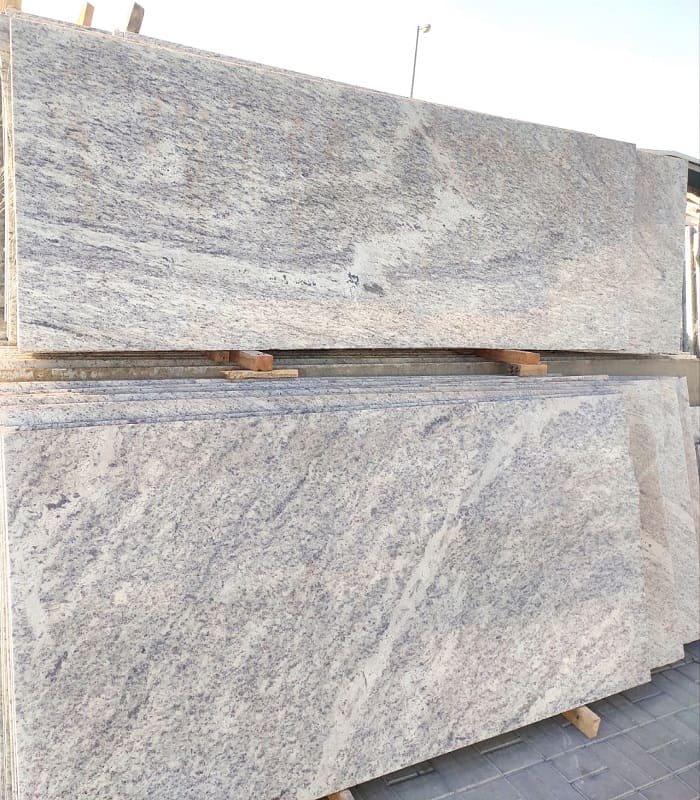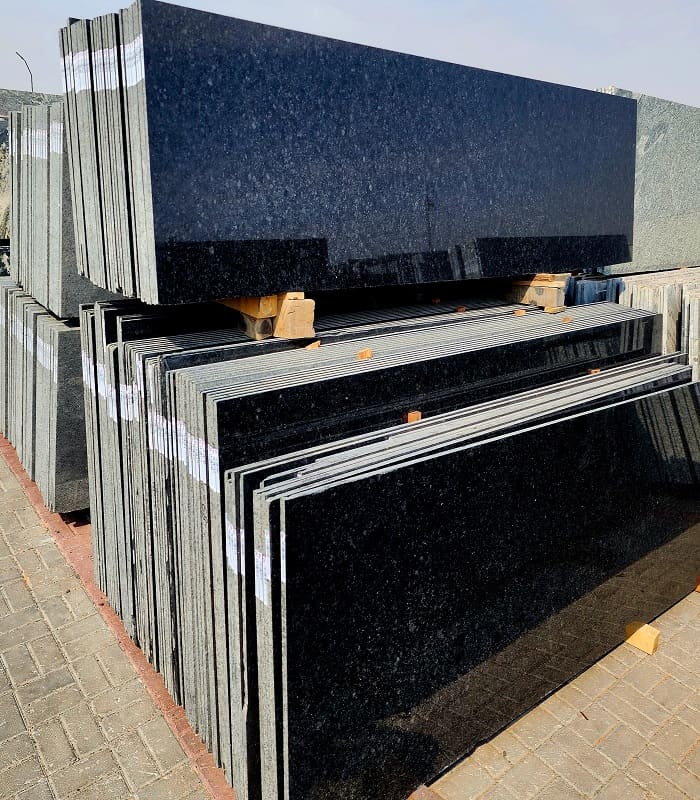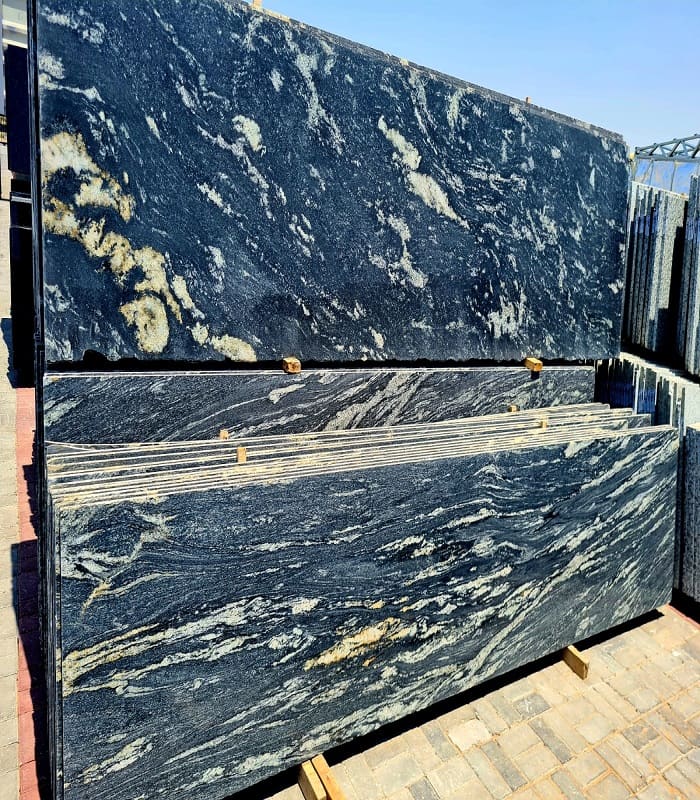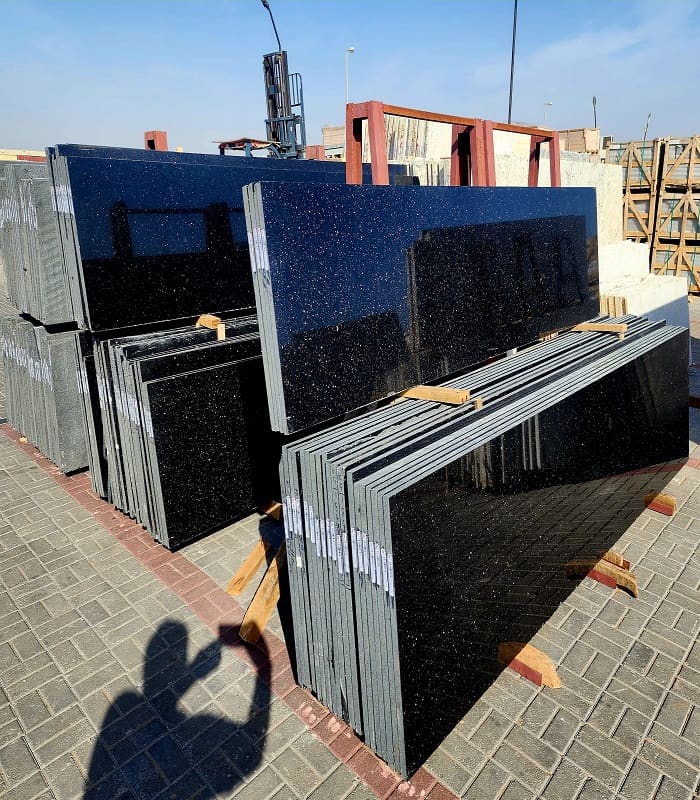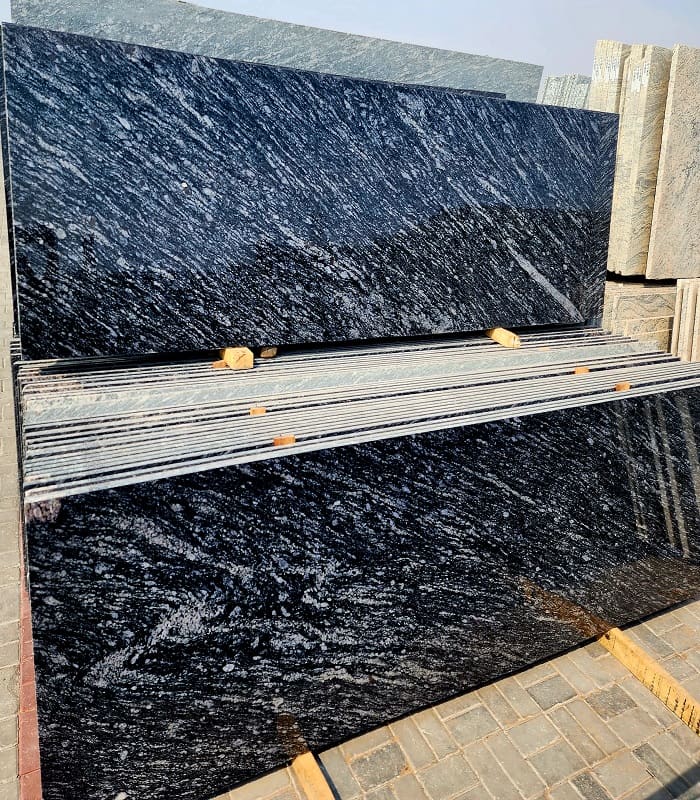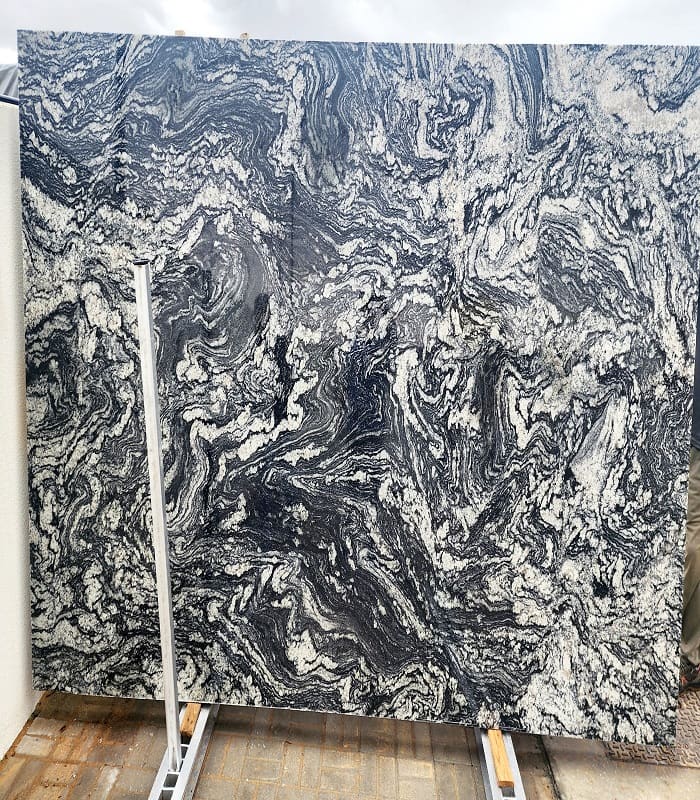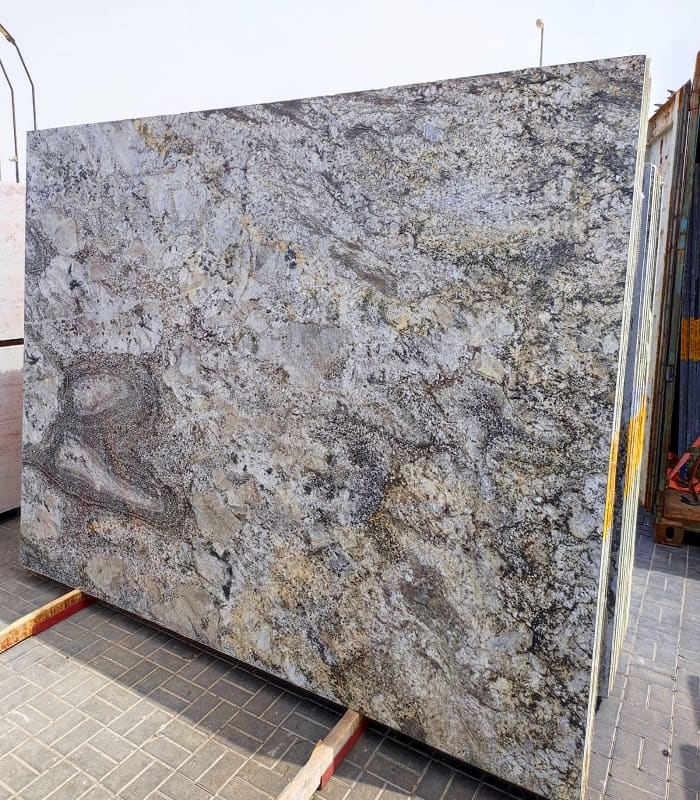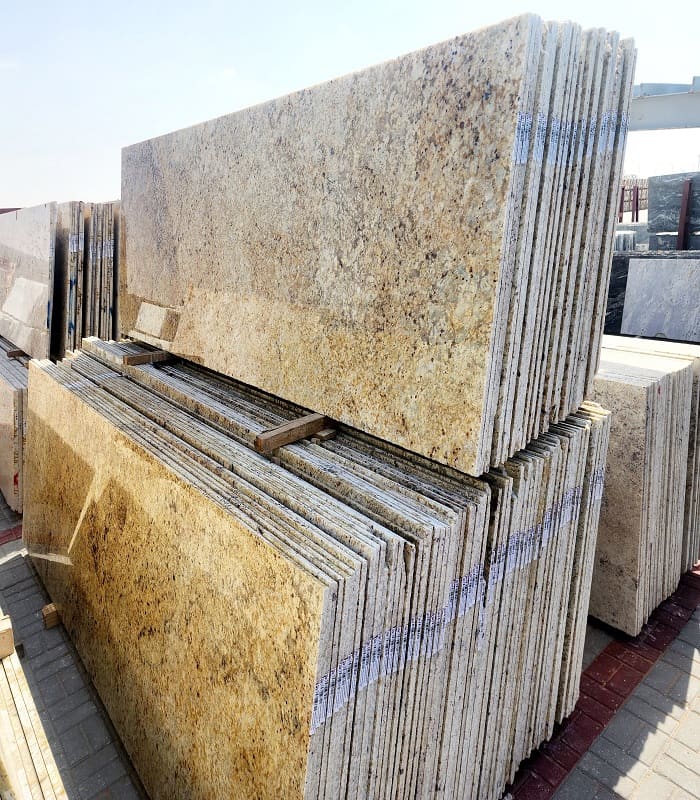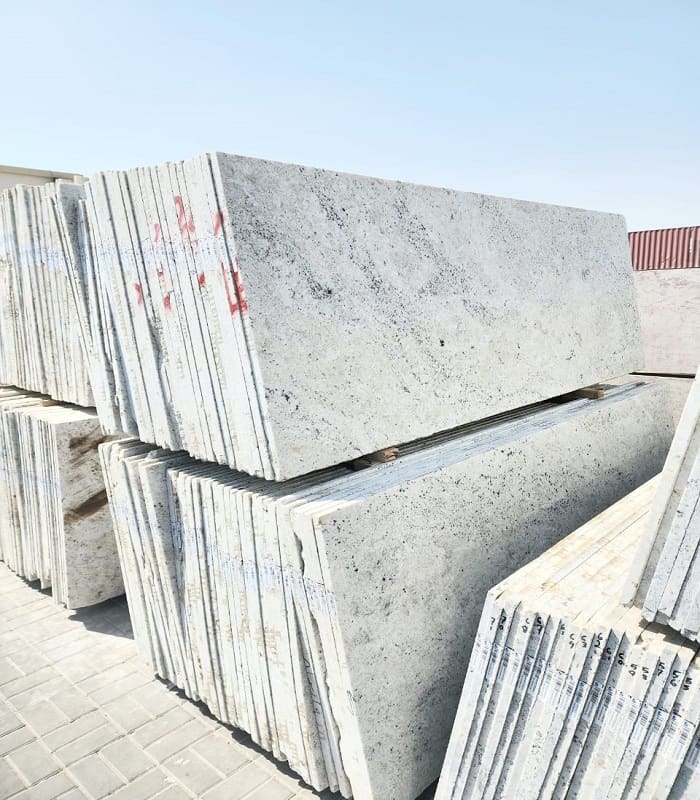
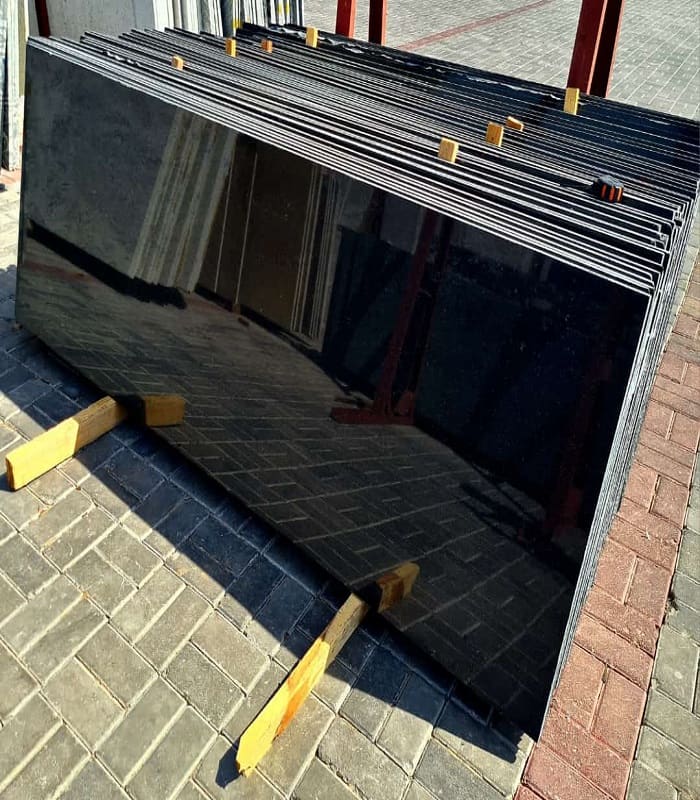
Granite · 6 variants
Application
Slip conditions, weather and installation build-up.
Terraces, courtyards, paths and pool surrounds put stone in direct sun, sand and water. Our range for outdoor paving is granite: granite tiles in 60 × 60, 60 × 30 and 60 × 10 cm (mostly 20 mm, with three 60 × 30 cm products in 30 mm) and granite slabs that can be cut to larger paving pieces.
Outdoors, finish and build-up matter as much as colour. This page covers surface heat, slip, drainage, bedding and loads. Slip resistance for an outdoor area must be decided by your designer using test data, which we do not hold, and any area carrying vehicles needs an engineer.
In UAE summer sun, paving gets very hot, and dark stone gets hotter than light stone. Where people walk barefoot, around pools or on roof terraces, lighter colours and shade generally help, but no stone stays cool in full sun.
Polished stone outdoors can be dangerously slippery when wet from irrigation, pool water, cleaning or morning dew, and sand on a smooth surface adds to the risk. Outdoor paving normally needs a textured finish chosen against the designer’s slip requirement.
Paving should shed water to drains or soft landscape, away from buildings. The falls are formed in the base, not by tilting individual tiles, and need to be agreed before the base is laid.
Stone paving is commonly bedded on a concrete slab (a rigid build-up) or on compacted layers (a flexible build-up). The choice affects thickness, joints and movement joints, and it is for your installer or engineer to specify.
Paths and terraces carry people and furniture. Driveways, service routes and areas used by maintenance vehicles carry far higher loads and need an engineered design with thickness and base to suit.
Driveways and any area used by vehicles must be designed by an engineer; do not assume a 20 mm or 30 mm tile will carry vehicle loads. Pool surrounds involve slip safety, pool chemicals and salt water, and need the designer’s input with test evidence. Dark Emperador marble is generally not recommended for outdoor paving because it weathers and is etched by acids, and our 15 mm porcelain slabs are not offered for outdoor paving. Black Marquina’s family is unconfirmed. Roof terraces add waterproofing and loading questions for the building’s engineer. Send any of these cases with drawings for technical review.
Finishes are not documented in our catalogue, so whether a textured finish such as flamed, bush-hammered or brushed is available for a given material must be confirmed in your quotation. Textured finishes generally give more grip than polished, though they also hold dirt and are harder to clean. Flaming usually lightens the colour and changes the look, so do not judge a flamed paver by a polished photograph. See our finishes guide.
Our granite tiles are mostly 20 mm, with three 60 × 30 cm products in 30 mm; slabs are offered in 20 mm and 30 mm. For pedestrian areas on a rigid concrete base, stone in this range is commonly used. Flexible build-ups, larger pieces and any vehicle loading generally need thicker or specially designed paving. Your installer or engineer confirms the thickness for your build-up and use.
Measure each paved area in metres and sketch its shape, marking drains, steps, planters and the pool edge if there is one. Edges and copings are best listed in linear metres.
Give the paved area in square metres (m²), plus edges and copings in linear metres. Your installer will add an allowance for cutting waste, which depends on the shapes and the number of drains and curves to cut around. Ask them for the figure, and keep some spare pavers from the same lot for repairs.
We supply tiles and slabs. The base, falls, drainage, bedding, jointing and laying are the work of your landscape contractor or installer. If you need pavers, copings or steps cut to size, ask in your request and we will confirm whether that can be arranged before quoting.
Outdoors, a paved area is seen as a whole, so shade differences between crates can show as patches. Ask for one lot, and lay tiles from several crates at once so they mix. A textured finish tends to soften differences in pattern, but it changes the colour, so compare like with like. See natural variation.
If your designer, consultant or client needs technical documents such as test reports, data sheets or certificates, list them in your request and we will tell you what can be provided for the materials you choose.
Crates of paving are heavy and need firm ground and lifting equipment to offload. Plan where they can be set down without damaging lawns, irrigation or new concrete, and keep them off soil to avoid staining. Cover them against cement splashes. Delivery terms are confirmed in your quotation; see delivery preparation.
Ask whether a sample or a yard visit is possible. If you can get a piece in the intended finish, leave it in the sun at midday and wet it: it is a simple way to feel the heat and the grip, though it is not a substitute for a slip test.
Sweep or rinse off sand regularly, since grit wears surfaces and fills textured finishes. Clean with water and a pH-neutral cleaner; avoid acid cleaners, which can damage stone and joints. White deposits (efflorescence) from new bedding usually need a suitable cleaner rather than acid. Check whether irrigation water leaves marks, and adjust sprinklers to keep them off the paving. See the granite care guide.
For barefoot areas, a lighter granite in a textured finish is generally more comfortable than dark stone. Manufactured outdoor porcelain pavers, typically thicker than our 15 mm porcelain slabs, are another option with published slip data from their makers; we do not supply them. For edges, copings and walls in gardens, see the landscape detailing page, and for steps, see the stair treads page.
Generally it is not advisable on walking surfaces, because polished stone can be very slippery when wet. A textured finish, confirmed against your designer’s slip requirement, is the usual approach.
Lighter colours generally absorb less heat than dark ones, but all stone gets hot in direct UAE sun. Shade and planting matter as much as colour.
Do not assume so. Vehicle areas need an engineered design for the paving and the base. Send the details for technical review.
Your designer’s slip requirement, a suitable textured finish, pool copings and attention to chemicals and drainage. We do not hold slip data, so involve your designer early.
From the catalogue
Shown because they are offered as tiles or as slabs that can be cut into paving. Listing does not confirm outdoor suitability, slip resistance or load capacity for any material or finish — your designer or engineer confirms that.